Physical Address
304 North Cardinal St.
Dorchester Center, MA 02124
Physical Address
304 North Cardinal St.
Dorchester Center, MA 02124

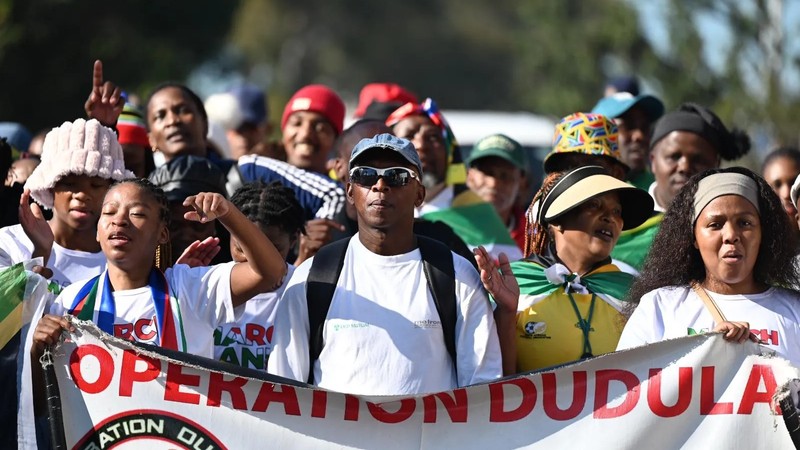
Something tense is brewing in Cape Town’s townships, and it goes far deeper than the headlines suggest. Organisers of anti-immigration protests say they are facing escalating threats — not from police, not from government, but from extortion gangs allegedly protecting foreign-owned spaza shops from demonstrators. It is a story about power, money, and who really controls the streets.
The protests, directed at foreign-owned informal businesses, have drawn comparatively small crowds in Cape Town relative to other parts of South Africa. Community leaders believe that is no coincidence. The presence of extortion networks, they argue, has actively discouraged large-scale mobilisation in certain neighbourhoods, creating a chilling effect that silence alone cannot explain.
The Khayelitsha Development Forum has been one of the few bodies willing to speak openly about what is happening on the ground. Its deputy chairperson, Mbulelo Dwane, acknowledged that some foreign-owned shopkeepers had privately admitted to relying on extortionists for protection — though he was careful to describe the broader claims as rumours. That careful language matters. In communities where gangs operate, speaking too loudly carries real consequences.
Somali shop owners in Khayelitsha have painted a strikingly specific picture of how this extortion economy functions. Some areas reportedly host up to four separate gangs, each demanding monthly protection fees ranging from R1,500 to R3,500. Failure to pay, shop owners say, leads directly to violence. And critically, they do not trust the police to protect them — a damning indictment of the state’s reach in these communities.
A voice note circulating on social media added another layer of complexity. A man speaking isiXhosa appealed to protesters not to target foreign-owned spaza shops — an unusual intervention that raised immediate questions about who was sending the message and why. Protest organisers responded without hesitation, declaring that their communities do not belong to extortionists and that no threat would derail their campaign.
Law enforcement did score one visible win. In Langa, police monitored a suspect via drone as he collected protection fees from local spaza shops, ultimately arresting him in possession of two unlicensed firearms. It was a rare glimpse into how sophisticated — and brazen — these rackets have become. Drones tracking extortionists in a Cape Town township is not a scene from a crime thriller; it is 2024 South Africa.
Meanwhile, Cape Town’s law enforcement arrested at least 13 people for public violence and malicious damage to property after alleged looting attempts at foreign-owned businesses across Delft, Gugulethu, Hanover Park, and Mfuleni. Safety and security MMC JP Smith noted that the marches which did take place were small and largely peaceful — a fragile calm that few believe will last indefinitely.
What this moment reveals is a layered crisis that young South Africans cannot afford to look away from. The immigration debate is real, the economic frustration is real, but so is the danger of criminal networks exploiting that frustration for profit. When extortion gangs start shaping the politics of the street, everyone loses — protesters, shop owners, and the communities caught in between.
The question worth sitting with is this: in neighbourhoods where the state has failed to deliver safety, jobs, or economic dignity, who fills the vacuum? Too often, the answer is organised crime. And until that structural failure is addressed honestly and urgently, Cape Town’s townships will remain a battleground — not just between communities, but between the people and the predators who profit from their desperation.



