Physical Address
304 North Cardinal St.
Dorchester Center, MA 02124
Physical Address
304 North Cardinal St.
Dorchester Center, MA 02124

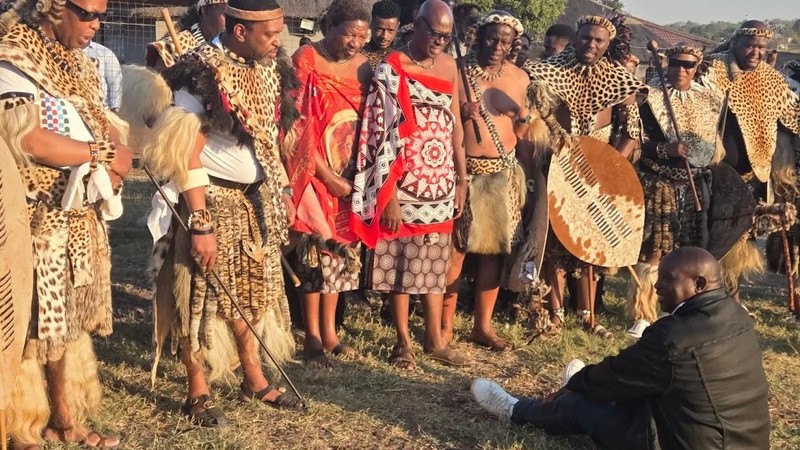
Somewhere in Mpumalanga, close to the Eswatini border, the sound of horns echoed across a royal residence last weekend. Regiments danced. Ndebele maidens performed. And King Misuzulu kaZwelithini, ruler of the amaZulu nation, stood at the centre of it all — finalising lobola negotiations for his fourth wife-to-be, Princess Sihle Mdluli, also known in royal circles as Queen Mawewe.
The king did not arrive quietly. He came accompanied by a formidable delegation — Traditional Prime Minister Inkosi Phathisizwe Chiliza, spokesperson Mpikayise Buthelezi, Private Secretary Arnold Ndamase and regiments — travelling to the KaMawewe Royal Residence in Mgobodzi, Nkomazi, to meet the Mdluli family on their home ground. Seventy cattle were offered as lobola. That number was deliberate, a direct acknowledgement of Princess Sihle’s status: she is the daughter of Chief Khulile Mkhatshwa of the Mawewe Indlamadoda Royal Authority, making her a princess in her own right, and the Zulu royal family made sure the offering matched that standing.
Spokesperson Buthelezi confirmed that both families, satisfied with the outcome, have now agreed to move forward with a full customary wedding ceremony expected before the end of 2025. Traditional Prime Minister Chiliza was direct about the significance of the moment: “That’s why the king himself is here today — to make sure everything that was agreed on is concluded so that the Queen can officially be recognised as the queen of the Zulu nation.” The ceremony was not merely bureaucratic. It was alive. Traditional singing, horn-blowing and dancing marked the conclusion of negotiations that had begun during a previous, quieter visit to the Mdluli family.
Queen Mawewe joins a royal household that already includes Queen Ntokozo Mayisela, Queen Nozizwe Mulela and Queen Nomzamo Myeni. She will be based at the eMashobeni Royal Palace, near Pongola in northern KwaZulu-Natal — a residence that carries enormous historical weight. The palace is directly linked to King Shaka kaSenzangakhona, the founder of the Zulu nation, and King Misuzulu personally oversaw its restoration after ascending to the throne. Today, eMashobeni hosts some of the most significant cultural ceremonies in the Zulu calendar, including the annual Reed Dance, the First Fruits Festival and the ceremony of burning the reed.
The exact date of the customary marriage ceremony remains unconfirmed. Inkosi Chiliza was careful to manage expectations: “We can’t say how soon the ceremony will take place because senior members of the Zulu nation still have to meet and report back.” Royal tradition moves on its own timeline, shaped by elders, protocol and ancestral process — not press schedules. For the thousands of young South Africans who look to the Zulu royal family as a living institution of culture and identity, that deliberate pace is itself part of the meaning.
What the weekend made clear is that the Zulu royal household remains a dynamic, deeply rooted institution, one that continues to perform its traditions with full ceremonial weight in a modern world that often treats culture as spectacle. For Princess Sihle Mdluli, the journey from Mpumalanga to a palace linked to King Shaka is only just beginning — and a nation is already watching.



