Physical Address
304 North Cardinal St.
Dorchester Center, MA 02124
Physical Address
304 North Cardinal St.
Dorchester Center, MA 02124

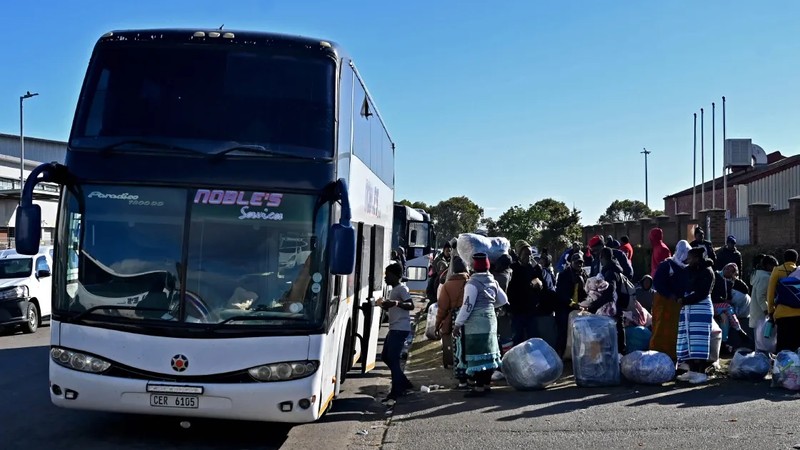
Something is cracking open in South Africa right now, and it is bigger than the protests making headlines. Thousands of migrant workers have lost their jobs in recent weeks, businesses are scrambling to fill sudden labour gaps, and entire sectors — from agriculture to transport — are starting to feel the economic tremors of an intensifying anti-illegal immigration campaign. What looks on the surface like a law-and-order debate is actually pulling back the curtain on something far more uncomfortable: a cheap labour system that has quietly powered the South African economy for decades.
What began as scattered demonstrations in May rapidly gained momentum as anti-illegal immigration groups, including March and March and the Labour and Civic Organisation (LACO), set a hard deadline of June 30 for undocumented foreign nationals to leave the country. That self-imposed ultimatum lit a fuse. Protests spread across Gauteng, KwaZulu-Natal, and the Western Cape, with Cape Town becoming a flashpoint — demonstrations zeroing in on foreign-owned spaza shops, street traders, and businesses accused of hiring undocumented migrants.
But the economic fallout that followed has not played out the way protesters promised it would. Fact-checking by Africa Check found no credible evidence that removing undocumented migrants would automatically reduce unemployment or generate jobs at any meaningful scale. The reality on the ground is messier, and for many South African workers, considerably more troubling.
Labour organisations are documenting a disturbing pattern: employers have seized on the anti-migrant climate not to hire more South Africans, but simply to dismiss workers — migrant and local alike — with less scrutiny and less pushback. The Casual Workers Advice Office (CWAO), through its Simunye Workers Forum, recorded dismissals at companies including Harvest Fresh Farms, Sunshine Plastics, Fortune Plastics, ZGG Farms, and Guard Master/Wire Ventures. Workers from Malawi, Zimbabwe, Lesotho, and other countries were among those pushed out — and these dismissals were already happening before the protests even peaked.
Here is the uncomfortable truth that gets buried in the noise of the immigration debate: South Africa’s economy has long depended on a cheap labour regime that survived the democratic transition largely intact. Three decades of public investment aimed at economic transformation have not dismantled it. Businesses — many of them benefiting from public incentives — have continued to source the most economically vulnerable labour available, because vulnerability is profitable. Migrant workers, often undocumented and afraid to assert their rights, fit that profile perfectly.
This is not simply a story about foreign nationals versus South Africans. That framing is a trap, and falling into it lets the real culprits — under-regulated labour markets and capital that prioritises cheap costs over decent work — off the hook entirely. South Africa’s Constitution is unambiguous: it guarantees the dignity of every human being, regardless of nationality. Exploitation does not become acceptable because its victims happen to carry foreign passports. And unemployment among South Africans cannot be waved away because businesses find precarious migrant labour more economically convenient.
What this moment actually demands is a hard reckoning with how labour markets are organised and enforced. Every company receiving public support or state incentives should be held to a clear, measurable standard — demonstrable commitments to local employment, accredited workplace training, full compliance with labour legislation, genuine skills transfer, and long-term sustainable development. The current crisis has, perhaps unintentionally, exposed exactly where that accountability has been absent.
For young South Africans watching all of this unfold, the lesson is sharp and worth sitting with. The challenge facing this country is not simply swapping one labour force for another. It is about building an economy whose competitiveness rests on productivity, innovation, skills, and human dignity — not on the perpetual hunt for the cheapest available worker. That is what a democratic developmental state is supposed to look like. And right now, South Africa is still a long way from delivering on that promise.



