Physical Address
304 North Cardinal St.
Dorchester Center, MA 02124
Physical Address
304 North Cardinal St.
Dorchester Center, MA 02124

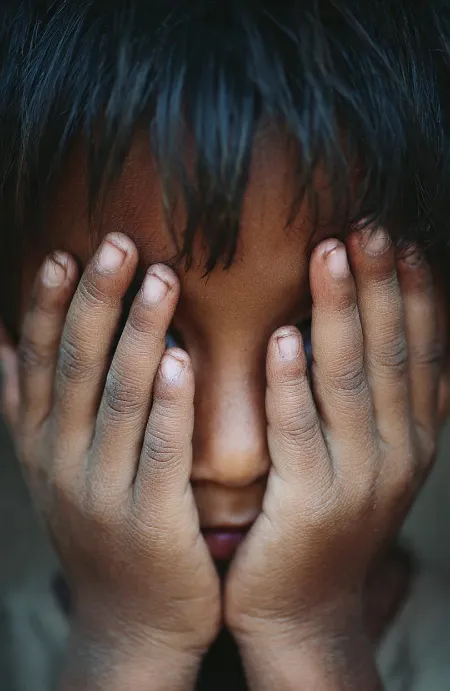
Between July and September 2026, South Africa recorded 4,362 child rape cases, meaning children under 18 made up nearly 45% of all verified rape victims in just one quarter. Acting Police Minister Firoz Cachalia released these figures in Pretoria on Friday, alongside the country’s latest quarterly crime statistics, and the numbers carry a weight that no percentage can fully absorb.
Police recorded a total of 9,908 rape cases during the second quarter of the 2026/27 financial year. Of the 9,705 cases where victims’ sex and age could be confirmed, 5,116 involved adult women and 227 adult men. The scale of the crisis is not new, but the data keeps arriving with a relentless consistency that demands more than routine acknowledgment.
Cachalia noted that reported sexual offences declined by just 2.7% compared to the previous period, a reduction far slower than those recorded in other violent crime categories. He was direct about what that means: a marginal statistical dip does not translate into meaningful safety for the women and children still experiencing violence every single day.
The minister placed significant pressure on police stations to raise their standards when handling sexual violence cases. Survivors, he insisted, must be treated with dignity from the moment they walk through a police station door. Investigations need to be thorough, dockets properly prepared, and the justice system engaged in a way that actually holds perpetrators to account. “Victims cannot be expected to carry the burden of a system that should serve them,” Cachalia said, in a phrase that cuts to the core of a long-standing institutional failure.
What makes this moment particularly significant is Cachalia’s willingness to push the conversation beyond policing. Law enforcement, he argued, cannot fix the cultural and social conditions that produce violence in the first place. He pointed specifically to beliefs rooted in male superiority and the normalisation of violence as attitudes that communities, families and institutions must actively challenge. “We all need to take responsibility for challenging the negative attitudes that normalise abuse,” he said, framing gender-based violence not just as a crime problem but as a social one. For young South Africans growing up in communities where these attitudes still circulate, that framing matters.
Cachalia also addressed the country’s illegal firearms crisis in the same briefing, announcing intensified operations to trace and recover unlicensed weapons and dismantle the supply chains that feed them into criminal networks. Forensic investigations will be strengthened to link recovered firearms to past crime scenes, potentially unlocking cold cases and connecting perpetrators to multiple offences. He also issued a pointed warning to licensed firearm owners: negligence in securing weapons contributes directly to the illegal trade. “Every stolen or diverted firearm can become the instrument of another family’s grief,” he said.
The statistics released on Friday are a snapshot of a country still grappling with deep structural failures around gender, power and safety. For South Africa’s youth, who will inherit both the problem and the responsibility to dismantle it, the figures are not abstract. They represent classmates, siblings and neighbours. The conversation Cachalia is trying to start, one that connects policing reform to cultural change, is the right one. Whether the institutions around him move fast enough to match it remains the harder question.



