Physical Address
304 North Cardinal St.
Dorchester Center, MA 02124
Physical Address
304 North Cardinal St.
Dorchester Center, MA 02124

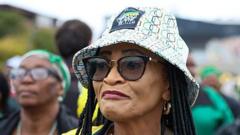
The African National Congress is racing to secure power-sharing deals across South Africa’s major cities after suffering its worst electoral performance since the end of apartheid, winning just 31% of the national vote in this month’s local elections, down sharply from 46% five years ago.
The party that has governed South Africa since the historic democratic transition of 1994 won a majority in only one of the country’s nine provinces, Limpopo, compared to six in the previous local elections. It came first in just two of the country’s eight cities, a stark contrast to its dominance in 2021. Parties now have until 27 November to negotiate and form local governments, making the next few weeks critical for the country’s political landscape.
In Gauteng, South Africa’s economic engine and home to Johannesburg and Pretoria, the pro-business Democratic Alliance (DA) swept all three major metros, including Ekurhuleni, finishing ahead of the ANC in each. Nationally, the DA pulled in 25% of the vote, up from 22% five years ago, and held its majority in Cape Town, the only city where a single party secured an outright win. The left-leaning uMkhonto weSizwe (MK) Party, led by former President Jacob Zuma, came third nationally with 10%, emerging as a dominant force in KwaZulu-Natal with 34% of the provincial vote, though it too falls short of a majority and must negotiate to govern Durban.
Despite sharing power with the DA at the national level through the Government of National Unity (GNU), formed in 2024 after the ANC lost its parliamentary majority for the first time since apartheid, the ANC appears determined to avoid replicating that arrangement locally. State broadcaster SABC has reported that most of the party’s senior leaders regard a deal with the DA as a last resort. A party insider told the Daily Maverick that a nationwide agreement to work with the DA at municipal level “was overwhelmingly rejected” at a meeting of ANC members.
Instead, the ANC has been courting smaller parties. In Gauteng, multiple reports point to an emerging arrangement with ActionSA, which finished as the third-largest party in the province with 17% and now holds kingmaker status. ActionSA is unlikely to align with the DA, as the two cannot agree on mayoral candidates in Johannesburg and Pretoria, effectively pushing the DA toward the opposition benches in the province.
Whether these local tensions signal a broader fracture in the GNU remains unclear. Political analyst Andre Duvenhage told the BBC that “a lot of asymmetrical coalitions” could emerge, where parties govern together in one city while sitting in opposition elsewhere. Analyst Sandile Swana cautioned that any party threatening to leave the GNU over failed local deals would be “shooting yourself in the foot.” The ANC’s mounting coalition pressures and internal divisions have been building for months, and neither the ANC nor the DA has publicly addressed what the local fallout means for their national arrangement.
For young South Africans watching these negotiations unfold, the stakes are concrete. The ANC’s collapse in support is widely linked to voter frustration over corruption, unreliable electricity, failing water infrastructure and poor waste collection. Half of South Africa’s cities have been governed by coalition arrangements since 2016, and those agreements have frequently proven unstable, disrupting basic service delivery in the process. Governance in all three Gauteng cities has come under scrutiny in recent years, with Johannesburg bearing the heaviest burden. Duvenhage put it plainly: “If we are really turning the ship around, we are talking about a 10-year period.” Swana agreed, saying it would take a decade to “cleanse and purify” local councils and restore them as functioning municipalities.