Physical Address
304 North Cardinal St.
Dorchester Center, MA 02124
Physical Address
304 North Cardinal St.
Dorchester Center, MA 02124

The African National Congress is heading into its National Executive Committee meeting in Boksburg, Ekurhuleni, carrying the weight of a party that is visibly cracking. The thesis is straightforward: the ANC is not simply managing a bad election result. It is confronting a compounding crisis, where a collapsing vote share, an uneasy alliance with the Democratic Alliance, and unresolved questions about Cyril Ramaphosa’s future are feeding into each other in ways that make a clean political reset extremely difficult.
The 2026 local government elections delivered a verdict that is hard to spin. The ANC’s national vote share dropped from 45.59% in 2021 to 30.76%, its worst municipal performance since the end of apartheid. That number is not a blip. It is a trajectory, and it has forced a reckoning inside the party that no amount of official reassurance can fully suppress.
ANC insiders speaking to IOL described a mood of genuine frustration within Gauteng structures, particularly over the prospect of formalising a coalition with the DA in Johannesburg. “There is growing frustration within our structures about the prospect of going into coalition with the DA in Johannesburg,” one insider said. “Members are asking why we should continue entering arrangements with a party whose approach at the national level has created so much tension.” Another put it even more bluntly: “It’s a serious pain to work with the DA, trust me.”
At the heart of the coalition anxiety is a fear that the political friction already visible inside the Government of National Unity will simply migrate downward into municipal governance. The GNU was presented as a pragmatic arrangement after the ANC lost its parliamentary majority in the 2024 national elections, but the partnership has been marked by recurring tension rather than smooth cooperation.
For many ANC members, the DA’s decision to approach the Constitutional Court over the ANC’s failure to submit its proportional representation candidate lists before the Electoral Commission of South Africa’s deadline crystallised exactly what they distrust about the relationship. The DA’s argument was procedural and legally sound: no party should receive preferential treatment for missing a deadline that applied to everyone equally. The Constitutional Court ultimately ruled in favour of the ANC, reinstating its candidates. But the episode left a mark.
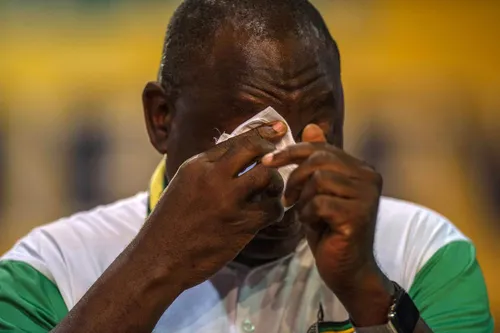
“The DA’s decision to take the ANC to court over the candidate lists did not sit well with many members,” a third insider said. “We are supposed to be government partners, yet when an opportunity arose, they chose confrontation. That has raised serious questions about the relationship.” The proceedings also saw ANC secretary-general Fikile Mbalula collapse in court, an image that added a layer of drama to an already charged moment. As the ANC’s worst municipal result since 1994 sinks in, the question of whether a Johannesburg coalition with the DA is politically sustainable has become one of the most contested issues inside the party.
The concern is not merely about policy disagreement. It is about whether two parties with fundamentally different political cultures and voter bases can govern a city like Johannesburg without turning every decision into a proxy battle for national relevance. “Johannesburg cannot become another battleground,” one insider warned. That anxiety is real, and it is shaping how ANC members are approaching the NEC meeting with far more caution than the official communications suggest.
Layered on top of the coalition question is the issue of presidential accountability. Reports emerged that Ramaphosa offered to step aside during discussions with the ANC’s top seven leaders, framing his potential departure as a call for collective responsibility over the electoral losses. ANC leaders have since moved quickly to dismiss these reports, insisting there is no decision for him to leave office. But the fact that the conversation reportedly happened at all signals how deep the internal anxiety runs.
“The president’s reported willingness to step aside has opened another difficult conversation within the organisation,” one source said. “Members want accountability, and they want to know who takes responsibility for the electoral losses.” This is the accountability deficit that sits at the centre of the ANC’s current crisis. The party lost nearly 15 percentage points of its vote share over five years, and there is no consensus on who owns that failure or what structural changes are needed to reverse it.
The demand for introspection is genuine among the rank and file. “We cannot keep losing electoral support and pretend everything is fine,” the same source added. “People must account, from the national leadership down to the structures on the ground.” Whether the NEC meeting produces any meaningful accountability, or whether it closes ranks around existing leadership as it has done before, will say a great deal about whether the ANC is capable of the self-correction its situation demands. For a generation of young South Africans watching the country’s dominant party struggle to hold its coalition together while haemorrhaging votes, the 2026 coalition arithmetic may be only the beginning of a much longer reckoning.