Physical Address
304 North Cardinal St.
Dorchester Center, MA 02124
Physical Address
304 North Cardinal St.
Dorchester Center, MA 02124

On the evening of June 8, Israeli Prime Minister Benjamin Netanyahu’s Likud party posted four words on its official X account: “There is no Gadi without Tibi.” Accompanying the terse message was an AI-generated, eleven-second clip showing two politicians — Gadi Eisenkot and Ahmad Tibi, a prominent Arab lawmaker — standing together before a parliament draped in dark clouds. “Eisenkot does not have a government without the Arabs,” the text at the end declared.
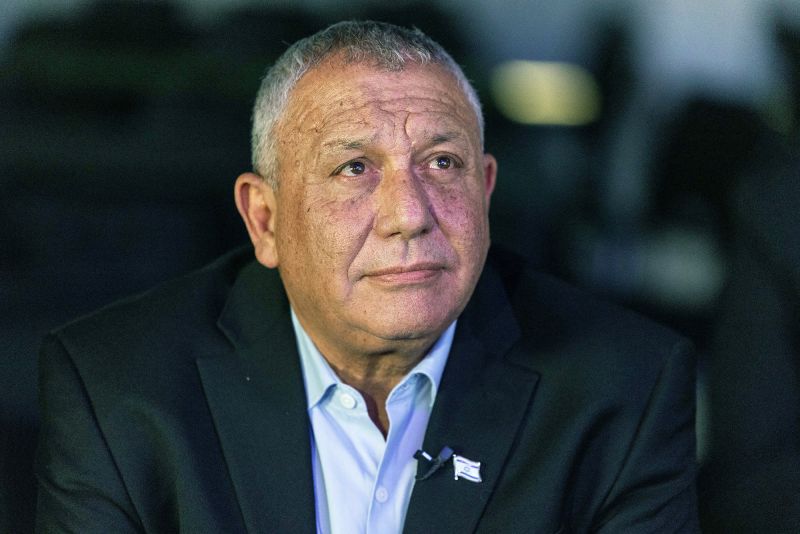
That single post told you almost everything you need to know about where Israeli politics stands right now. It confirmed that Netanyahu will once again lean on the anti-Arab rhetoric his party has weaponised for years — and, more importantly, it revealed that Eisenkot has become the primary political threat to Israel’s longest-serving leader ahead of parliamentary elections scheduled for late October.
For a generation of young Israelis and observers across the region, the name Gadi Eisenkot may not yet carry the weight it does inside Israel. But it is gaining ground fast — and the story of why matters far beyond the borders of the Middle East’s most militarised democracy.
Eisenkot’s Yashar party — meaning “straight” or “honest” in Hebrew — was founded less than a year ago and spent most of its early existence languishing in the single digits. The conventional wisdom held that former Prime Ministers Naftali Bennett and Yair Lapid, who formed a joint list, would anchor the anti-Netanyahu bloc. Both men actively sought to fold Eisenkot into their alliance. He declined, choosing to run independently instead.
That gamble is paying off. Most recent surveys now show Yashar running neck and neck with Likud and ahead of the Bennett-Lapid joint list. The latest Channel 12 poll projects Eisenkot’s party taking 21 seats in the Knesset, Israel’s parliament, just behind Likud’s 23 and ahead of Bennett-Lapid’s 18. When respondents were asked who was better suited to serve as prime minister, 38% named Eisenkot against 36% for Netanyahu — a statistical near-tie that, given Netanyahu’s decades of dominance, reads as seismic.
Netanyahu’s campaign apparatus has noticed. An adviser to the prime minister confirmed they have 400 more videos about Eisenkot ready to release. Likud’s messaging, which had previously fixated on Bennett, has now pivoted decisively toward its new rival. Campaign videos mocking Eisenkot’s heavily accented English have begun circulating, contrasting it with Netanyahu’s polished, Pennsylvania-schooled delivery. “Gadi wouldn’t strike Iran” has emerged as another line of attack.
The contrast between these two figures runs deeper than political positioning — it cuts through biography, class, and cultural identity in ways that resonate powerfully with Israel’s diverse and often fractured electorate.
Netanyahu, 76, is the son of a historian, raised in Jerusalem’s elite circles, a graduate of prestigious American institutions, and a veteran of the military’s elite Sayeret Matkal commando unit. He has spent decades mastering political theatre, sharp messaging, and grand international performances. He is the stuff of viral clips and headline-grabbing speeches at the United Nations.
Eisenkot, 66, is something else entirely. The second of nine children born to Moroccan immigrants, he grew up in Tiberias and Eilat — cities on the geographic and social periphery of Israeli power. Soft-spoken, understated, and deliberately undramatic, he rose through the Golani Brigade to become the IDF’s chief of staff from 2015 to 2019, a position to which Netanyahu himself appointed him. “Under your command, Gadi, the IDF carried out great work,” Netanyahu said at Eisenkot’s 2019 retirement ceremony. “We salute you, for your many merits as fighter and commander.”
Eisenkot’s tenure as chief of staff was not without controversy. In 2016, he oversaw the prosecution of Elor Azaria, a combat medic convicted of killing a wounded Palestinian attacker in Hebron — a case that ignited a fierce national debate about military ethics and rules of engagement. Eisenkot stood behind the military’s legal process despite intense pressure from the Israeli right, including from Netanyahu himself. For his supporters, that moment defines his character: a man willing to hold a line even when it costs him politically.
Eisenkot entered formal politics in 2022 under former military chief Benny Gantz, and together they joined Netanyahu’s emergency war cabinet following the Hamas attacks of October 7, 2023. Over time, Eisenkot grew openly critical of the government’s conduct of the war — particularly its lack of a coherent strategy regarding the hostages held in Gaza.
“The war is being conducted through tactical gains, without significant moves to achieve strategic objectives,” he wrote in a February 2024 letter to Netanyahu and the war cabinet. The critique was measured, methodical, and devastating in its precision.
Then came the personal dimension that no political consultant could script. Two months into the fighting, Eisenkot’s youngest son, Gal, was killed in Gaza. Two of his nephews were later killed in combat. All while Netanyahu’s own son, Yair, spent a significant portion of the war in Miami, not serving in reserve duty.
“We will continue to be a united and happy family so that your sacrifice will not be in vain,” Eisenkot said at Gal’s funeral. “We will do everything to be worthy — and make the right decisions for those who sacrificed, your brothers in arms, and for the entire Israeli people.”
By June 2024, Eisenkot and Gantz withdrew from the war cabinet, citing the absence of any endgame strategy. A year later, Eisenkot split from Gantz to launch Yashar independently — and has not looked back.
There is a dimension to Eisenkot’s rise that carries enormous political significance, one that speaks directly to questions of representation and identity that young Africans and youth across the Global South will recognise immediately.
Mizrahi voters — Jews of Middle Eastern and North African descent — have historically formed the backbone of Likud’s electoral coalition. Yet Israel has never had a Mizrahi prime minister. Eisenkot, the son of Moroccan immigrants who grew up far from the centres of Ashkenazi-dominated power, represents something genuinely new. Even Likud lawmaker David Bitan acknowledged in a recent interview that Eisenkot’s background “gives him a very interesting advantage.” Former ultra-Orthodox Shas lawmaker Yigal Guetta was blunter still, telling Channel 12 News simply: “Yes, a Moroccan prime minister!”
Veteran columnist Nachum Barnea captured the emotional texture of Eisenkot’s appeal in Yedioth Aharonot, writing that “he comes across to people as someone they want to hug” — a quality he traced to the rare convergence of Eisenkot being a former chief of staff, a bereaved father, and a son of the Moroccan periphery all at once.
None of this means Eisenkot’s path to the prime ministership is straightforward. With roughly four months until the election, the coalition arithmetic remains punishingly complex — not just for Eisenkot, but for the entire anti-Netanyahu camp.
Netanyahu has watched multiple challengers rise on waves of public hope and enthusiasm, only to crumble against his political skills. The graveyard of “WannaBibis” — rivals who tried to out-Netanyahu Netanyahu — is long and well-populated.
Anshel Pfeffer, Israel correspondent for The Economist and author of one of Netanyahu’s biographies, argues that Eisenkot stands apart from all previous challengers in one crucial respect. “There is an ongoing Israeli audition since 1996 seeking for the person who will bring down Netanyahu,” Pfeffer said. “Those who succeeded, like Ehud Barak and Ariel Sharon, did so by being fundamentally different. Those who failed often tried to imitate him.” Eisenkot, in Pfeffer’s assessment, is not following the imitation script. “There is only one Netanyahu. Eisenkot is the first in years who is trying to beat Netanyahu by being his opposite.”
Yet Pfeffer is careful not to overstate the contrast. He points out that Eisenkot was a central architect of some of Israel’s most consequential and contested military strategies — including the Dahiyeh doctrine, which calls for the use of overwhelming force against civilian infrastructure to deter future militant attacks, developed in the aftermath of the 2006 Lebanon war, as well as strategic planning at the outset of the Gaza conflict. “Personality-wise, he is different,” Pfeffer said, “but in terms of policy, it’s less clear.”
That tension — between a genuinely different style of leadership and a policy record that shares more with the establishment than his image suggests — is the central question that will define Eisenkot’s campaign in the months ahead.
“Eisenkot is not Netanyahu and can never be,” Pfeffer concluded. “But that may be precisely what many Israelis are looking for: a fundamentally different style of leadership.”
Whether that is enough to end nearly three decades of Netanyahu’s dominance is a question Israeli voters will answer in October. But for now, the audition is very much alive — and for the first time in years, it has a genuinely compelling candidate at its centre.



