Physical Address
304 North Cardinal St.
Dorchester Center, MA 02124
Physical Address
304 North Cardinal St.
Dorchester Center, MA 02124

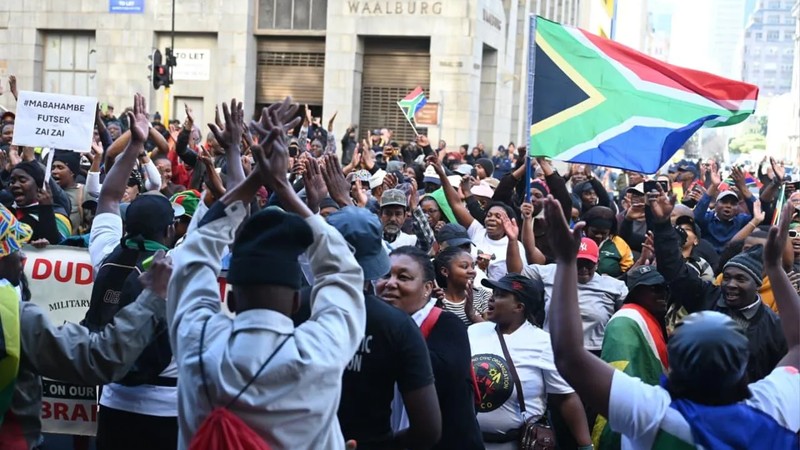
A police van pulls up. Officers demand papers. In that moment, the difference between a refugee permit and an expired visa is not a legal technicality — it is everything.
South Africa’s immigration debate has been running hot, and with the Department of Home Affairs pushing new policy proposals while government operations sweep up undocumented foreign nationals across the country, the terminology flying around in headlines and political speeches matters more than ever. Yet for most people — including many of the young Africans directly affected — the distinctions between a legal migrant, an asylum seeker, a refugee, and an undocumented migrant remain genuinely unclear. That confusion has real consequences.
Start with the broadest category. A legal migrant is simply any foreign national present in South Africa under the authority of the Immigration Act or related legislation. That umbrella is wider than people often assume — it covers someone on a student visa, a professional on a work permit, a person holding permanent residence, and crucially, both recognised refugees and asylum seekers whose applications are still being processed. Legal status is not a single document; it is a spectrum.
An asylum seeker sits at a specific, transitional point on that spectrum. When someone flees their country and arrives in South Africa to claim protection, they are issued a temporary Section 22 permit while the authorities assess their case. That permit is legally valid. The person holding it is lawfully in the country, entitled to remain until a decision comes through. Treating an asylum seeker as an “illegal” is not just a moral failure — under South African law, it is factually wrong.
A refugee is what an asylum seeker becomes once their claim is approved. Recognition under the Refugees Act means the state has formally acknowledged that this person faces persecution, armed conflict, or comparable danger in their home country and that they need protection. That status carries its own permit and its own set of rights. The journey from asylum seeker to recognised refugee can take years, which is precisely why the Section 22 permit exists as a bridge — and why its validity must be respected in the interim.
Then there is the category that sits outside all of this: the undocumented or “illegal” foreigner, defined under the Immigration Act as someone present in South Africa in contravention of the law. This applies to people who crossed the border without authorisation, who overstayed a visa, whose permit lapsed without renewal, or who lost their legal status and remained anyway. Officials have been explicit that recent enforcement operations target this group specifically — not refugees, not asylum seekers, not legal migrants.
The distinction sounds clean on paper. On the ground, in communities where xenophobic tension can flare fast and where not everyone carrying a valid permit feels safe presenting it, the line between protected and vulnerable is far thinner. For young Africans moving across the continent — chasing education, escaping instability, building something new — understanding exactly where the law stands is not just useful. It is a form of power.



