Physical Address
304 North Cardinal St.
Dorchester Center, MA 02124
Physical Address
304 North Cardinal St.
Dorchester Center, MA 02124

A single interview just blew open one of South Africa’s biggest political controversies in years.
The story begins well before the headlines, in the quiet but powerful world of public affairs consulting. Resolve Communications, chaired by former Democratic Alliance leader Tony Leon and run by former DA CEO Paul Boughey, had for years operated at the intersection of private-sector interests and political access. The firm built its reputation on knowing the right doors to knock on — and, crucially, who would open them.
Things started unravelling publicly in mid-2025, when former DA leader and ex-agriculture minister John Steenhuisen sat down for a tell-all interview with Media24. What he said sent shockwaves through South Africa’s Government of National Unity (GNU). Steenhuisen alleged that Resolve Communications had been actively shaping public narratives around foot-and-mouth disease containment on behalf of its clients — narratives he believes were weaponised against him and ultimately cost him his ministerial position.
But Steenhuisen did not stop there. He went further, claiming that Resolve used its closeness to senior DA figures to arrange meetings between GNU ministers and its private-sector clients, including Elon Musk’s Starlink. He named himself and Communications Minister Solly Malatsi among those who had been pressed to engage with the firm’s clients. He described the situation bluntly: “A company chaired by a former DA leader and led by a former DA CEO was pivotal in criticising me and my chief of staff, relentlessly driving public narratives.” He had already raised the alarm internally, flagging the behaviour to the DA’s parliamentary caucus as a serious ethical risk.
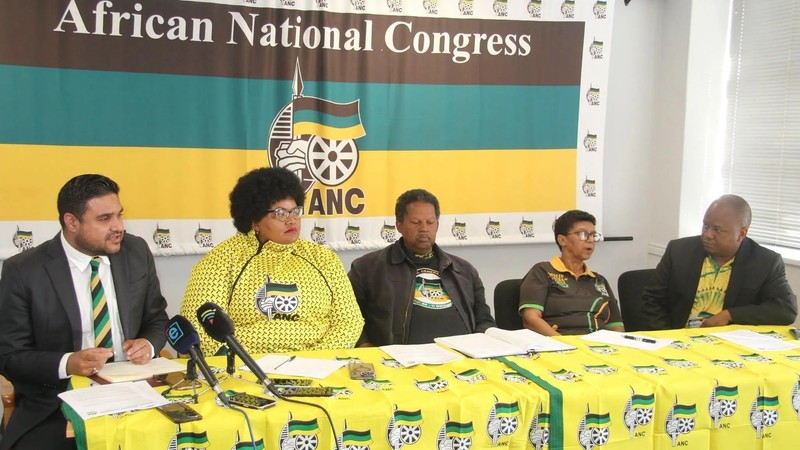
Weeks later, the political fallout was escalating fast. The African National Congress released a sharp statement calling the allegations “perturbing” and “damning,” framing them as evidence of an attempt by Leon and Boughey to capture the state. The ANC argued that the scandal exposed a long-running double standard — that the DA had spent years positioning corruption as something that only happened under Black-led governments, while presenting itself as the gold standard of clean governance. “This selective political narrative has contributed to the harmful perception that corruption is linked to race rather than to individual criminal conduct and systemic governance failures,” the party said, demanding the same level of scrutiny the DA had always applied to others.
ANC spokesperson Nonceba Mhlauli confirmed that the party’s executive had already directed its parliamentary caucus to pursue the matter. The ANC’s call for a full, independent investigation was unambiguous — and it was not alone.
ActionSA filed a formal complaint with the Public Protector, requesting an investigation into Resolve’s dealings with GNU ministers, and simultaneously called on President Cyril Ramaphosa to commission an independent probe. Parliament’s Portfolio Committee on Communications ordered Malatsi to submit a written explanation — backed by documentation — about his engagements with Resolve and Starlink. Committee chairperson Khusela Diko did not rule out a full parliamentary inquiry. The General Industries Workers Union of South Africa added its voice, demanding an “immediate, unfettered investigation” involving the Public Protector, Parliament’s ethics structures, and law enforcement agencies.
By then, President Ramaphosa had weighed in. Speaking on the sidelines of the Chris Hani Region Volunteers Drive in the Eastern Cape, he said the full truth must come out — a statement short on detail but significant in its direction of travel.
Resolve Communications pushed back hard. The firm rejected all accusations as “baseless,” insisting its public-affairs work had at all times been lawful, transparent, and consistent with accepted professional practice both in South Africa and internationally. Tony Leon called the allegations politically motivated and without evidence, flatly denying that Resolve directs ministers or influences government decisions. He described comparisons to state capture as “an insult to the South Africans who suffered under the real thing.” Chief operating officer Loftus Marais went further, dismissing the Public Protector complaint as “a political stunt” and arguing that the watchdog holds no constitutional jurisdiction over a private company.
Underlying all of this is the unresolved question of Starlink in South Africa. The satellite internet provider, active in over 100 countries, remains unlicensed in South Africa because current legislation requires telecoms operators to hold at least 30% ownership by historically disadvantaged South Africans — a threshold Starlink has declined to meet. In May 2025, Minister Malatsi gazetted a policy direction that critics say dilutes Broad-Based Black Economic Empowerment rules by exempting multinationals investing in the country from that 30% ownership requirement. For young South Africans watching access to technology and economic transformation hang in the balance, that detail is anything but a footnote.
As of now, no evidence of wrongdoing by Resolve Communications or any of the individuals named has been formally established. But the investigation calls are mounting, the political pressure is building, and South Africa’s youth — the generation that will inherit whatever governance structures survive this moment — are watching closely.



