Physical Address
304 North Cardinal St.
Dorchester Center, MA 02124
Physical Address
304 North Cardinal St.
Dorchester Center, MA 02124

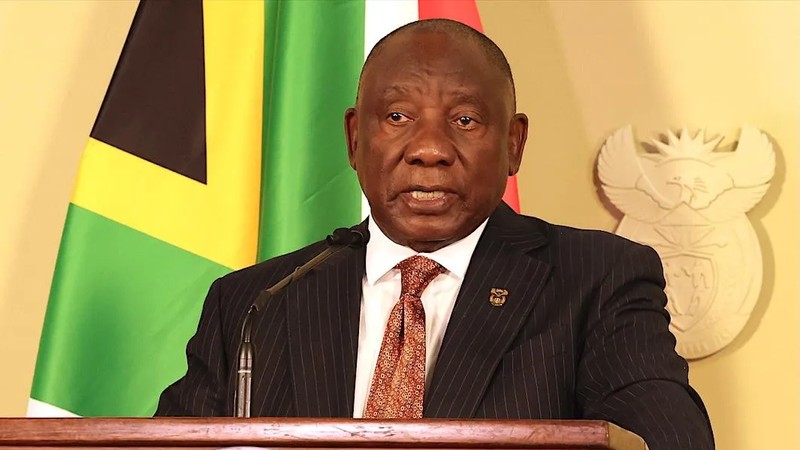
South Africa’s Economic Freedom Fighters (EFF) and the African Transformation Movement (ATM) announced on Saturday they will oppose President Cyril Ramaphosa‘s court application to block Parliament from proceeding with his impeachment inquiry — a legal battle that puts the president’s accountability on the line.
On Friday, Ramaphosa filed papers in the Western Cape High Court, requesting that National Assembly Speaker Thoko Didiza and Impeachment Committee Chairperson Makashule Gana be stopped from commencing with the inquiry. The president wants proceedings paused until the court rules on his separate challenge to the Independent Panel report that triggered the inquiry.
Ramaphosa argues he will suffer irreparable harm if Parliament moves forward before the High Court rules on the validity of that report. He claims he was left with no choice after Parliament rejected his request to voluntarily suspend the proceedings.
However, Speaker Didiza pushed back, stating that parliamentary committees determine their own working arrangements. The State Attorney acting for Gana confirmed the committee was pressing ahead, with a meeting scheduled for June 24.
The EFF did not mince words. Spokesperson Sinawo Thambo said the application “confirmed that Ramaphosa will exhaust every legal and political avenue to delay accountability.” The party pointed to the Constitutional Court’s recent ruling, which explicitly mandated Parliament to establish an impeachment committee — a directive, they argue, that cannot be suspended by a pending review.
The ATM went further, labelling the move a deliberate stalling tactic and requesting the High Court hear the matter on an expedited basis during the week of June 22, 2026, to keep the accountability process on track.
At the heart of the inquiry is the Phala Phala scandal — the alleged theft of United States dollars from Ramaphosa’s farm in February 2020. The impeachment committee is tasked with determining whether the president violated the Constitution or the law in connection with that incident.
Nearly four years after Parliament appeared to bury the original Section 89 panel report, a Constitutional Court judgment has revived the process — forcing Ramaphosa to confront a chapter he had hoped was closed.
Activists and Citizens Forum spokesperson Dennis Bloem accused Ramaphosa of contradicting his own anti-corruption agenda. “His decision to apply for an interdict is in direct contradiction with his promises to fight corruption,” Bloem said.
Political analyst Professor Andre Duvenhage raised the stakes further, arguing there were grounds to suggest Ramaphosa was pursuing a “Stalingrad” strategy — a term used to describe the tactic of using endless legal challenges to delay proceedings. Duvenhage also warned that the move risks undermining the legislature’s constitutional oversight role over the executive.
With the June 24 committee meeting looming and court papers already filed, South Africa’s political and legal arenas are set for a defining confrontation over presidential accountability.



