Physical Address
304 North Cardinal St.
Dorchester Center, MA 02124
Physical Address
304 North Cardinal St.
Dorchester Center, MA 02124

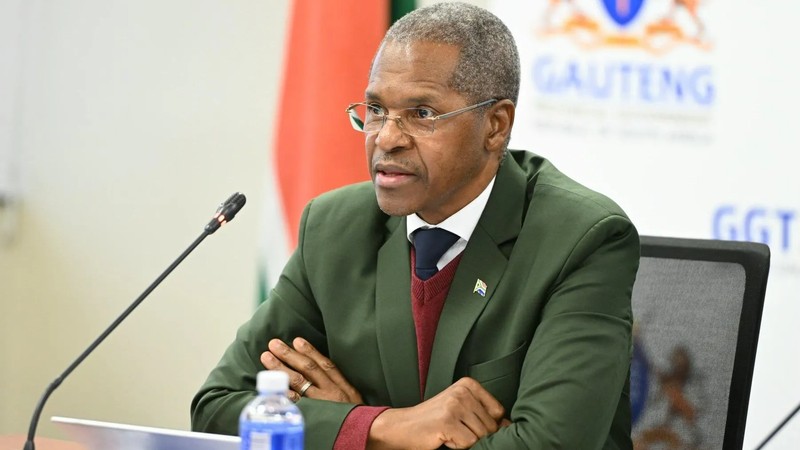
One hundred municipalities across South Africa have formally adopted the Code for Ethical Leadership in Local Government. That’s a headline worth pausing on. For a country where local government has become almost synonymous with corruption, mismanagement and service delivery failure, this moment carries real weight — but only if the commitment holds. The central question isn’t whether the Code exists. It’s whether it will actually change anything on the ground for the millions of young South Africans who depend on functional municipalities every single day.
The thesis here is straightforward: this initiative is genuinely significant, but its value is entirely conditional. A code without enforcement is decoration. What matters now is implementation, accountability, and political will.
Minister Velenkosini Hlabisa of the Department of Cooperative Governance and Traditional Affairs (CoGTA) welcomed the milestone, calling it “a positive development in collaborative efforts to ensure ethical and accountable leadership.” The Code was launched at the Summit on Ethical Leadership in Local Government held in Gauteng on 1 March 2024, and is the product of a partnership between The Ethics Institute, the Department of Cooperative Governance, the South African Local Government Association (SALGA), and the Moral Regeneration Movement.
It didn’t emerge from nowhere. The Code is rooted in the Local Government Anti-Corruption Strategy of 2015 — a strategy developed precisely because corruption at municipal level had already become a structural crisis. Nearly a decade later, that crisis has deepened. Billions in municipal funds are lost annually to fraud and mismanagement. Basic services — water, electricity, sanitation — collapse in communities that can least afford it. Young people in townships and rural areas bear the sharpest edge of this dysfunction. So the urgency behind this Code isn’t symbolic. It’s existential.
In October 2024, Minister Hlabisa and SALGA President Councillor Bheke Stofile signed a mutual agreement to push all municipalities toward formal adoption through official Council Resolutions. Getting 100 councils to pass that resolution, spanning all nine provinces, is not nothing. It required political coordination and institutional buy-in at a meaningful scale.
The Code applies to everyone in a position of municipal leadership — not just elected officials. That scope matters enormously. It covers political figures, councillors, traditional leaders, municipal managers, and administrative officials. This is a deliberate and necessary broadness. Corruption in local government doesn’t live only in council chambers; it runs through procurement departments, supply chains, and administrative offices. A code that only targets politicians would miss most of the problem.
It outlines clear principles and practices for ethical governance. Councils that have adopted it are now expected to develop concrete Implementation Plans to institutionalise these standards and build a genuine culture of accountability. The word “institutionalise” is key. Cultures don’t change through declarations — they change through sustained processes, consequences, and visible leadership.
Minister Hlabisa put it plainly: the Code should “inspire local government leaders to serve their communities with integrity, discipline and commitment, and enable communities to hold them accountable.” That second part — enabling communities to hold leaders accountable — is arguably the most progressive element of the entire framework. It repositions citizens, including young people, as active participants in governance rather than passive recipients of whatever their municipality delivers.
Here’s where the optimism has to be tempered. Passing a Council Resolution is the lowest bar in this process. South Africa has no shortage of policies, strategies, and frameworks that look excellent on paper and collapse in practice. The 2015 Anti-Corruption Strategy itself is proof of that — it existed for nearly a decade while corruption in local government continued to escalate. The Code’s credibility will not be built in council chambers. It will be built — or destroyed — in the months and years of implementation that follow.
The remaining municipalities that have not yet adopted the Code are a live test of political commitment. Minister Hlabisa has encouraged them to follow suit, but encouragement is not pressure. What mechanisms exist to compel adoption? What consequences follow for municipalities that adopt the Code but produce no Implementation Plan? These questions remain open, and they are the right questions to be asking right now.
For young South Africans — who are statistically the most affected by unemployment, poor infrastructure, and failing public services — this isn’t an abstract governance debate. It’s about whether the municipality that controls your water supply, your local clinic, your roads, is run by people who are genuinely accountable or by people who have simply signed another document.
The Code is accessible through the CoGTA website at www.cogta.gov.za and The Ethics Institute at www.tei.org.za/lgeli. That transparency is a start. But access to a document has never, on its own, changed a culture. What comes next — the implementation plans, the oversight, the consequences — will determine whether this milestone becomes a turning point or just another footnote in South Africa’s long governance crisis.



