Physical Address
304 North Cardinal St.
Dorchester Center, MA 02124
Physical Address
304 North Cardinal St.
Dorchester Center, MA 02124

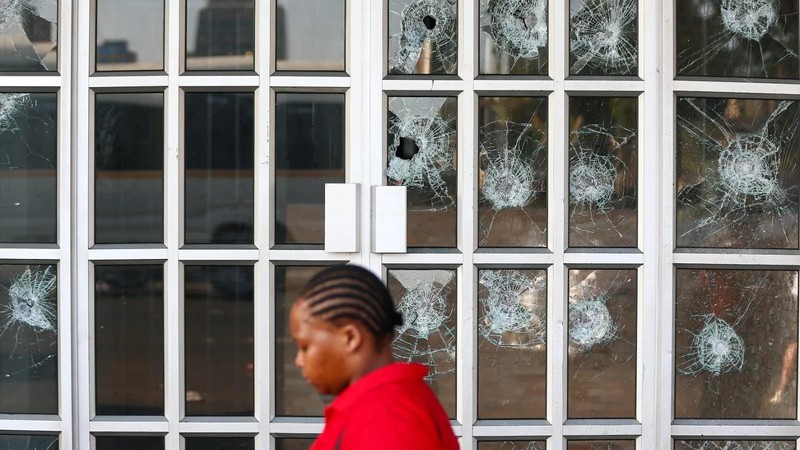
KwaZulu-Natal police fired tear gas, stun grenades and rubber bullets on Friday as large crowds of anti-immigration protesters returned to the streets of Durban, a day after some of the city’s worst civil unrest in recent memory. Officers from the South African Police Service, reinforced by troops from the South African National Defence Force (SANDF), moved to contain demonstrators who had already left a trail of destruction across the central business district on Thursday. The government scrambled to restore calm while navigating a deeply charged political situation that touches on identity, belonging and the right to protest in post-apartheid South Africa.
Police spokesperson Colonel Robert Netshiunda issued a statement Friday evening pushing back against claims that officers had simply stood by while criminal acts unfolded around them. “Police wish to set the record straight that what is unfolding is a crowd management situation,” the statement read. Netshiunda confirmed that additional resources were being redeployed from across KwaZulu-Natal to reinforce ground units in Durban, and that intelligence officers were actively working to identify persons of interest for later arrest. The force said it was committed to applying the minimum legal force necessary — a careful balancing act between protecting property and honouring the constitutional right to demonstrate.
Thursday’s protests were brutal in their impact. Fourteen vehicles were set alight on Dr Pixley kaSeme Street, their burnt-out shells still standing on Friday as a grim reminder of the previous day’s violence. Many foreign-owned shops in the CBD kept their shutters firmly down. On Friday, more than 100 people marched along Dr Yusuf Dadoo Street, formerly known as Grey Street, as armed soldiers patrolled alongside police officers. The situation remained volatile throughout the day, with a house in the Berea area set alight Friday afternoon, reportedly believed to have been used for prostitution and drug dealing.
The Durban Chamber of Commerce and Industry NPC condemned the violence in no uncertain terms, warning that sustained unrest in eThekwini would carry lasting economic consequences for a city already struggling with unemployment and sluggish growth. The closure of businesses, the destruction of property and the deployment of soldiers to city streets all paint a picture of an urban centre under serious pressure — and the economic ripple effects will be felt far beyond the CBD.
The protests were not spontaneous. The March and March movement, joined by residents and several political parties, had initially marched to the Department of Home Affairs offices on Church Street, their grievances centred on the belief that foreign nationals were being prioritised over South African citizens when accessing government services. The demonstration then spilled into the broader CBD, where it turned violent. Protesters demanded the repatriation of undocumented foreign nationals and an immediate halt to asylum applications — demands that reflect a broader, simmering frustration with immigration policy and the state’s capacity to deliver services to its own people.
At the heart of the tension was a Home Affairs directive on asylum applications, issued in the wake of a Constitutional Court ruling. The government announced on Friday that it had withdrawn the directive — a significant concession that came as the streets were still burning. Whether that move will be enough to de-escalate the situation remains to be seen, but it signals that authorities are acutely aware of how explosive the political mood has become around immigration and access to state resources.
What is unfolding in Durban is not simply a law-and-order problem. It is a symptom of deep structural inequalities, a youth unemployment crisis and a political climate in which scapegoating of foreign nationals has found fertile ground. The images of burning vehicles and shuttered shops, of soldiers patrolling streets in a democratic South Africa, demand serious reflection. For young South Africans watching this unfold — whether in KwaZulu-Natal or across the country — the events in Durban raise urgent questions about who the state serves, how economic frustration gets channelled, and what kind of society is being built three decades after apartheid’s end.



