Physical Address
304 North Cardinal St.
Dorchester Center, MA 02124
Physical Address
304 North Cardinal St.
Dorchester Center, MA 02124

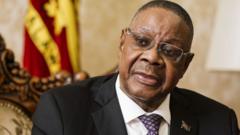
Malawi is burning — figuratively and literally — and its president is not there to see it.
President Peter Mutharika, 86 years old and back in power since October last year after defeating former president Lazarus Chakwera, left Malawi on 6 October for what his government described as a private visit to South Africa. This is his fifth such trip this year alone, each one shrouded in minimal official communication and growing public unease. Back home, Malawians are queuing for hours at petrol stations that may or may not have fuel, enduring rolling electricity blackouts, and finding hospital shelves stripped of essential medicines — all while a severe foreign currency shortage chokes the economy and drives up transport costs.
The Malawi Congress Party (MCP), the main opposition force, has broken its silence with pointed urgency. On Thursday, MCP campaign director Moses Kunkuyu stood before journalists in the capital Lilongwe and made clear that the issue was not Mutharika’s right to travel — it was the silence that followed him out of the country. “The issue is not that the president has traveled,” Kunkuyu said plainly. “The issue is that people are suffering and want reassurance that somebody is in charge.” The MCP has called on Vice-President Jane Ansah to step forward and address the nation directly, arguing that Malawians deserve to know who is managing their country’s affairs during a moment of compounding crises.
Information Minister Shadric Namalomba has pushed back hard, insisting that no leadership vacuum exists. “A state president is always in charge at any time, anywhere,” he told local media, framing the opposition’s concerns as politically motivated rather than genuinely civic. When pressed on the nature of the trip, his answer was blunt and revealing in its brevity: “A private trip is private.” He went further, accusing the MCP of exploiting crises that he claims their own administration created during its time in power, delivering what amounted to a sharp rebuke — “May I request them to seal their mouths as we address the problems they miserably created and failed to solve.”
Speculation about Mutharika’s health has been circulating on social media, with some reports claiming he had travelled onward from South Africa to India for medical treatment. The government moved quickly to deny this. Chief Secretary Justin Saidi confirmed the president remained in South Africa and urged the public not to spread unverified information. Mutharika himself has previously dismissed health-related speculation as “silly and laughable,” insisting he is well. Still, the opacity surrounding each trip feeds the rumour mill in ways that more transparent communication could easily prevent.
One concrete consequence of the president’s absence came into focus on Thursday, when Mutharika delegated the trade minister to lead Malawi’s delegation to the Common Market for Eastern and Southern Africa (Comesa) summit in Zimbabwe — a significant regional forum where a head of state’s presence would ordinarily carry diplomatic weight. It is a small detail, but a telling one about the practical costs of prolonged presidential absence.
For the generation of Malawians between 15 and 25, this situation is not abstract — it is lived daily. It is the minibus fare that jumped because fuel costs spiralled. It is the hospital that could not treat a family member because medicines ran out. It is the rolling blackout that cut the power during a study session. The accountability question at the heart of this story — who is governing, and how transparently — is one that shapes the quality of everyday life in ways that no political statement can paper over. When a government’s instinct is to deflect rather than explain, it is young citizens who absorb the cost of that silence.
Mutharika previously governed Malawi between 2014 and 2020, and his return to power came with expectations of experienced, decisive leadership. Whether his administration can demonstrate that leadership — visibly, credibly, and soon — may well define how the next generation of Malawian voters remembers this chapter.



