Physical Address
304 North Cardinal St.
Dorchester Center, MA 02124
Physical Address
304 North Cardinal St.
Dorchester Center, MA 02124

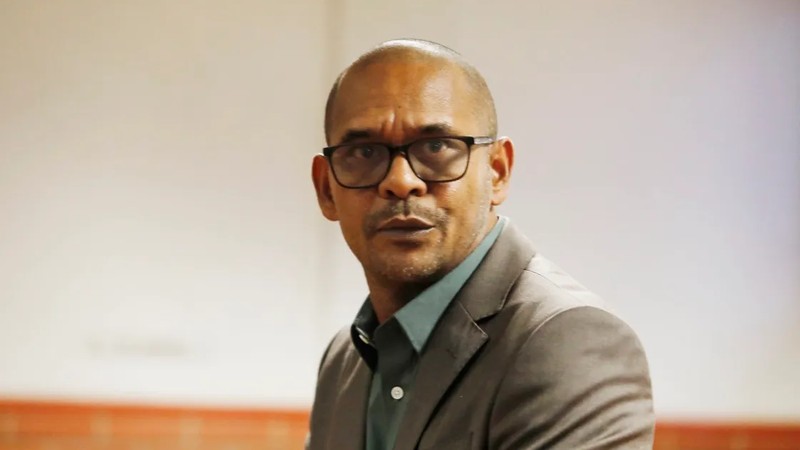
South African MP Fadiel Adams is suspended, facing fraud charges, and tangled in a presidential impeachment inquiry. For a politician who leads a minor party, he has managed to land himself at the centre of some very major storms.
It did not start here. Earlier last year, Adams, leader of the National Coloured Congress (NCC) and a sitting Member of Parliament, was already drawing attention for the wrong reasons — he received a 15-day ban from the House following a vulgar social media outburst that Parliament deemed unacceptable conduct. That incident was logged, noted, and would later come back to haunt him.
Then, months later, Adams was arrested at his residence inside the parliamentary village in Cape Town. The charges were serious: three counts of fraud and two counts of defeating the administration of justice. Prosecutors alleged he had misrepresented his status and conducted unauthorised interviews with awaiting-trial inmates at Westville Prison. Adams denied any wrongdoing, but the legal pressure around him was clearly building.
Against that backdrop, a fresh complaint landed before Parliament’s Joint Committee on Ethics and Members’ Interests. Democratic Alliance chief whip George Michalakis filed the complaint after Adams posted a screenshot on Facebook that contained the personal email address and telephone numbers of a DA staff member. Adams told the committee he had not noticed the personal details in the screenshot and apologised. The committee was unconvinced that ignorance was enough of a defence — it found that Adams had breached the Code of Ethical Conduct and Disclosure of Members’ Interests, and it treated his earlier social media violation as an aggravating factor when deciding the penalty.
The consequences came swiftly. On Monday, 3 August 2026, Parliament placed Adams on suspension under the Powers, Privileges and Immunities of Parliament and Provincial Legislatures Act. Along with the 20-day suspension — set to run until 28 August 2026 — he was ordered to receive a formal reprimand, issue an apology to Parliament, and forfeit the equivalent of 20 days’ salary and allowances. Critically, the suspension does not remove him from office; he remains an MP, just a frozen one for now.
Two days later, on Wednesday, the reality of that suspension played out publicly. Adams was absent from a meeting of Parliament’s Impeachment Committee — the body examining a Section 89 inquiry into President Cyril Ramaphosa. Committee Secretary Thembinkosi Ngema confirmed to members present that Adams had already been suspended and would not be on the platform until the ban was lifted. The committee pressed on regardless, with Chairperson Magashule Gana announcing that Advocate Thandazani Madonsela SC had been appointed as the committee’s evidence leader after a majority vote backed him. Parliament spokesperson Moloto Mothapo later confirmed the full terms of the suspension publicly.
The Ramaphosa impeachment inquiry is itself in a complicated place — a Western Cape High Court ruling has halted the hearing of oral evidence, leaving the committee doing preparatory work while the legal dust settles. Adams had been an active voice in those proceedings, which makes his absence, forced or otherwise, a notable gap.
Despite the suspension locking him out of parliamentary platforms, Adams is still expected to appear before the Madlanga Commission on 11 August, where he is scheduled to give evidence about alleged fraud and corruption involving senior Crime Intelligence officials. The commission is also expected to probe his possession and circulation of sensitive Crime Intelligence documents — documents Adams insists were anonymously delivered to his parliamentary office, and that handling them fell squarely within his duties as an MP.
For young Africans watching how political accountability works — or sometimes doesn’t — the Adams saga is a live case study. A minor-party MP at the intersection of a presidential impeachment inquiry, a corruption commission, active criminal charges, and now a parliamentary suspension, all within the span of roughly a year. The institutions are moving, slowly and imperfectly, but they are moving. Whether that ultimately means anything for Adams, or for the officials he has accused, is a question still very much open.



