Physical Address
304 North Cardinal St.
Dorchester Center, MA 02124
Physical Address
304 North Cardinal St.
Dorchester Center, MA 02124

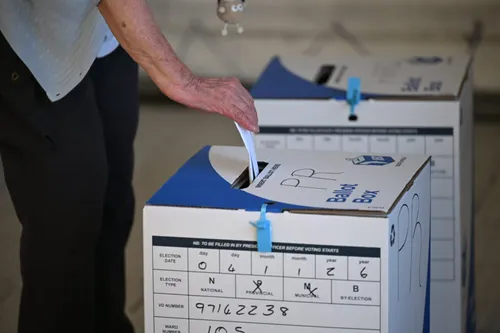
South Africa’s 2026 Local Government Elections unfolded under a shadow of violence, with police registering 57 criminal case dockets on voting day alone and confirming that 21 murder cases classified as politically motivated had been recorded across the election period. The figures paint a sobering picture of the security challenges surrounding one of the country’s most consequential democratic exercises in recent years.
Lieutenant-General Tebello Mosikili, Chairperson of the National Joint Operational and Intelligence Structure (NATJOINTS), disclosed the statistics during a Security Cluster briefing held at the National Results Operations Centre in Midrand on Thursday, November 5. She confirmed that 85 incidents were reported across the country on November 4, the main voting day, producing 57 criminal case dockets and 27 arrests.
Of those 57 cases, 32 involved alleged contraventions of the Electoral Act, with the remainder spanning assault, intimidation, malicious damage to property, theft, crimen injuria, drunk and disorderly conduct, public violence, business burglary and fraud. The breadth of offences reflects both organised electoral misconduct and opportunistic criminality that tends to spike around high-stakes political events.
KwaZulu-Natal recorded the highest number of criminal cases on voting day, with 15, followed by Limpopo with 11, the Eastern Cape with 10 and Gauteng with eight. The Western Cape recorded four cases, Mpumalanga and North West three each, the Free State two and the Northern Cape one. On the arrests side, Gauteng led with seven suspects apprehended, followed by KwaZulu-Natal with six.
The most alarming figure from the briefing was the tally of politically motivated killings. “To date, we have registered 21 murder cases which are politically motivated in relation to the election period,” Mosikili stated plainly. These cases span multiple provinces and reflect a pattern of electoral violence that security authorities had already flagged before polling began.
Among the confirmed incidents, a MK Party member was murdered in KwaZulu-Natal. In Bushbuckridge, Mpumalanga, a 57-year-old man was shot dead in the early hours of November 5. A separate stabbing in Polokwane, Limpopo, targeted a 31-year-old man at a park opposite Florapark Comprehensive School, though a 35-year-old suspect was swiftly arrested. Another man was attacked and killed while walking home in KwaZulu-Natal on voting day itself.
Two additional deaths fell outside the direct violence category but still cast a pall over proceedings. An elderly woman collapsed and died upon arrival at a hospital in Shallcross, KwaZulu-Natal, and an IEC official died following a similar incident at Buhrmansdrift in the Ngaka Modiri Molema District, North West, on November 2. Police confirmed they were processing murder cases that occurred both outside voting stations and outside voting hours.
The violence and criminality did not begin on the main voting day. During the special voting period on November 2 and 3, police recorded 65 criminal case dockets and made 32 arrests. KwaZulu-Natal again topped the provincial breakdown with 16 cases, while Limpopo followed with 13. The Eastern Cape and Western Cape each recorded eight cases, Gauteng seven and Mpumalanga five.
Limpopo recorded the highest number of arrests during special voting, with 11 suspects apprehended, followed by KwaZulu-Natal with eight. Combined with the 27 arrests on the main voting day, the total number of suspects arrested across the entire election period reached 59.
Mosikili was measured but firm in her assessment of law enforcement’s performance. She noted that coordinated deployments kept the voting environment largely safe and that planned marches and protests across provinces did not materialise. Police also acted against a KwaZulu-Natal officer who arrived at a voting station in a vehicle displaying political party branding, a reminder that misconduct within the ranks is also being monitored.
“These interventions reinforce a clear position that the electoral environment is protected by the rule of law, and intimidation, violence, electoral misconduct and criminality will not be tolerated,” Mosikili said. She added that no individual stands above the law, a statement carrying particular weight given the politically connected nature of some of the incidents under investigation.
As vote counting, reconciliation and verification continue nationally, NATJOINTS has confirmed it will maintain its full security posture until the elections are formally concluded. The focus now shifts to protecting voting materials, securing results operations and ensuring the integrity of the results-management process. For a generation of young South Africans watching these elections closely, the message from the state is clear: the democratic process will be defended, whatever the cost.



