Physical Address
304 North Cardinal St.
Dorchester Center, MA 02124
Physical Address
304 North Cardinal St.
Dorchester Center, MA 02124

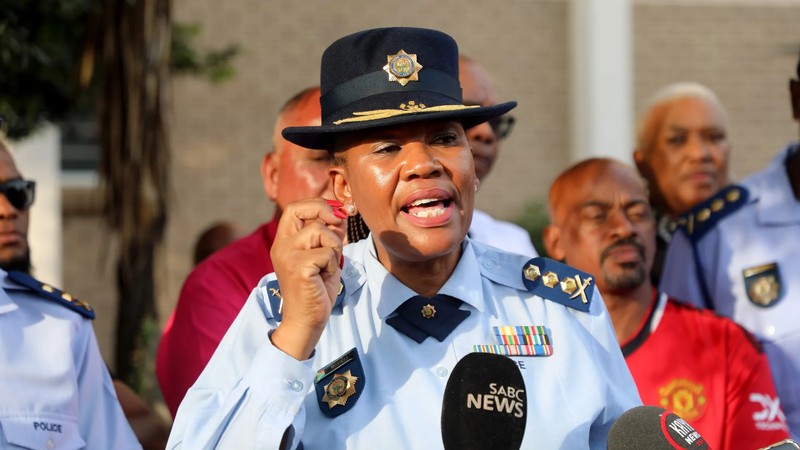
Seven arrests. Over 400 suspects nabbed since 2018. And a warning so direct it leaves no room for doubt.
With South Africa’s Local Government Elections locked in for 4 November 2026, the country’s top policing authority is making one thing crystal clear: anyone thinking about using violence to tip the political scales will be hunted down. Lieutenant General Tebello Mosikili, Deputy National Commissioner for Policing and Co-Chairperson of the National Joint Operational and Intelligence Structure (NATJOINTS), stepped before journalists in Pretoria this week to deliver a message that was equal parts warning and promise.
“We are issuing a stern warning to everyone who is planning attacks, assassination or acts of violence for political gain,” Mosikili said, her words carrying the weight of a security apparatus already stretched across all nine provinces. The stakes are real. Across the country, political party members and local councillors have been losing their lives in what investigators are treating as targeted, politically motivated murders — and the public has been watching, and worrying.
The cases already under investigation read like a map of South Africa’s most politically volatile flashpoints. Two MK Party representatives and two EFF members killed in Gauteng. Two ANC councillors murdered in the Eastern Cape and KwaZulu-Natal. A Democratic Alliance ward candidate shot dead in the Western Cape. These are not statistics from a distant past — they are open wounds in communities that are supposed to be preparing to vote, not to mourn.
So far, seven suspects have been arrested in connection with these killings. But the broader enforcement machinery runs much deeper. Since its founding in 2018, the Political Killings Task Team (PKTT) — a multidisciplinary, multisectoral unit built specifically to tackle this crisis — has arrested more than 400 suspects, including over 180 alleged hitmen linked to the murders of councillors, political leaders and party members. Mosikili pointed to that record not as a boast, but as a demonstration of resolve: no matter how long an investigation takes, the task team gets there.
NATJOINTS has built its electoral security strategy around five operational pillars. Intelligence collection and analysis sits at the foundation, feeding real-time information into operations on the ground. From there, the framework expands into visible policing, protection of election infrastructure, rapid response capability, and crowd management — all tightly coordinated with the Independent Electoral Commission (IEC) and other key stakeholders. Mosikili confirmed that the recent voter registration period was deliberately used as a live rehearsal, stress-testing the security framework before the real thing arrives in November.
For young South Africans — many of whom will be voting for the first time in these elections — the violence surrounding local government politics is not an abstract concern. Ward councillors are the closest point of contact between government and community. When those figures are assassinated, or when candidates are intimidated into stepping back, it is ordinary people who lose a voice. The right to vote only means something when the environment around it is safe, and that is precisely what law enforcement is now being asked to guarantee.
Mosikili’s message to would-be perpetrators was unambiguous: arrest, prosecution, and lengthy prison sentences await those convicted of politically motivated violence. The machinery is already in motion. The question now is whether the warning lands — and whether South Africa can arrive at November with its democratic process intact.



