Physical Address
304 North Cardinal St.
Dorchester Center, MA 02124
Physical Address
304 North Cardinal St.
Dorchester Center, MA 02124

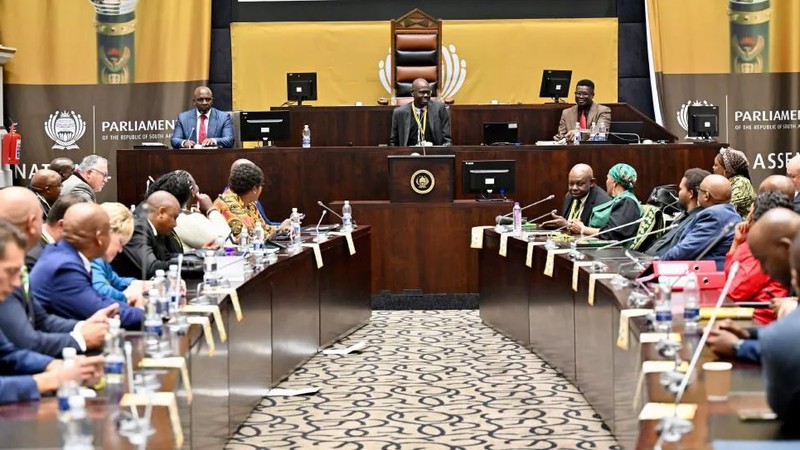
At the heart of South Africa’s most politically charged constitutional saga sits a simple but explosive question: should President Cyril Ramaphosa be removed from office? The Section 89 inquiry — the formal parliamentary process for impeaching a sitting president — was triggered by the so-called Phala Phala scandal, in which more than half a million US dollars were stolen from Ramaphosa’s private game farm in Limpopo in February 2020. What made the story detonate politically was not just the theft itself, but the serious questions it raised about whether the president had concealed the incident and potentially misused state resources to investigate it quietly. An independent panel chaired by former Chief Justice Sandile Ngcobo concluded in 2022 that Ramaphosa did indeed have a case to answer — and that finding set the parliamentary wheels in motion.
For young South Africans already exhausted by years of state capture scandals and elite impunity, the inquiry represents something rare: a constitutional mechanism designed to hold even the most powerful person in the country accountable. Whether it actually delivers on that promise is a very different question — and right now, the process is tangled in a web of legal battles that has brought it to a near-complete standstill.
The short answer is that Ramaphosa himself went to court to stop it. In July, the president secured an interim interdict from the Western Cape High Court, effectively freezing the committee’s public hearings while he mounts a legal challenge against the Ngcobo panel’s report. That challenge questions the legitimacy of the findings that put him in the committee’s crosshairs in the first place. Until the High Court rules on that matter, the impeachment committee cannot proceed to the public-hearing stage — the very phase where evidence would be tested and witnesses questioned in full view of the public.
But the legal complications do not stop there. The committee has also found itself embroiled in a separate controversy over its own internal decisions, specifically over who should lead the gathering of evidence when hearings eventually resume. This has opened yet another front in the legal battle, and it is this dispute that dominated Wednesday’s session.
The committee had previously recommended Advocate Thandazani Madonsela SC as its evidence leader — the legal professional responsible for presenting and interrogating evidence during the inquiry. That recommendation was then withdrawn, a move that immediately drew fierce criticism and, crucially, legal action. Both the Economic Freedom Fighters (EFF) and the African Legal Professionals Association approached the Western Cape High Court this week, asking it to set aside the committee’s decision to pull Madonsela’s name. Their argument, in essence, is that the withdrawal was unlawful and undermines the integrity of the entire process.
On Wednesday, the committee voted — 19 to nine — to formally oppose both court applications. Chair Makashule Gana confirmed the position plainly after the vote: “We are going to oppose the two applications.” The committee also agreed, by the same margin, to hold off on recommending any new evidence leader until the legal challenges have been resolved, meaning the search for a replacement is frozen for the foreseeable future.
The voting breakdown reveals the familiar fault lines of South African parliamentary politics. The ANC, DA, IFP, Patriotic Alliance, Freedom Front Plus, ACDP and Al Jama-ah all voted to oppose the court applications — forming the majority bloc that carried the 19-to-nine decision. On the other side, the MK Party, EFF, ActionSA, BOSA, ATM and UAT voted to abide by whatever the court decides, rather than actively contest the applications. That distinction matters: voting to “abide” is not the same as supporting the applicants, but it signals a reluctance to spend parliamentary resources defending a decision that several parties view as problematic.
ANC MP Cameron Dugmore defended the majority’s position by pointing to the legal opinion the committee had received, arguing that it had been presented with two lawful options and had simply chosen one of them. “We acted fairly, we acted rationally,” he said — a framing that his critics in the minority clearly do not accept. DA MP George Michalakis added a broader institutional argument, warning that a court ruling in favour of the applicants could set a dangerous precedent. “A judgement in favour of the applicants would have serious repercussions for parliamentary procedure and the powers of committees,” he said, suggesting the stakes extend well beyond the Phala Phala inquiry itself.
In practical terms, the inquiry is now frozen on multiple levels simultaneously: public hearings are blocked by Ramaphosa’s interdict, the search for an evidence leader is suspended pending the new court challenges, and the committee is now preparing to fight two separate legal battles at once. The timeline for any resolution remains deeply uncertain, and the prospect of actual public accountability hearings feels more distant than ever.
But the broader significance of this saga goes beyond South Africa’s borders. Across the continent, from Nairobi to Dakar, the question of whether constitutional accountability mechanisms can withstand pressure from powerful executives is one of the defining political challenges of this generation. When a sitting president can deploy legal resources to slow-walk a parliamentary inquiry, it raises urgent questions about the design of these systems and who they ultimately serve. For a generation of Africans demanding governance that is transparent, responsive and genuinely accountable, the Phala Phala saga is not just a South African story — it is a stress test of democratic institutions that everyone invested in the continent’s future should be watching closely.



