Physical Address
304 North Cardinal St.
Dorchester Center, MA 02124
Physical Address
304 North Cardinal St.
Dorchester Center, MA 02124

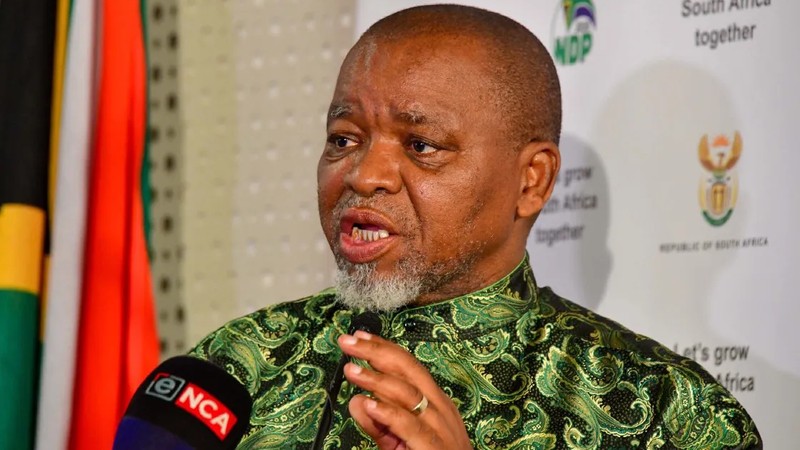
A video clip shared widely on social media has put ANC national chairperson Gwede Mantashe at the centre of a heated political storm, just weeks ahead of the 4 November local government elections. The footage, filmed during a door-to-door campaign in Freedom Park, shows Mantashe asking a resident whether her grandchildren receive the Child Support Grant — and when she confirms they do, he follows up with a pointed question: “Who is giving them that?” The clip spread fast, and the backlash was immediate, with critics accusing the senior ANC figure of using government benefits to pressure voters into backing the ruling party.
Mantashe did not stay quiet for long. Appearing on Newzroom Afrika, he pushed back firmly against the accusations, arguing that reminding citizens of what the ANC has delivered over 32 years in government is not vote-buying — it is simply holding up a record. His defence raises a question that matters deeply to young South Africans navigating a country still scarred by apartheid’s economic legacy: where exactly is the line between political accountability and political manipulation?
During his interview, Mantashe grounded his argument in historical context. He pointed out that the Child Support Grant did not exist under apartheid, describing it as a deliberate ANC policy designed to fight malnutrition among the country’s most vulnerable children. He made a similar case for RDP housing, positioning it as a post-1994 transformation of a system that had systematically excluded Black South Africans from decent shelter. On social grants more broadly, he stressed that the ANC government equalised access across racial lines — a significant shift from the apartheid-era model that distributed state support unequally.
Mantashe also raised a point that cuts both ways politically. He acknowledged that a different party in power could choose to increase social grants — or eliminate them entirely. That framing is worth sitting with, because it simultaneously defends the ANC’s legacy and implicitly warns voters about what could change under alternative governance. Whether that reads as honest political education or a subtle threat depends heavily on who is listening and how much they feel they have to lose.
The core accusation against Mantashe is one of emotional blackmail — the idea that by linking government services to ANC governance in front of grant recipients, he was creating a psychological pressure to vote a certain way. Mantashe rejected this framing outright, explaining that the resident herself had asked what she would receive in exchange for her vote, and that he used the moment to clarify that government services are not transactional. “We are not buying votes; we are servicing society,” he said, a line that his supporters have rallied around and his critics have called a deflection.
The distinction Mantashe draws — between delivering services and conditioning votes — is legally and ethically significant. Vote-buying, in its strict legal sense, involves offering material goods or money directly in exchange for a vote. What Mantashe did sits in a grayer zone: reminding beneficiaries of existing services in a campaign context. That gray zone is exactly where political power operates most effectively, and it is also where young voters need to be most critically alert. Understanding the difference between a party’s legitimate record and the weaponisation of that record is one of the most important political skills a citizen can develop.
Mantashe’s broader defence — that beneficiaries of government housing worth R250,000 should recognise the value of what they have received — touches on a real tension in South African political life. Gratitude and political loyalty are not the same thing, and a functioning democracy depends on citizens being able to hold governments accountable regardless of what services they receive. The ANC’s record on housing, education and social assistance is real, but so are the persistent failures in service delivery, unemployment and corruption that have defined much of the post-apartheid era.
For the generation of South Africans aged 15 to 25, many of whom have grown up entirely under ANC governance, this controversy is a live lesson in how political parties use history, identity and dependency to compete for loyalty. Mantashe insists the ANC will serve society no matter who voters ultimately support — a statement that sounds inclusive but arrives in the context of a campaign designed to maximise ANC votes. As the 4 November elections approach, the debate over where service delivery ends and political pressure begins is one that every young voter deserves to engage with eyes wide open.



