Physical Address
304 North Cardinal St.
Dorchester Center, MA 02124
Physical Address
304 North Cardinal St.
Dorchester Center, MA 02124

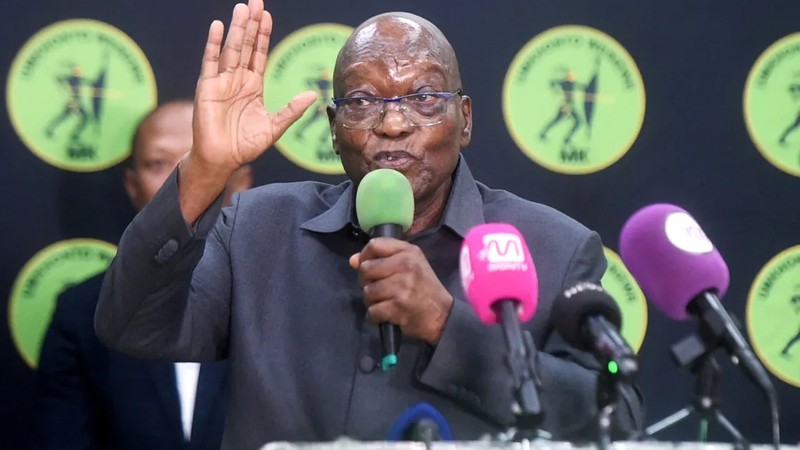
Jacob Zuma is in hospital. That single fact has sent ripples across South African politics, forcing an uncomfortable question into the open: what happens to the uMkhonto weSizwe Party when its founder is no longer at the helm?
Zuma was admitted to Netcare St Anne’s Hospital in Pietermaritzburg last week. The MK Party’s national office moved quickly to calm nerves, describing the stay as a routine check-up — something Zuma reportedly undergoes twice a year — and insisting he was “healthy and in good spirits.” His son and the party’s first deputy president, Duduzane Zuma, reinforced that message at a rally last Friday, promising supporters that his father would lead the party into the 2029 general elections.
Yet reassurances rarely silence speculation. Reports that Zuma’s condition was more serious than officially acknowledged began circulating almost immediately, and the political class started doing what it always does: reading the tea leaves.
Minister in the Presidency Khumbudzo Ntshavheni stepped into the conversation on Sunday, confirming that President Cyril Ramaphosa had assigned the Surgeon General to oversee Zuma’s care. Her main message, though, was one of restraint. “It’s only his medical doctors that can pronounce on his health status and health conditions with his consent,” she said, pushing back firmly against demands for official updates.
Ntshavheni’s intervention matters beyond the medical details. It signals that the state is watching closely, even if publicly it insists this is simply about a former president’s welfare. The fact that she had to address the matter at all tells you something about how charged the atmosphere has become.
The MK Party is, by almost every measure, a vehicle built around one man. Zuma is its founder, its symbol, and its primary electoral draw. The party’s rise has been dramatic — it shook South Africa’s political landscape in the 2024 elections — but that rise was inseparable from Zuma’s personal brand and the loyalty he commands in KwaZulu-Natal.
Duduzane Zuma’s positioning as first deputy president is not accidental. It plants a succession narrative, a dynastic one, firmly in the public imagination. Whether the party’s structures and its base would rally behind him the way they rally behind his father is a genuinely open question. Loyalty to a name is not always the same as loyalty to a person.
Then there is the military angle. Some reports linked a recent military deployment to KwaZulu-Natal — officially tied to violent anti-immigration protests in Durban — to contingency planning around Zuma’s health. The MK Party’s KwaZulu-Natal leadership rejected that framing outright, warning that connecting the deployment to Zuma’s condition without solid evidence risked inflaming public anxiety at an already tense moment.
For young South Africans watching this unfold, the stakes are real. Political instability in KwaZulu-Natal has economic consequences. It affects investment, employment, and the everyday security of millions of people in the region. The question of who leads the MK Party after Zuma is not just an internal party matter — it is a question about what kind of political force will shape the province, and the country, in the years ahead.



