Physical Address
304 North Cardinal St.
Dorchester Center, MA 02124
Physical Address
304 North Cardinal St.
Dorchester Center, MA 02124

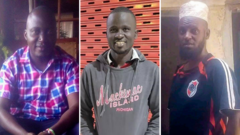
Three people came to say goodbye. They left in body bags — shot dead by police at a government-organised event. A BBC Africa Eye investigation has now confirmed what many feared: the mourners killed at Raila Odinga’s national farewell on 16 October 2025 were nowhere near the violence that triggered the gunfire.
Odinga, Kenya’s longest-serving opposition leader and former prime minister, died on 15 October 2025 at the age of 80 while receiving medical treatment in India. His death sent shockwaves across the country. Thousands flooded Nairobi’s Jomo Kenyatta International Airport just to witness his body being flown home — a spontaneous, emotional outpouring that signalled the scale of what was coming.
The body had originally been scheduled to lie in state at parliament. But the sheer volume of mourners and mounting fears of a security breach forced officials into a last-minute decision: the venue would shift to Kasarani Stadium, a 48,000-capacity arena on the outskirts of Nairobi. Organisers had almost no time to secure the space, and thousands poured onto the pitch and into the stands unchecked.
For hours, mourners waited in 30-degree heat with no public address system to keep them informed. The frustration was building. Eventually, a small section of the crowd began hurling objects — including plastic chairs — at officers guarding the VIP pavilion. Police responded by firing live rounds as mourners pushed toward the restricted area. Footage from across the stadium, however, showed the vast majority of the crowd remained calm and peaceful throughout.
Evans Kiche was a 40-year-old chef and the father of seven children. BBC analysis places him approximately 60 metres from the confrontation when a gunshot wound to the head killed him. Vincent Ogutu, 36, was a father of three who had not even planned to attend the event that day. He had been in central Nairobi with friends when they spotted the crowds heading toward Kasarani and decided, on impulse, to join them. He was shot in the chest and died within hours. Jidah Burka, 42, was killed by a gunshot wound to the head. Both Ogutu and Burka were positioned at least 160 metres from the VIP pavilion, in the opposite stands — far removed from any confrontation.
BBC Africa Eye went through more than 1,500 images and videos to reconstruct the timeline and establish exactly where each victim stood at the moment of the shooting. The findings are unambiguous: none of the three were involved in the clash that prompted police to open fire.
The investigation did not stop at the victims. BBC forensic analysis identified at least eight officers operating as a coordinated unit inside the stadium, dressed in tactical clothing and military camouflage, carrying assault rifles, with no visible insignia and their faces covered. Their movements and uniforms are consistent with a security layer assigned to protect President William Ruto and other VIPs. At least three officers from this unit appear to have discharged their weapons.
The BBC identified three of them as members of an elite police unit responsible for presidential protection. The investigation cannot establish with certainty which bullets killed which victim, and cannot rule out that other officers also fired inside the stadium that day.
Kenya’s Interior Minister Kipchumba Murkomen defended the police response, describing it as “restrained” given that officers had been working non-stop for many hours and were deployed to a new venue at the last minute. He acknowledged the crowd threw stones, though BBC footage only confirms plastic chairs among the projectiles — with no evidence of stones. On the question of individual accountability, Murkomen was careful: “I don’t think… somebody [was] sitting there and saying: ‘Shoot now’. It is the judgment of the police officer at the spur of the moment.”
Kenya’s National Police Service told the BBC the events of that day had “formed a fundamental learning curve for a better, more professional application in the future.” The Independent Policing Oversight Authority, or IPOA, which has been investigating the deaths for a full year, did not respond to requests for comment. No one has been held to account.
For Yvonne Akinyi, Vincent Ogutu’s widow, the anniversary of her husband’s death approaches with no answers and no justice. “The people who we look at to protect us, these are the people that cause us this pain,” she told the BBC. “These are the people that make us to become young widows in this country, young orphans in this county.”
She describes her children as orphans now, and herself as a woman trying to hold it together on the outside while carrying a wound that will not close. “I will just try to be that strong woman. Very strong. But deep inside there is a hole,” she said. “At Kasarani there were so many people, so many of them. Why him.”
That question — why him, why them — is one that Kenya’s institutions have yet to answer. A year on, the families of Evans Kiche, Vincent Ogutu and Jidah Burka are still waiting for the state to reckon with what happened when police opened fire on innocent mourners at a farewell organised in the name of the nation.



