Physical Address
304 North Cardinal St.
Dorchester Center, MA 02124
Physical Address
304 North Cardinal St.
Dorchester Center, MA 02124

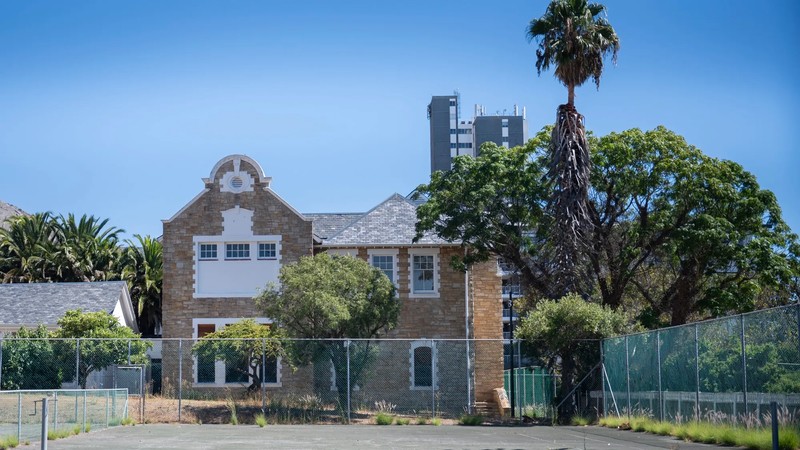
A decade-long legal fight just ended — and the verdict is damning. South Africa’s Constitutional Court has struck down the Western Cape Government’s plans for the Tafelberg school site in Sea Point, Cape Town, ruling that both the province and the City of Cape Town have consistently failed their constitutional duty to provide affordable housing in well-located urban areas. This isn’t just a property dispute. It’s a reckoning with apartheid’s unfinished business.
The story starts in 2015, when the Western Cape Government decided to sell the former Tafelberg Remedial School site — prime real estate in the wealthy suburb of Sea Point — to the Phyllis Jowell Jewish Day School for R135 million. Housing advocacy groups Ndifuna Ukwazi and Reclaim the City pushed back hard, arguing that valuable public land should serve the people who need it most, not the highest bidder. By 2020, the Western Cape High Court agreed, setting aside the sale and finding that the City and province had reinforced apartheid-era spatial inequality rather than dismantling it. That core finding was never overturned, even as the case climbed all the way to the apex court.
The Constitutional Court, in a unanimous judgment delivered by Justice Nonkosi Mhlantla, declared the province’s disposal of the Tafelberg site unlawful. The court found that officials had incorrectly declared the property surplus to government needs, and that neither budget constraints nor dependence on national funding justified the failure to house people in well-located, well-connected neighbourhoods. The ruling builds directly on the landmark Grootboom judgment of 2000, which established the state’s duty to progressively realise the right to adequate housing — but it goes further, affirming that where housing is built is just as constitutionally significant as whether it is built at all.
The court also found that the province failed to conduct a meaningful public participation process before deciding the site’s fate. That matters beyond Tafelberg. It sets a precedent that communities must have a genuine say before public land changes hands.
GOOD Party secretary-general Brett Herron, whose party welcomed the ruling, argued it dismantles a central pillar of the Democratic Alliance’s approach to public land — the idea that high property values can override constitutional obligations. He pointed to what he described as a deliberate pattern: housing investment concentrated on the Cape Flats, historically Black and Coloured areas far from economic opportunity, while formerly white suburbs remain untouched by any meaningful integration. No affordable housing, he said, has been developed in areas previously designated as White Group Areas under apartheid.
The court has now ordered the Western Cape Government to submit a sworn report to the Western Cape High Court within three months, detailing its affordable housing plans for the site and disclosing exactly how many affordable units have been delivered in Cape Town’s inner city and surrounding areas since the litigation began in 2017. That accountability mechanism is significant. It transforms the judgment from a symbolic win into a concrete demand for transparency.
Western Cape Infrastructure MEC Tertuis Simmers struck a more conciliatory tone, acknowledging that the ruling reinforces a principle the province claims to have long embraced: that the location of housing matters. He promised a forthcoming ministerial policy statement on spatial transformation and affordable housing reform. Whether that statement will match the urgency the court has demanded remains to be seen.
For young South Africans navigating a housing crisis that forces them to commute hours from the cities where they work, this ruling is personal. The Constitutional Court has made it clear — geography is not a neutral fact. It is a political choice. And that choice, when it perpetuates the spatial logic of apartheid, is unconstitutional.



