Physical Address
304 North Cardinal St.
Dorchester Center, MA 02124
Physical Address
304 North Cardinal St.
Dorchester Center, MA 02124

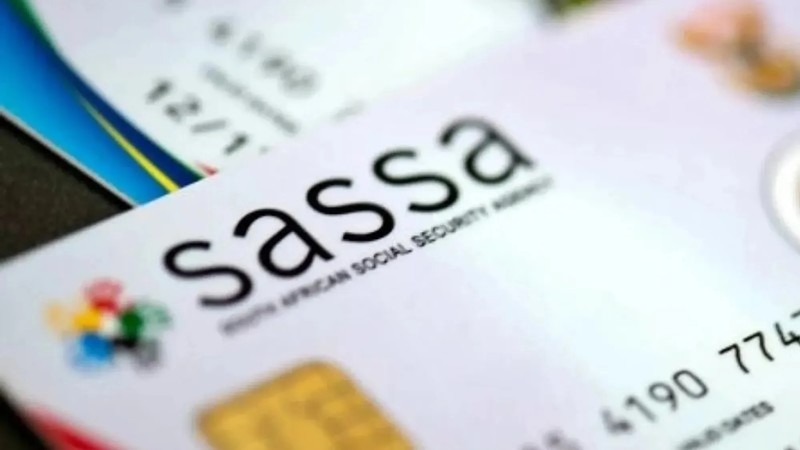
South Africa’s Social Relief of Distress (SRD) grant was designed as exactly what its name promises — a relief mechanism for those caught in the grip of economic hardship, with no income and no safety net. Administered by the South African Social Security Agency (SASSA), the R370 monthly grant targets unemployed individuals who have no other source of financial support. Yet, in the 2025/26 financial year, more than 10 million applications were rejected, raising urgent questions about whether the system is actually reaching the people it was built to serve.
For millions of young South Africans — many of whom are navigating a brutal job market with youth unemployment hovering above 45% — this grant is not a luxury or a political talking point. It is the difference between eating and going hungry, between keeping a phone line active to search for work and being completely cut off. Understanding why so many applications fail is not just an administrative curiosity; it is a matter of economic justice.
SASSA applies a strict set of eligibility criteria, and any mismatch between an applicant’s records and government databases can trigger an automatic rejection. The agency cross-references applications against multiple data sources, which means that even minor inconsistencies can result in a declined status without any human review. The speed and scale of this automated verification process is precisely what makes it both efficient and deeply problematic.
That R624 monthly income threshold is strikingly low, sitting well below South Africa’s own food poverty line, and yet it functions as an absolute cut-off. A single informal payment, a once-off transfer from a family member, or even a refund deposited into an applicant’s account can be enough to trigger a rejection — a reality that disproportionately punishes those who survive through irregular, informal economic activity, which describes a significant portion of South Africa’s youth.
What makes this situation particularly alarming is the evidence that the majority of rejections are not just harsh — they are wrong. Research conducted by the Institute for Economic Justice (IEJ), drawing on a survey of 900 excluded individuals and 58 in-depth interviews, found that an extraordinary 89.7% of monthly exclusions on average were erroneous, meaning that eligible people were being turned away by a system that had misclassified their financial situation. That figure should stop anyone in their tracks.
The IEJ’s research further revealed that 80% of rejections stem from misclassified financial status — the automated income verification system is flagging people as ineligible when they are, in fact, exactly the kind of applicant the grant was designed to support. Beyond the verification failures, the research highlights significant application barriers, with many prospective beneficiaries struggling to navigate the process due to digital access limitations and language obstacles. South Africa’s digital divide is not abstract; it is actively excluding vulnerable people from social support they are legally entitled to receive.
The dysfunction does not end at the rejection stage. Even among the approximately nine million people currently approved for the SRD grant, the IEJ found that nearly half do not actually receive their funds. Approval, it turns out, is no guarantee of payment — a reality that exposes a systemic gap between policy intent and on-the-ground delivery. Ongoing legal challenges could ultimately affect twice as many people, including those who have been approved but remain locked out of accessing their money.
If your SRD application has been rejected and you believe that decision was unfair or incorrect, you have a legal right to appeal, and you should use it. SASSA explicitly advises against simply reapplying, because the system is likely to automatically reject a follow-up application in the same way it rejected the first. The correct path is through the Independent Tribunal for Social Assistance Appeals (ITSAA), a body that operates separately from SASSA to ensure a fair and impartial review process.
To lodge an appeal, applicants need to visit the ITSAA website, provide their South African ID number and the cell phone number used during the original application, and follow the steps to submit a formal challenge to the decision. Crucially, applicants have a window of 90 days from the date of rejection to initiate this process — missing that deadline forfeits the right to appeal for that application cycle. Given the scale of erroneous rejections documented by the IEJ, using this appeals mechanism is not just a bureaucratic option; it is a meaningful act of claiming what the system owes you.
The SRD grant debate sits at the heart of a broader conversation about what kind of social contract South Africa is building for its youth, and whether the state is genuinely committed to catching those who fall through the cracks of a deeply unequal economy. When over 10 million applications are rejected in a single financial year, and independent research shows that nearly nine in ten of those exclusions are erroneous, it is impossible to frame this as a story of isolated administrative errors. It is a structural failure, operating at scale, with real human consequences.
Progressive reform of the SRD system — raising the income threshold, improving verification accuracy, expanding digital access support, and accelerating the processing of appeals — is not a radical ask. It is the minimum standard a functional welfare system should meet. For South Africa’s young people, who are both the most economically vulnerable and the most directly affected by these failures, the stakes of getting this right could not be higher.



