Physical Address
304 North Cardinal St.
Dorchester Center, MA 02124
Physical Address
304 North Cardinal St.
Dorchester Center, MA 02124

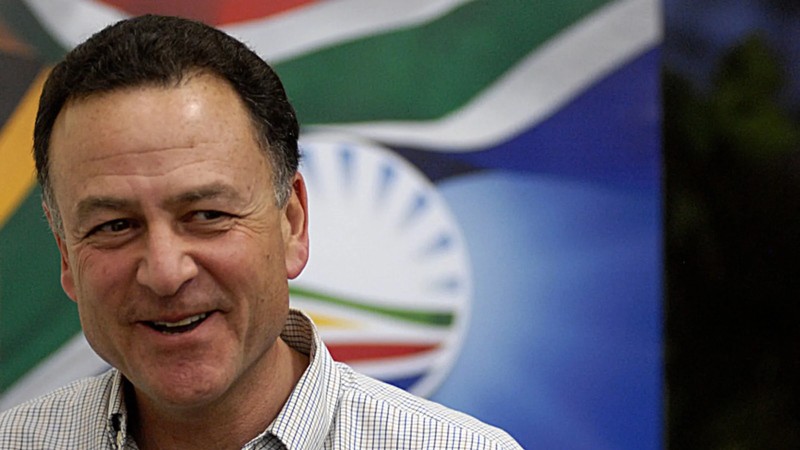
South Africa is caught up in one of its most heated political controversies in recent years, and at the centre of it sits a single question that cuts to the heart of democratic governance: where does legitimate lobbying end and dangerous political influence begin? The allegations swirling around Tony Leon’s strategic communications firm, Resolve Communications, have pulled in DA ministers, corporate giants, and even the presidency — and for young South Africans watching how power actually operates in this country, the story demands close attention.
The saga erupted when former DA leader and recently dismissed agriculture minister John Steenhuisen alleged in a News24 interview that Resolve Communications — chaired by former DA leader Tony Leon — had routinely approached him and other DA ministers to arrange meetings with corporate clients. Steenhuisen named Communications Minister Solly Malatsi, current Agriculture Minister Willie Aucamp, and himself as targets of Resolve’s outreach. The bombshell? He later discovered that some organisations represented by Resolve were among those pushing for his removal from Cabinet.
ActionSA has escalated the matter formally, lodging a complaint with the Public Protector’s Office and demanding an official investigation into Resolve’s alleged dealings with Government of National Unity ministers. ActionSA National Chairperson Michael Beaumont drew a direct and sobering parallel to South Africa’s not-so-distant experience with state capture, warning that what Resolve describes as routine lobbying looks like “something far more sinister.” The party has also announced parliamentary questions directed at all DA ministers and deputy ministers, and is calling for Malatsi to appear before parliament’s portfolio committee on communications and digital technologies.
The General Industries Workers Union of SA (GIWUSA) echoed those demands, urging the Public Protector, Parliament’s ethics structures, and law enforcement agencies to investigate Leon, Malatsi, and other DA leaders linked to the controversy. The union specifically flagged concerns that Starlink may have received privileged political access outside South Africa’s established telecommunications regulatory framework — which, if true, would represent a serious distortion of public policy in favour of private corporate interests.
President Cyril Ramaphosa weighed in with language that is impossible to ignore: “That really smacks of this type of state capture that has been talked about.” The ANC called for an independent investigation, describing the allegations as both “perturbing” and “damning.” The DA, for its part, pushed back through new leader Geordin Hill-Lewis, who argued there is nothing improper about ministers meeting stakeholders and lobby groups, pointedly noting that President Ramaphosa himself has met Elon Musk.
Leon has denied all allegations categorically and with considerable force, dismissing the claims as politically motivated and describing them as “Looney Tunes stuff” and “complete nonsense.” He insists that Resolve Communications neither directs ministers nor influences government decisions, and argues that helping a lawful business make its case to government — openly and on the record — is the precise opposite of state capture. The DA has similarly distanced itself institutionally, with spokesperson Jan de Villiers stating that questions about the conduct of private firms must be answered by those firms, not by the party.
University of KwaZulu-Natal political analyst Zakhele Ndlovu offered a sharper verdict: the DA, he said, has lost its moral high ground. Even if nothing Resolve did was strictly illegal, the party can no longer credibly position itself as the standard-bearer of clean governance and transparency. “I would not be surprised if the DA is captured just like other parties,” Ndlovu said, “as the business sector spends a lot of money trying to influence government policy in its favour.”
It is essential to be clear: the allegations against Leon, Resolve Communications, and those implicated remain unproven, and no formal findings of wrongdoing have been made. But the controversy has already done something significant — it has ripped open a conversation that South Africa has long needed to have about the absence of a formal, transparent lobbying framework, and about who really holds influence over the decisions that shape millions of lives.
For a generation that grew up watching the devastation of state capture unfold, the patterns being described here are uncomfortably familiar. Whether or not this rises to the level of illegality, the deeper question — of who gets access, who benefits, and who pays the price — is one that every young South African has both the right and the responsibility to ask.



