Physical Address
304 North Cardinal St.
Dorchester Center, MA 02124
Physical Address
304 North Cardinal St.
Dorchester Center, MA 02124

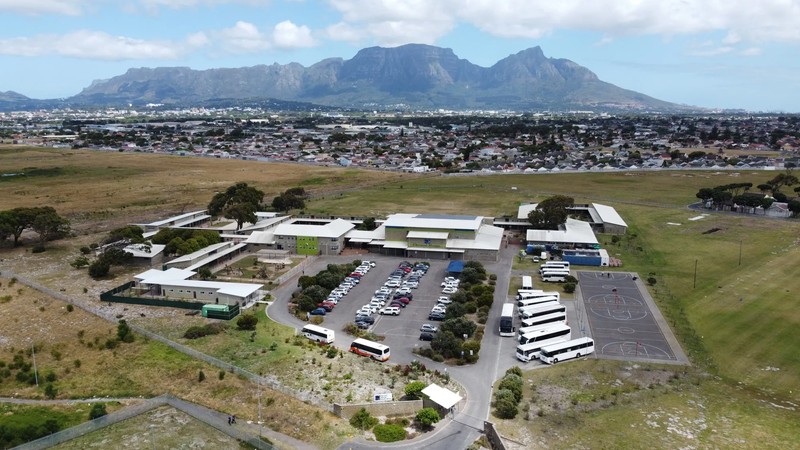
A community forged by forced removals is now watching its land quietly slip away again.
Mitchells Plain, the sprawling township on Cape Town’s Cape Flats, was built on displacement. During apartheid, thousands of coloured families were uprooted from District Six and other neighbourhoods under the Group Areas Act and resettled here — far from the city centre, far from opportunity, far from power. Decades later, the City of Cape Town is now reportedly proposing to sell off public land in the very community that was built as a dumping ground for people the apartheid state deemed inconvenient. For residents and activists, the question is blunt: who exactly benefits when public land disappears?
That question sits at the heart of an opinion piece by Faiez Jacobs — former Member of Parliament, Cape Town activist, and founder of The Transcendence Group — who argues that the proposed disposal of public land in Mitchells Plain is not just a planning issue. It is a justice issue. It is a transparency issue. And for a generation of young people growing up in one of South Africa’s most under-resourced urban areas, it may be the defining issue of their political lives.
You cannot understand Mitchells Plain without understanding what was taken first. The families relocated here did not choose this land. They were assigned to it, stripped of property rights elsewhere, and told to rebuild their lives on the sandy, wind-battered margins of the Cape Peninsula. What followed was a community that, despite everything, built schools, mosques, churches, sports clubs, and a fierce collective identity. The land they occupy is not just real estate. It carries memory.
That history makes the current moment particularly charged. When a municipality proposes selling public land in a historically dispossessed community without robust, transparent public engagement, it triggers something deeper than bureaucratic frustration. It triggers grief. It triggers rage. And for younger residents — those between 15 and 25 who have grown up in an era of promises about redress and transformation — it triggers a hard, clarifying question: was any of this ever really for us?
South Africa’s post-apartheid constitutional framework was supposed to answer that question with a resounding yes. The Constitution guarantees the right to housing, to dignity, to equality. Land reform was meant to be a cornerstone of the new democratic order. Yet the reality on the Cape Flats tells a different story — one of persistent overcrowding, inadequate services, and now, apparently, public assets being earmarked for disposal rather than community development.
Here is what makes this situation dangerous: opacity.
When public land is sold without meaningful community consultation, without clear public records of who benefits, and without a transparent process for evaluating alternative uses, it creates fertile ground for corruption and exclusion. Jacobs’ argument cuts to this nerve directly. Public land held by a municipality is not the private property of city officials or councillors. It belongs, in principle, to the people — including, critically, the people of Mitchells Plain who have the most historical and moral claim to see it used in their interest.
The City of Cape Town has faced sustained criticism over the years for how it manages land in poorer, predominantly coloured and Black communities compared to wealthier, predominantly white suburbs. Whether those criticisms reflect deliberate policy or structural neglect, the effect on the ground is the same: communities like Mitchells Plain consistently receive less, wait longer, and fight harder for basic resources. Against that backdrop, any proposal to sell public land there — rather than use it for affordable housing, community infrastructure, or green space — demands serious, public scrutiny.
Justice, in this context, is not abstract. It has a postcode.
It looks like a municipal council that holds open, accessible public meetings in Mitchells Plain before any land disposal decision is finalised — not after. It looks like a clear, published record of what land is being considered for sale, at what price, to whom, and for what purpose. It looks like a genuine assessment of whether that land could instead be used to address the community’s documented housing backlog, or to create youth centres, sports facilities, or economic infrastructure for a population that skews young and is desperately short of opportunity.
For young people in Mitchells Plain, this is not a distant policy debate. It is lived reality. Many of them are growing up in overcrowded homes, watching friends leave the area because there is nowhere affordable to stay, and navigating a job market that consistently undervalues the Cape Flats. When they see public land — their land, in principle — potentially heading toward private hands without a fight, the cynicism that follows is not irrational. It is a rational response to a system that has repeatedly told them their needs come last.
The broader African context matters here too. Across the continent, from Nairobi to Lagos to Accra, urban land has become one of the most contested political battlegrounds of the 21st century. Rapid urbanisation, population growth, and rising property values have made city land enormously valuable — and that value has a way of flowing toward those who are already powerful, unless communities organise, demand transparency, and hold their governments accountable. Mitchells Plain is not unique in facing this pressure. But its particular history of dispossession makes the stakes uniquely sharp.
This is the moment that defines what accountability means.
Jacobs’ intervention matters because it names something that too often goes unnamed in South African urban politics: the quiet, procedural ways in which public assets can be transferred out of community hands without anyone firing a shot or passing a dramatic law. The disposal of public land can happen through bureaucratic processes that are technically legal but substantively unjust — and the communities most affected are often the last to know and the least equipped to challenge it in time.
That is why transparency is not a nice-to-have. It is the foundation of democratic governance. And for a generation of young South Africans who came of age after apartheid, who were promised a different country, and who are now watching the same patterns of exclusion play out in new administrative clothing — the demand for transparency is also a demand for dignity. Mitchells Plain has already given enough to this country’s history of sacrifice. Not another hectare should go without a full, honest, public reckoning of who benefits and who bears the cost.



