Physical Address
304 North Cardinal St.
Dorchester Center, MA 02124
Physical Address
304 North Cardinal St.
Dorchester Center, MA 02124

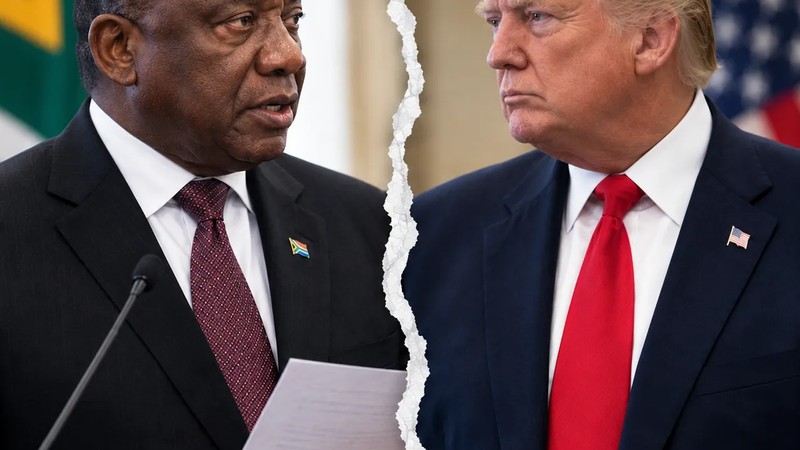
South Africa’s political class just got a serious wake-up call from Washington. US Secretary of State Marco Rubio announced on Tuesday that the United States will restrict visas for any South African politician, official, or individual deemed responsible for — or complicit in — laws and policies that allow land expropriation without compensation, or that discriminate against Afrikaners. The move signals a sharp escalation in tensions between Pretoria and Washington, and it lands squarely in the middle of one of South Africa’s most contested political debates: land reform.
Here are the key takeaways you need to understand about this developing standoff between two governments with very different ideas about justice, race, and economic redress.
The timing matters. Just two days before Rubio’s announcement, the FF Plus publicly warned that South Africa was “dragging its feet” on what the party described as five key US conditions for normalising bilateral relations. The government’s reported response — that there was “no rush” because there was “no deadline” — is now looking like a serious miscalculation, at least in terms of optics. Whether or not you agree with Washington’s framing, dismissing a superpower’s concerns with that kind of nonchalance is a diplomatic gamble.
This is where the debate gets genuinely complex, and young South Africans especially need to think critically about it. Madonsela’s intervention is significant. She reminded the public that eight African women had recently been murdered in what authorities are investigating as potentially the work of a serial killer — a crisis that has received far less international attention than farm attacks on white landowners. She argued, powerfully, that selective outrage about violence and discrimination in South Africa distorts a much more complicated reality, one shaped by decades of apartheid-engineered poverty and exclusion.
The US visa threat is real, but so is the risk of letting foreign governments define what justice looks like inside South Africa’s borders. The land question is not simple. It sits at the intersection of history, economics, race, and sovereignty — and no tweet, visa ban, or press release from Washington fully captures that complexity. South Africa’s youth, who will inherit both the land and the debt of its unresolved past, deserve a debate that is honest about all of it.



