Physical Address
304 North Cardinal St.
Dorchester Center, MA 02124
Physical Address
304 North Cardinal St.
Dorchester Center, MA 02124

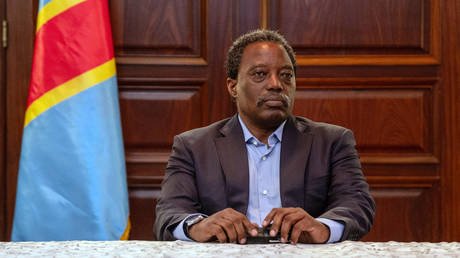
On Monday, former Congolese president Joseph Kabila officially launched a new political and military coalition called the Front for the Refoundation of the Nation (FRN), announced at his residence in Goma — the rebel-held capital of North Kivu province. This is not a minor political statement. It is a direct, armed challenge to the government of President Félix Tshisekedi, framed by coalition adviser Claude Ibalanky as a fight against “tyranny” through “any means necessary, including the use of force.”
The FRN formally replaces the Congo River Alliance (AFC), absorbing its leadership structure and aligning itself with M23, the rebel movement that has seized vast swathes of eastern Congo since its renewed offensive in early 2025. This merger of political ambition and military muscle represents one of the most significant escalations in a conflict that has already claimed thousands of lives.
Kabila stands at the top of the coalition as its leader, with AFC chief Corneille Nangaa and M23 political head Bertrand Bisimwa serving as vice presidents. The armed wing of the FRN will be commanded by Sultani Makenga, M23’s military chief — a figure long associated with some of the most intense fighting in the region. The architecture of this coalition is deliberate: it merges political legitimacy, or at least the appearance of it, with real military force on the ground.
Kabila himself is no ordinary opposition figure. He governed the Democratic Republic of Congo from 2001, following the assassination of his father President Laurent-Désiré Kabila, until Tshisekedi succeeded him in 2019. His return to rebel-held Goma last year, after years spent largely in South Africa, signalled that his political ambitions were far from finished.
The timing is layered with political calculation. On Friday, just days before the FRN’s launch, Kabila publicly accused Tshisekedi’s government of corruption, poor governance, and repeated military failures. He also took aim at Kinshasa’s critical minerals agreement with the United States, framing it as a betrayal of Congolese sovereignty — a message that resonates strongly with a younger generation increasingly sceptical of foreign deals that rarely seem to benefit ordinary citizens.
There is also a legal dimension that makes this moment particularly charged. In September last year, the High Military Court sentenced Kabila to death in absentia for treason, war crimes, and crimes against humanity, following allegations of support for M23. Kinshasa had already suspended his party’s activities and ordered his assets seized months earlier. Kabila rejected the charges as politically motivated, and from his position in rebel-held territory, he now appears to be responding with escalation rather than retreat.
The DR Congo government, the United Nations, and several Western governments have consistently accused Rwanda of backing the AFC/M23 coalition — allegations that Kigali continues to deny. The rebel coalition’s capture of Goma and Bukavu during its early 2025 offensive dramatically shifted the military balance, and the FRN’s formation deepens the political complexity of a conflict that has never been purely internal.
Washington, for its part, imposed sanctions on Kabila in April, accusing him of financing the AFC and encouraging Congolese soldiers to defect to rebel ranks. That the United States is simultaneously brokering a peace accord with Rwanda while sanctioning a key rebel figure illustrates just how tangled the international stakes have become in eastern Congo.
Eastern DR Congo has endured more than three decades of overlapping conflicts, with dozens of armed groups competing for territory and control of the region’s extraordinary mineral wealth. The human cost is staggering: according to UN agencies, 18.5 million people require humanitarian assistance this year alone. The violence has displaced entire communities, shattered infrastructure, and left a generation growing up knowing little else but instability.
Even as peace talks mediated by Qatar continue and a US-brokered accord with Rwanda remains nominally in place, fighting has not stopped. Congolese news outlet Actualite.cd reported fresh clashes between AFC/M23 forces and pro-government Wazalendo militias near Bukavu on Sunday and Monday, with at least one child wounded by gunfire and residents once again forced to flee their homes. The FRN’s launch, promising to use force “by any means necessary,” does not suggest that silence is coming any time soon.
The formation of the FRN is a reminder that the Congo crisis is not simply a military conflict — it is a political contest over who controls one of Africa’s most resource-rich nations, and who gets to define its future. Kabila’s move reframes him from a former president living in exile to an active belligerent, and it forces regional actors, from the African Union to neighbouring states, to respond to a rapidly changing reality.
For young people across the continent, what happens in eastern Congo matters beyond its borders. The exploitation of its minerals — cobalt, coltan, gold — feeds the global technology economy, including the devices that connect this generation to the world. Understanding the political forces shaping that extraction, and the human cost attached to it, is not just news literacy. It is a form of power.



