Physical Address
304 North Cardinal St.
Dorchester Center, MA 02124
Physical Address
304 North Cardinal St.
Dorchester Center, MA 02124

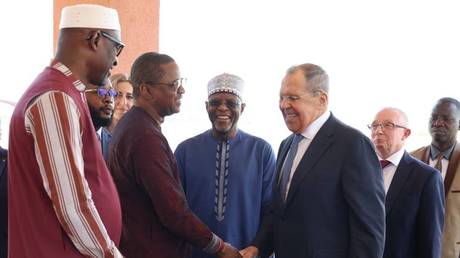
Niger’s Foreign Minister Bakary Yaou Sangare made it crystal clear on Wednesday: Russia is the Alliance of Sahel States’ “main partner” in the fight against terrorism. He made the declaration at the second ministerial meeting between Russia and the AES in Niamey — a gathering that signals just how dramatically the region’s geopolitical map has shifted.
The AES, formed in 2023 by Burkina Faso, Mali, and Niger, emerged from a wave of military coups that swept the Sahel. These three governments collectively turned their backs on France, accusing their former colonial power of failing to stop the deadly jihadist insurgencies tearing through the region. Russia stepped in — fast.
Sangare confirmed that previous agreements between the AES and Moscow are being implemented, particularly in defense. Several accords have already strengthened the military capabilities of AES armed forces on the ground. That is not abstract diplomacy — that is boots, hardware, and training.
Russian Foreign Minister Sergey Lavrov, visiting Niamey on his first official trip to Niger, framed the partnership in ideological terms too. He said Moscow and the AES share a vision of a multipolar world order and stand firmly against what he called “neo-colonial practices” imposed by Western nations. He also praised the Alliance’s progress in regional integration and its construction of a new security architecture.
On the diplomatic front, Lavrov announced that Russia has now completed its embassy presence across all three AES member states, with the opening of its mission in Niger. He also revealed that President Vladimir Putin has personally invited the leaders of Burkina Faso, Mali, and Niger to the upcoming third Russia-Africa Summit in Moscow.
This is not just talk. In April, Russian military instructors and personnel from the Africa Corps — a Russian Defense Ministry unit deployed in Mali — provided air support to help Malian forces prevent militants from seizing critical sites, including the presidential palace in Bamako. The partnership is operational, not theoretical.
Beyond the battlefield, AES members are pushing for deeper cooperation across other strategic sectors. Burkina Faso is already working with Russia’s Rosatom on civil nuclear energy under a signed memorandum, and Burkinabe students are currently training in Russia — a long-term investment in technical capacity that goes far beyond security.
Lavrov’s Niamey stop was the second leg of a broader African tour that began in Ethiopia. The visit underscores that Moscow is actively courting the continent — and that the AES is one of its most committed partners. For young Africans watching these developments, the stakes are enormous: new alliances are being forged, old colonial frameworks are being dismantled, and the question of who controls the Sahel’s future is very much open.
Whether this Russia-AES axis delivers genuine security and development — or simply replaces one form of dependency with another — remains the defining question of this generation.



