Physical Address
304 North Cardinal St.
Dorchester Center, MA 02124
Physical Address
304 North Cardinal St.
Dorchester Center, MA 02124

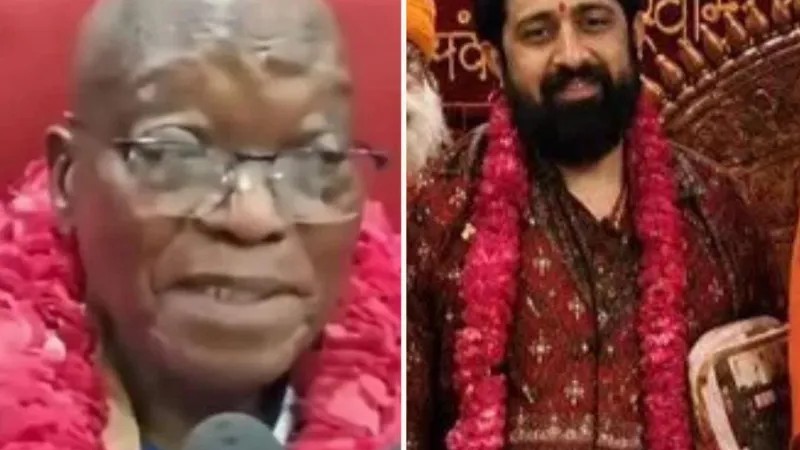
It started, as so many controversies do, with a photograph. When footage and images emerged of former South African president Jacob Zuma standing at a temple in Haridwar, India, flanked by the country’s High Commissioner to India, Ambassador Anil Sooklal, and Ajay Gupta — a member of the family at the very centre of South Africa’s State Capture scandal — the reaction was immediate and fierce. That Tuesday appearance set off a chain of events that has since pulled in Parliament, multiple government ministers, diplomatic circles, and a country still raw from years of institutionalised corruption.
To understand why this moment hit so hard, you have to go back further — all the way to 2018, when the Gupta family, accused of using their close ties to Zuma to loot state resources on a massive scale, quietly slipped out of South Africa and disappeared. The National Prosecuting Authority (NPA) eventually secured Interpol Red Notices for brothers Atul and Rajesh Gupta, and in 2022, the two were arrested in the United Arab Emirates. South Africa formally requested their extradition, but in 2023, a Dubai court rejected that application on technical grounds. As recently as January 2026, outgoing NPA head Shamila Batohi confirmed that a fresh extradition application was being prepared. The Guptas, in other words, remain a live and deeply sensitive issue for the South African state.
Against that backdrop, Zuma’s decision to fly to India and publicly reunite with Ajay Gupta — describing him to Indian media as “a brother and friend of mine” who had been “chased away by some people in South Africa” — was never going to pass without consequence. “I haven’t had time to meet with him, so I decided that I should come,” Zuma said simply, as if the political weight of that meeting were entirely invisible to him.
The story deepened significantly on Friday, when Democratic Alliance Member of Parliament Ryan Smith revealed to the parliamentary Committee on International Relations that Ambassador Sooklal had not acted alone or on personal initiative. According to Smith, it had been confirmed to the committee that Sooklal received written instructions from DIRCO — the Department of International Relations and Cooperation — to formally receive both Zuma and Ajay Gupta. The committee’s chairperson, Supra Mahumapelo, had shared this information with members through a WhatsApp group message, an informal but telling disclosure. “I am not sure how the communication was disseminated to the chairperson, but that is confirmed on our WhatsApp group,” Smith said, making clear that the confirmation was now on record.
Mahumapelo, for his part, acknowledged that he had taken the committee into confidence, confirming that the body was handling what had been framed as a private visit by Zuma. But the distinction between a “private visit” and one that apparently required formal written diplomatic instructions was precisely what Smith and others found impossible to reconcile. If the department itself authorised the reception, then the question of who knew what — and when — moves well beyond the ambassador’s desk and lands squarely at the feet of the minister.
By Saturday, DIRCO had gone conspicuously silent, offering no public response to the emerging details. The department’s quiet stood in sharp contrast to the noise building around it, as calls grew louder for accountability and a clear account of the chain of command behind Sooklal’s instructions.
International Relations and Cooperation Minister Ronald Lamola moved to address the controversy with a carefully worded position: former presidents, he explained, are entitled to certain privileges, including facilitation through diplomatic protocols. He acknowledged, however, that Zuma’s visit reflected negatively on South Africa, and confirmed that the department was awaiting an internal report into the matter before any further steps would be taken. It was a response that tried to walk a narrow line — defending protocol without defending the optics.
Deputy President Paul Mashatile offered a similar line of reasoning, insisting that it is standard practice for South African embassies and high commissions to support and accommodate former heads of state during international engagements, and that Sooklal’s conduct was consistent with those norms. The message from the executive, broadly, was: the ambassador followed the rules. But Minister in the Presidency Khumbudzo Ntshavheni struck a markedly different tone, raising pointed concerns about South Africa’s ongoing efforts to secure the extradition of the Gupta brothers and stating that government officials abroad were expected to act in line with the law — not assist individuals connected to criminal proceedings.
Ntshavheni’s remarks drew pushback from Zuma’s camp almost immediately. Foundation spokesperson Mzwanele Manyi, who had accompanied Zuma on the trip, argued that the minister was conflating two separate people: Ajay Gupta, who was present at the temple, and Atul and Rajesh Gupta, against whom the extradition proceedings are directed. “They are indeed brothers, but they are not interchangeable,” Manyi said pointedly. He also noted that the UAE court had found South Africa’s extradition request legally deficient, citing a cancelled warrant for one charge, no warrant for another, and a ruling that the alleged money laundering fell within UAE jurisdiction — details that, in Manyi’s framing, reflected poorly on the NPA rather than on Zuma.
International relations expert Kingsley Makhubela raised a concern that cut to a deeper institutional nerve: by appearing to pre-judge the situation and call for “drastic action” against Sooklal before any formal determination had been made, Ntshavheni risked sending a chilling message through the country’s diplomatic bureaucracy. “It paralyses one of the critical statecraft that the country has,” Makhubela warned. “It sends a message across the bureaucracy that you shouldn’t do certain things.” His argument was that Sooklal’s role appeared limited to providing diplomatic assistance to a former head of state — a function that is, by most readings, squarely within his mandate.
Yet Makhubela was not without criticism for Zuma himself. Even if the ambassador acted correctly, the former president carried his own responsibility to exercise political judgment. “In terms of President Zuma, I think he should have exercised some level of discretion. He knows there are these allegations against these individuals. He knows he is implicated in some of these issues. He knows these issues are being investigated; there are cases,” Makhubela said. It is a distinction worth sitting with: following protocol is not the same as making wise choices, and the two can coexist — or fail to — in the same moment.
Political analyst Sipho Seepe was less measured in his assessment of Zuma’s judgment. “He should understand that there are political ramifications. Guptas are not light in this country. The fact that you had the Justice Department try to get them back here, it is something you should have factored in in terms of how you behave,” Seepe said, capturing a frustration felt widely — that Zuma continues to move through the world as though the consequences of State Capture belong to someone else’s story.
The parliamentary committee has formally requested a report from DIRCO, and once Minister Lamola has briefed the committee, a public statement is expected to follow. The outcome of the department’s internal inquiry will be the key variable: it will determine whether Sooklal acted within his mandate, whether he exceeded it, or whether the written instructions he allegedly received shift accountability further up the chain. For a generation of young South Africans who grew up watching State Capture unfold in real time — through headlines, commission testimonies, and the slow grind of prosecutions that have yet to deliver full justice — this episode is a reminder that the story is far from over.
The Guptas left South Africa in 2018. Six years later, they have not been extradited. The man who presided over the era of State Capture is now visiting one of them abroad, with apparent diplomatic facilitation from the very state that is still trying to hold the family accountable. Whether that amounts to a protocol violation, a political miscalculation, or something more serious is precisely what the coming weeks will need to answer.



