Physical Address
304 North Cardinal St.
Dorchester Center, MA 02124
Physical Address
304 North Cardinal St.
Dorchester Center, MA 02124

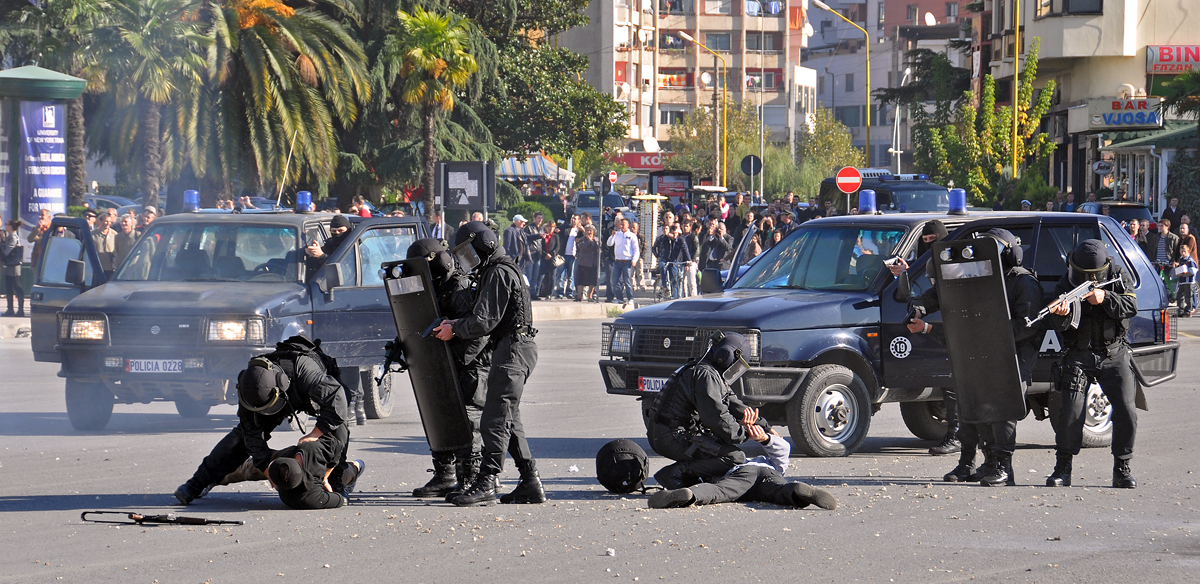
The smell of pepper spray hung over Tirana’s parliament square on Thursday as water cannons swept across the crowd. What started weeks ago with whistles, cardboard flamingos and beachside vigils had, by that afternoon, become something rawer — rocks and plastic bottles arcing through the air, police lines buckling under pressure, and the sound of shattering glass echoing through the Albanian capital.
This is the “Flamingo Revolution.” And it is no longer just about birds.
The spark was a luxury resort. In late May, barbed-wire fencing and bulldozers appeared on the beaches of Zvernec, on Albania’s southwestern Adriatic coast, signalling the start of construction on a high-end development tied to Ivanka Trump and her husband Jared Kushner. The project — first announced in 2024 — has two components: a coastal development cutting through the Narta Lagoon, a protected wildlife reserve, and a smaller resort on Sazan Island, a former communist-era military base sitting largely uninhabited just off the shore. The flamingo, one of the migratory species whose habitat sits directly in the bulldozers’ path, became the movement’s unlikely symbol.
Thousands flooded the streets. They blew whistles. They held up cardboard cut-outs of flamingos. They were, for weeks, overwhelmingly peaceful.
Then Thursday happened. Hundreds of demonstrators surged toward the parliament building in a second major confrontation this week alone, attempting to block lawmakers from entering. Riot police pushed them back, made arrests, and deployed both pepper spray and a water cannon to disperse the crowd. Nine officers were reported injured by thrown projectiles. Nearby, protesters smashed the windows of an empty police car. Interior Minister Besfort Lamallari condemned what he called “acts of vandalism and criminal violence.” It was a sharp departure from the peaceful energy that had defined the movement for weeks — though the underlying anger driving it had been building for much longer.
At the heart of that anger is Prime Minister Edi Rama, the long-serving Socialist leader whose government approved and continues to defend the resort project. Protesters on Thursday chanted “Rama has to go to jail,” demanding his resignation and turning what began as an environmental campaign into a full-throated political uprising. Rama, for his part, has not backed down. He argues that the development would be transformational for Albania as it chases EU membership and tries to break into the high-end tourism market. He has also suggested that protesters’ concerns — while “well-meaning” — are being “weaponised” by hostile actors running a coordinated online campaign.
That framing has not gone down well. And it is not just Albanians pushing back.
In June, the European Commission issued a pointed warning to Tirana, urging authorities to “act without delay” to avoid jeopardising Albania’s EU accession bid. The bloc’s environmental standards are non-negotiable for candidate countries, and building a luxury resort through a protected lagoon is exactly the kind of move that could stall years of diplomatic progress. The message from Brussels was clear: the flamingos matter, legally speaking.
What makes this story resonate beyond Albania’s borders is the collision of forces it puts on display — American political royalty, Balkan power politics, environmental protection and a generation of young people who are done being told that economic development and ecological responsibility cannot coexist. The protesters are not just fighting for a lagoon. They are fighting over what kind of future Albania gets to build, and who gets to decide.
The flamingos, for now, are still there. So are the bulldozers.



