Physical Address
304 North Cardinal St.
Dorchester Center, MA 02124
Physical Address
304 North Cardinal St.
Dorchester Center, MA 02124

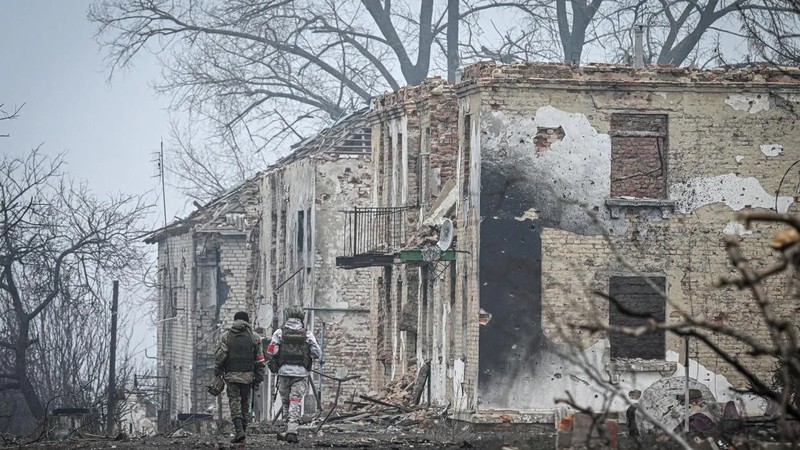
Picture a continent watching a war it did not start, funding it did not provide, and a peace deal it had no seat at the table to shape. That is Africa’s position in the Russia-Ukraine conflict — and according to a growing chorus of political thinkers across the continent, it is exactly the kind of position Africa can no longer afford to accept.
The war in Eastern Europe has dragged on long enough to expose something that seasoned observers have argued for decades: when the world’s great powers move their chess pieces, Africa tends to be the board, not the player. But a sharper question is now cutting through diplomatic circles and university lecture halls from Kinshasa to Harare — what lessons should African governments actually extract from this conflict before the next geopolitical storm arrives on their doorstep?
Luke Zunga, a political analyst, economist, and former Zimbabwe Diaspora Chairman, has been direct about what the shifting American posture toward Ukraine reveals. Speaking to CAJ News Africa, Zunga pointed out that Ukraine’s deep dependence on Washington has always rested on shaky ground. “Clearly, Ukraine relies on American support,” he said. “However, Trump understands the underlying reason for the war as an EU issue. The EU wants Ukraine to be a member, but the cost of the war is borne by the US.”
That observation cuts to the heart of a structural problem. The United States has poured substantial military and financial resources into Ukraine since the conflict erupted, while European nations have faced mounting domestic pressure over the price of continued solidarity. The result is an alliance that looks increasingly fractured — and Zunga argues that African governments should be paying close attention to that fracture.
His message is unambiguous: international agreements and political alliances do not run on goodwill. They run on interest. When a powerful country’s interests shift — or when the government it backs loses an election or falls from power — the support evaporates. Africa has lived this story before, from Cold War proxy conflicts to post-independence coups backed by foreign capitals, yet the lesson seems to require repeating.
Jean Bwasa, a Congolese expert in political science, international relations, and human rights, frames the moment with even greater urgency. For him, the Russia-Ukraine war is not just a European crisis — it is a mirror Africa needs to hold up to itself. “I strongly believe that it is about time we Africans became mature enough to understand that Westerners do not necessarily have our continent’s interests at heart,” Bwasa told CAJ News Africa.
He is not alone in that reading. Across the continent, a generation of young Africans — many of them watching the conflict unfold on their phones in real time — are asking why their governments rush to take sides in disputes that deliver them nothing. The war in Ukraine has triggered global food price shocks, disrupted grain supplies, and spiked energy costs, all of which hit African households hardest. Yet African diplomacy has often been reduced to a binary: back the West or back Russia.
Bwasa rejects that binary entirely. Drawing on historical precedents like the dissolution of the Soviet Union and the violent fragmentation of Yugoslavia, he warns that geopolitical arrangements that once seemed permanent can collapse with brutal speed — and that Africa’s own history of colonial carve-ups and Cold War manipulation should make its leaders especially wary of betting on any single bloc.
“Does the Ukrainian conflict affect us directly? I say a big no,” Bwasa stated plainly. The real question, he argues, is not which side is right but how Africa positions itself so that any engagement serves African security and development — not the ambitions of Washington, Brussels, Beijing, or Moscow.
That is a fundamentally different way of thinking about foreign policy. It demands that African governments stop measuring their diplomatic worth by how closely they align with powerful patrons and start measuring it by what they extract from those relationships. Africa holds enormous leverage — a young and rapidly growing population, vast natural resources, and consumer markets that every major power is competing to access. The continent has rarely used that leverage with the confidence it deserves.
Bwasa and Zunga both point toward the same conclusion: Africa must study the new global power dynamics emerging from this conflict and position itself as an actor, not an audience. The rise of multipolarity — a world where the United States no longer calls every shot unchallenged — actually creates space for African agency, if African leaders choose to seize it.
For young Africans between fifteen and twenty-five, this is not an abstract geopolitical debate. It is about whether the continent they inherit will still be trading its sovereignty for security guarantees that evaporate the moment a foreign election changes hands. It is about whether African universities will produce the analysts, economists, and diplomats capable of negotiating on equal terms with global powers — rather than simply implementing frameworks designed elsewhere.
The Russia-Ukraine war will eventually end. A deal will be struck, boundaries will be redrawn or frozen, and the cameras will move on. But the structural dynamics it has exposed — the transactional nature of great-power alliances, the cost of dependency, the danger of fighting someone else’s war — will remain. Africa’s window to absorb those lessons and act on them is open right now.
The question is whether its leaders, and the generation rising behind them, will walk through it.



