Physical Address
304 North Cardinal St.
Dorchester Center, MA 02124
Physical Address
304 North Cardinal St.
Dorchester Center, MA 02124

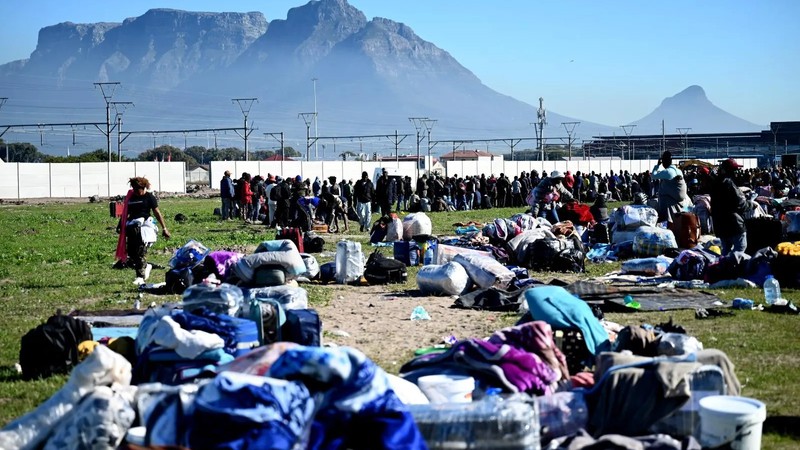
Picture this: thousands of people sleeping in an open field near a train station, no shelter overhead, no dignity on offer, no clear plan from the government supposed to be managing their departure. That is the reality that played out near the Langa train station in Epping, Cape Town, where thousands of undocumented Zimbabwean nationals found themselves stranded after the Department of Home Affairs abruptly shut down its voluntary repatriation centre. This is not a scene from a distant conflict zone — it is happening right now, in one of Africa’s most developed cities.
The broader operation to repatriate foreign nationals has since shifted its focus to Musina, a border town in Limpopo, but the transition has been anything but smooth. The Western Cape Government announced on Sunday that it had — alongside municipalities, national departments, humanitarian organisations, faith-based partners and law enforcement agencies — “successfully concluded” its role in assisting foreign nationals who voluntarily chose to return to their countries of origin. That official language, clean and self-congratulatory, clashes sharply with what was actually unfolding on the ground, where buses were pulling out without warning and people were still waiting with nowhere to go.
Dr Naeem Kathrada, Head of Medical for Gift of the Givers in the Western Cape, described a chaotic Sunday morning at the Epping Refugee Repatriation Centre. The centre had officially closed, yet people who had arrived late on Friday and Saturday were still present, caught between a system that had moved on and a border that was not yet within reach. “We tried to organise buses on Sunday, but there was a bit of confusion with the drivers and payment,” Kathrada explained. “So we had all the buses, but then the buses pulled out.” By Monday lunchtime, five buses were ready to load passengers — but the group was still waiting on the Zimbabwe Consul-General to issue travel documents before anyone could move. The bureaucracy did not pause for the people it was supposed to serve.
The voices calling out this failure are growing louder. Yeshelen Govender, spokesperson for the Siyafana Sonke Action Campaign in KwaZulu-Natal, acknowledged the work of civil society organisations that stepped in, but was unflinching in his assessment of the state’s conduct. “These migrants, documented or undocumented, have been kept in absolutely inhumane conditions,” he said. His words land hard. Because the distinction between documented and undocumented — a legal category that governments often use to justify differential treatment — apparently made no difference to the quality of care, or lack of it, that people received in these camps.
What Govender’s critique cuts to is something deeper than logistical failure. It is about political will. The South African state, he argued, has shown it can mobilise significant time and effort when the goal is the rapid removal of people from the country — but that same energy does not extend to ensuring those people are treated with basic human dignity while the process unfolds. Civil society groups like Gift of the Givers have ended up hiring buses to transport migrants from Durban to Musina, essentially performing a function that should have been the state’s responsibility from the start. That is a striking inversion of roles in a country with functioning government institutions.
Scrutiny of the process is set to intensify, with the Portfolio Committee on Home Affairs undertaking an urgent two-day oversight visit. Whether that oversight translates into accountability — or simply produces another report that collects dust — remains to be seen. For the young Zimbabweans huddled near that Epping train station, waiting on a bus, waiting on a document, waiting on a system that keeps telling them it is done with them, the politics of oversight feel very far away. What matters is the bus. What matters is getting home. And right now, that simple, human need is caught in the gap between what the state says it has done and what thousands of stranded people are still living through.



