Physical Address
304 North Cardinal St.
Dorchester Center, MA 02124
Physical Address
304 North Cardinal St.
Dorchester Center, MA 02124

Something is shifting in South Africa’s political landscape, and it’s coming from the youngest voices in the room. Ahead of the 2026 Local Government Elections, scheduled for November 4, the Electoral Commission of South Africa (IEC) is reporting a surge in voter registrations — and a striking majority of those new voters are between 16 and 29 years old. For a generation often dismissed as politically disengaged, the numbers tell a very different story.
The IEC organised a national voter registration weekend on 20 and 21 June 2026, with a second one lined up for 1 and 2 August 2026. These weekends give eligible South Africans a chance to register for the first time or update their existing details. But what’s making headlines isn’t just the events themselves — it’s the sheer scale of the response they triggered.
By midday on that first Saturday in June alone, over 300,000 people had already registered. By the weekend’s close, the IEC had recorded a staggering 2.9 million voter registrations. Of the 477,174 brand-new voters who signed up, 379,767 — a full 80% — were aged between 16 and 29. That’s not a blip. That’s a generation showing up.
Part of what’s driving this momentum is a fundamental shift in how registration actually works. South Africans no longer have to queue at a physical station and wait for hours. The IEC’s online self-service portal, RegisterToVote.org.za, has made the process accessible from a phone or laptop, at any hour, without bureaucratic friction. During a recent registration period, 132,092 people registered through the online portal, slightly outpacing the 128,113 who used in-person Voter Management Devices (VMDs). The digital channel has officially overtaken the traditional one.
The platform has also been zero-rated, meaning users can access it without spending any mobile data. In a country where data costs remain a real barrier for young people, that decision is not a minor detail — it’s a structural move toward equity. The portal, now accessible at registertovote.elections.org.za, stays open until midnight on the day the election is officially proclaimed by the Minister of Cooperative Governance and Traditional Affairs.
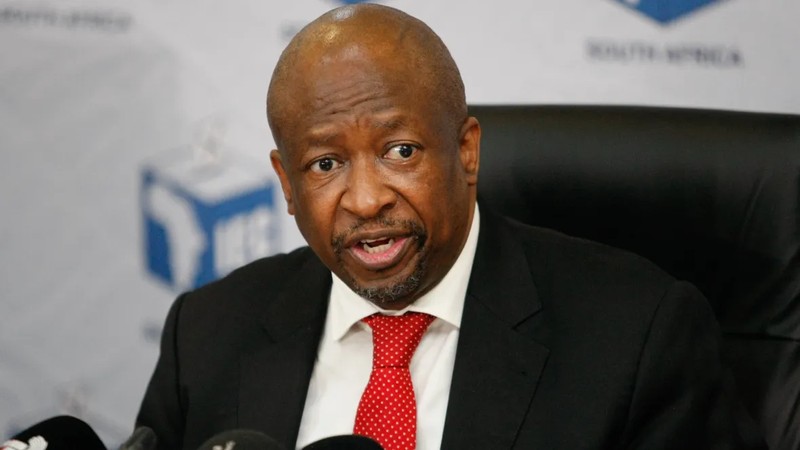
IEC Chief Electoral Officer Sy Mamabolo was direct about what the numbers mean. “The figures indicate that youth-focused campaigns are finding resonance with young persons and that, far from being apathetic, young people are responding positively,” he said. His words push back against a tired narrative — the idea that young Africans simply don’t care about politics. What the data suggests instead is that young people care deeply, but they need systems that actually meet them where they are.
The IEC’s Online Registration Campaign, which ran throughout February 2026, encouraged citizens to register, verify, and update their details entirely remotely. That campaign appears to have planted seeds that bloomed during the June weekend. It’s a model worth watching: sustained digital outreach, paired with zero-rated access and simplified tools, produces measurable civic participation.
Beyond registration, the portal offers additional tools that matter on election day. Citizens can use it to verify their registration status, confirm their assigned voting station, update their residential address, and even apply for a special vote — a mechanism that allows people to vote outside their designated station under specific circumstances. These aren’t small features. For young people navigating university campuses, new jobs, or frequent moves, they make the difference between voting and not voting.
To complete registration or update details, voters need a valid South African identity document — a green barcoded identity book, a smart ID card, or a valid temporary identity certificate issued by the Department of Home Affairs. The Department has confirmed it remains open to help citizens access the documentation they need, removing one more potential barrier from the process.
The IEC also launched a new election logo and tagline as part of its broader push to energise participation, particularly among young voters. IEC Chairperson Mosotho Moepya called on political parties, government bodies, and civil society organisations to collaborate in strengthening the democratic process — a reminder that elections are not just an institutional exercise, but a collective one.
What’s unfolding in South Africa carries lessons that resonate far beyond its borders. Across the African continent, youth populations are growing faster than political institutions can adapt. The question of how to bring young people into democratic processes — genuinely, not performatively — is one every nation is grappling with. South Africa’s answer, at least for now, is to lower the barriers: make registration digital, make it free to access, and make it continuous rather than confined to a single weekend. When the system stops asking young people to sacrifice time and money just to participate, they participate.
The 2026 local elections are still months away, but the registration numbers are already writing the first chapter of their story. And if 80% of new voters being under 30 tells us anything, it’s that the next chapter of South African democracy will be written by the youth — whether the political establishment is ready for that or not.



