Physical Address
304 North Cardinal St.
Dorchester Center, MA 02124
Physical Address
304 North Cardinal St.
Dorchester Center, MA 02124

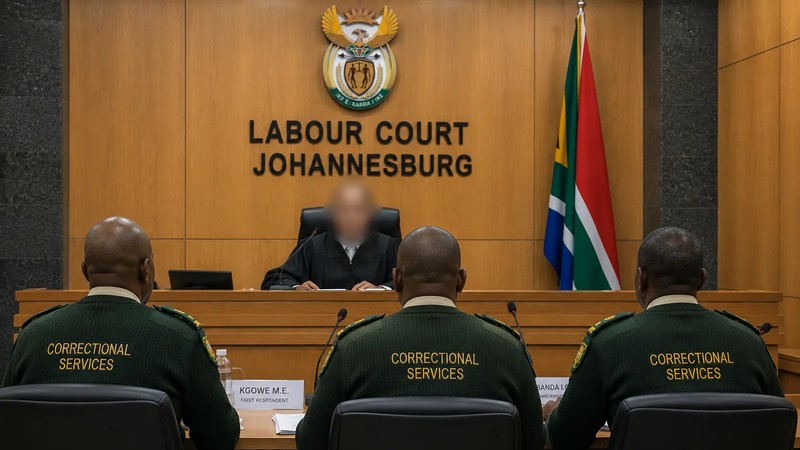
Three correctional officers in South Africa nearly walked away with over a million rand in back pay — after being fired for faking records. A court just shut that down.
The Labour Court in Johannesburg has overturned a settlement agreement that would have reinstated three correctional officers accused of falsifying records of parolee supervision visits. According to the Department of Correctional Services, the officers didn’t just bend the rules — they logged and recorded visits to parolees that never actually happened. In a system built on accountability and public safety, that kind of dishonesty cuts deep.
After a full departmental investigation, all three faced disciplinary proceedings and were ultimately dismissed. They then referred their cases to the General Public Service Sector Bargaining Council (GPSSBC) as an unfair dismissal dispute, which moved toward arbitration. That’s where things started to get murky.
Before the arbitration hearing could even begin, a departmental official identified only as Mtshweni stepped in with a mandate to settle the dispute. The deal that emerged was striking: the three officers would be reinstated, and they would receive full retrospective pay — a payout that exceeded R1 million. The arbitrator confirmed the settlement, and for a moment, it looked like the matter was closed.
But Correctional Services wasn’t done. After seeking a legal opinion, the department uncovered a critical irregularity at the heart of the agreement. The settlement had been concluded without the required authorisation to draw from the public purse — a non-negotiable procedural step when public funds are on the line. That single oversight unravelled everything.
The Labour Court moved to overturn the settlement entirely. For young South Africans watching how public institutions handle accountability, the ruling sends a clear signal: you cannot quietly sign away taxpayers’ money to resolve disputes that were born from misconduct, especially without following the rules that exist to protect those funds in the first place.
Still, the court was careful to note that the three officers are not simply left in the cold. They retain the right to take their unfair dismissal claims back to arbitration, where they can still argue for reinstatement and back pay through a legitimate process. The door to justice remains open — just not through a back-channel deal that bypassed the public interest.
This case is a reminder that in a country still fighting corruption and institutional rot, accountability has to run in every direction — including inward, at the very departments meant to uphold it.



