Physical Address
304 North Cardinal St.
Dorchester Center, MA 02124
Physical Address
304 North Cardinal St.
Dorchester Center, MA 02124

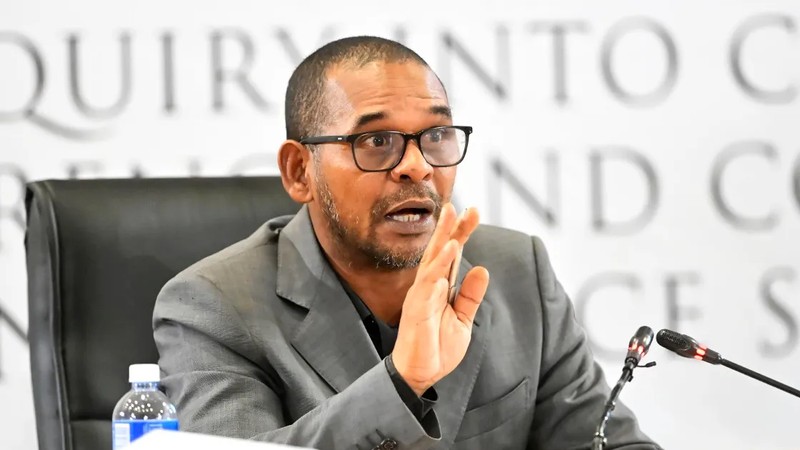
It began, as so many South African corruption scandals do, with a government tender — this one worth a staggering R360 million, awarded by the South African Police Service to a healthcare company called Medicare24 Tshwane District, owned by a man named Vusimuzi “Cat” Matlala, who was himself already facing accusations in a separate murder case. That contract, and the questions swirling around it, would eventually pull in one of the country’s most powerful law enforcement figures and land the whole mess squarely before a High Court.
At the centre of that procurement controversy stood General Fannie Masemola, the National Commissioner of Police, who as accounting officer carried formal legal responsibility for how public money moved through the South African Police Service. Investigators began looking closely at the process through which Medicare24 secured its contract, and what they found troubled them — irregularities in the procurement process, and evidence suggesting that concerns about potential fraud had been raised well before the deal was finalised.
Those findings led to Masemola being charged with four counts of contravening Section 38 of the Public Finance Management Act, a law that places strict obligations on accounting officers to safeguard state resources. President Cyril Ramaphosa placed him on precautionary suspension shortly after, a decision that effectively froze the career of the country’s top cop while the legal process played out.
Then came the reversal.
The National Director of Public Prosecutions, Andy Mothibi, made the call to withdraw the charges against Masemola at the Pretoria Magistrate’s Court. By that point, at least R50 million had already been paid out under the contract before SAPS cancelled it in May 2025 — and the specific contract at the heart of the court proceedings was valued at R228 million. For many observers, the withdrawal raised immediate and uncomfortable questions about accountability at the highest levels of the state.
One of those observers decided to do something about it. Fadiel Adams, a Member of Parliament who is himself facing fraud charges as well as a separate accusation of defeating the administration of justice — stemming from an alleged misrepresentation of a visit to Westville Prison, where he is said to have falsely claimed he was conducting parliamentary duties while meeting trial-awaiting inmates — launched a legal application in the North Gauteng High Court in Pretoria, seeking to have Mothibi’s decision reviewed and set aside entirely.
In his founding affidavit, Adams argues that the NDPP’s decision was not rationally connected to the evidence that had been placed before prosecutors — evidence that included reports from IDAC, a Case Assessment Panel, and an independent senior counsel. He contends that documents readily available in the prosecution docket showed that Masemola had been alerted to possible irregularities before the tender was even awarded, and that he failed to act on those warnings.
The financial consequences of that alleged inaction, according to Adams, were concrete and quantifiable. His affidavit points to approximately R23 million paid in January 2026, a further R12 million in March 2026, and an additional R1.6 million in April 2026 — totalling around R38.16 million in irregular expenditure that he argues could have been avoided had Masemola intervened when concerns were first raised. Masemola only signed the letter cancelling the contract in May 2026, more than a year after those concerns had allegedly surfaced.
Adams grounds his legal standing in sections 38(a), (c), (d), and (e) of the Constitution, as well as section 6(1) of the Promotion of Administrative Justice Act (PAJA), and argues that the High Court has clear jurisdiction because both Mothibi and Masemola exercise their functions within its geographic reach. The application names Mothibi as the first respondent and Masemola as the second.
The political pressure around Masemola’s fate has been building in parallel. The South African Communist Party has publicly called for his immediate reinstatement now that the charges have been dropped, while President Ramaphosa has indicated only that lifting the suspension remains under formal consideration — a carefully non-committal position that signals how politically charged the question has become. Crucially, the withdrawal of criminal charges does not automatically restore Masemola to his post; Ramaphosa must make a separate, independent decision before the police chief can return to duty.
As for Adams himself, his own legal troubles continue on a separate track. He is due to appear before the Pinetown Regional Court on October 16, 2026, for a pre-trial conference in the matter relating to the Westville Prison visit. The irony of a fraud-accused MP leading a charge for prosecutorial accountability has not been lost on commentators, but it does not, in South African law, diminish the validity of his application.
The North Gauteng High Court must now wrestle with a question that cuts to the heart of how justice functions in post-apartheid South Africa: did the NDPP act within his constitutional mandate when he cleared the country’s top police officer, or does the evidence demand that the decision be undone entirely? For a generation of young South Africans watching institutions bend and sway under political pressure, the answer matters enormously.



