Physical Address
304 North Cardinal St.
Dorchester Center, MA 02124
Physical Address
304 North Cardinal St.
Dorchester Center, MA 02124

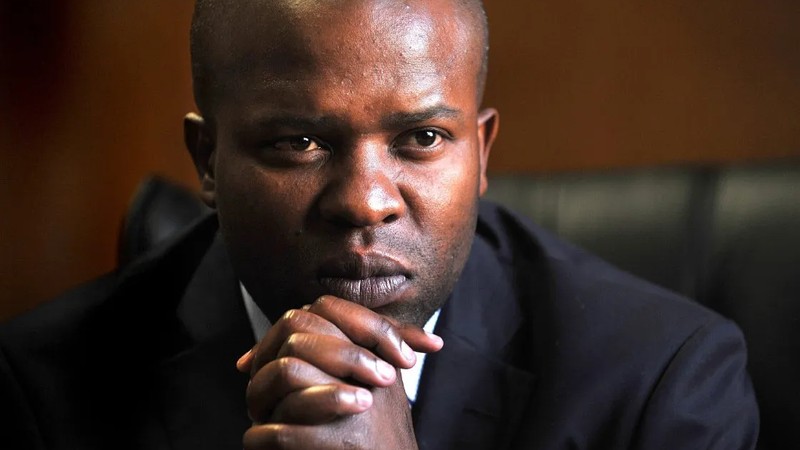
There is something deeply unsettling about a school that cannot repair its classrooms, feed its learners or stock its shelves with textbooks — not because the money was never there, but because someone decided to take it. That is precisely the reality Gauteng Education MEC Lebogang Maile placed before the public last Sunday, when he laid out the findings of a sweeping internal assessment that exposed corruption eating through the province’s school system like a slow, deliberate rot.
The numbers alone are staggering. Between 2023 and June 2026, the department’s internal review uncovered 41 serious cases of corruption, financial mismanagement, maladministration and procurement irregularities across Gauteng schools. Twenty-two of those cases were recorded in 2023 alone, representing more than half the total, while thirteen emerged in 2025 and six more had already surfaced by mid-2026 — a trajectory that makes it impossible to dismiss this as a one-off scandal or the work of a few bad actors. Maile was unequivocal on that point: “Corruption has not disappeared. It remains embedded in parts of the system. This is structural, not temporary.” When a senior government official uses the word structural, they are telling you the problem is woven into the fabric of how things work — and that should make every young South African sit up and pay attention.
What makes this crisis particularly damaging is the breadth of people implicated and the variety of schemes they allegedly used. The assessment identified principals, school governing body members, finance officers, bursars, administrative staff, teachers, general workers and private service providers as among those involved in misconduct. The methods ranged from inflated contracts and duplicate quotations to unauthorised withdrawals and payments for goods that were never actually delivered. At one primary school, more than R1 million was allegedly misappropriated; at a special needs school, payments were allegedly inflated by as much as 500% above market value; and one high school overspent by more than R2.2 million over just two financial years. These are not abstract figures — they are classrooms left to crumble, meals that never reached hungry learners, and books that never made it into a child’s hands.
The corruption does not stop at school budgets. Scholar transport has emerged as another high-risk area, with some contractors allegedly being paid based on declared fleet sizes while operating with far fewer vehicles — a practice that translates directly into overcrowded buses, longer and more dangerous routes, and learners arriving at school exhausted or not at all. The National School Nutrition Programme, a lifeline for thousands of children who depend on school meals as their most reliable source of food each day, has also been targeted, with groceries allegedly stolen alongside furniture, stationery, technical equipment and building materials. Even the revenue generated when school halls and sports grounds are hired out for funerals, church services and community events has reportedly been pocketed rather than declared, turning a community resource into a private income stream for those who should be protecting it.
These revelations did not emerge from a bureaucratic audit conducted in isolation — they surfaced through the voices of ordinary people. Gauteng’s It Takes a Village to Raise a Child outreach programme brought more than 11,000 residents into consultations across the province between May and July, giving parents, learners, teachers, religious leaders and community organisations a platform to speak about what is actually happening in their schools. Two concerns dominated every conversation: where the school money goes, and whether children are safe. On the safety front, communities flagged bullying, gangsterism, drug use, vandalism, weapons, intimidation and gender-based violence as urgent threats — a reminder that the crisis in Gauteng’s schools is not only financial but deeply human, touching the physical and emotional security of young people every single day.
Maile’s response has been notably sharp-edged for a government official, and that sharpness feels deliberate. He has made clear that dismissal alone is not a sufficient consequence for those found guilty of looting school funds: “I don’t just want people to be fired, I want them to be arrested. Firing is not enough.” He reminded officials that under the Prevention and Combating of Corrupt Activities Act, anyone in a position of authority who suspects corruption involving R100,000 or more is legally required to report it to the Hawks. Calling the misuse of school funds “the theft of opportunity from the African child,” Maile framed this not merely as financial misconduct but as an ethical failure with generational consequences — because when a child loses access to a decent education because someone stole the resources meant to provide it, that loss compounds over a lifetime.
For young people in Gauteng and across the continent, this story is both a warning and a call to action. Corruption in public institutions does not happen in a vacuum — it thrives where accountability is weak, where communities feel too powerless to speak up, and where the people responsible for oversight look the other way. The fact that more than 11,000 residents participated in these consultations, and that their concerns are now driving a formal departmental response, shows that community pressure works. Education is a collective inheritance, and protecting it demands exactly the kind of village Maile is invoking — parents, learners, civic organisations, unions, faith communities and government working together to make sure that every rand meant for a child’s future actually reaches that child.



