Physical Address
304 North Cardinal St.
Dorchester Center, MA 02124
Physical Address
304 North Cardinal St.
Dorchester Center, MA 02124

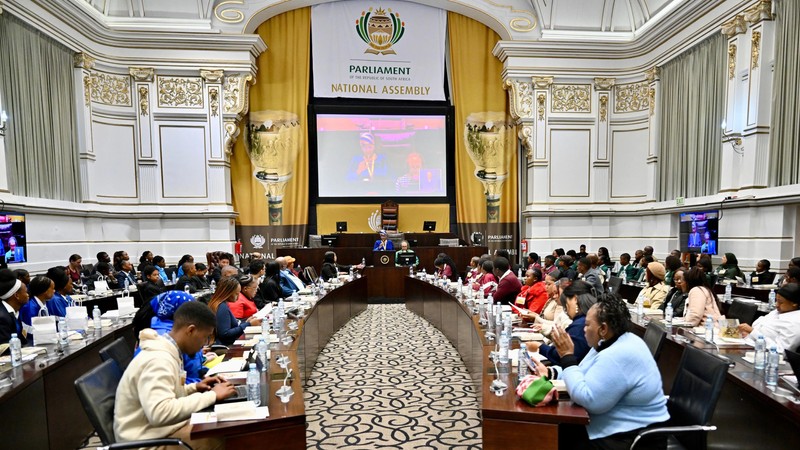
Fifty years after students took to the streets of Soweto and changed the course of South African history, a new generation gathered in Parliament on June 15, 2026, to ask a hard question: can a country call itself free when nearly 61% of its young people have no job?
Youth activists, high school students, members of Parliament, and representatives from institutions including the National Library of South Africa and the Pan South African Language Board (PanSALB) convened for an Intergenerational Dialogue titled “Youth Voices, Reading and Democracy.”
The event was hosted by Parliament’s Library Service ahead of National Youth Day on June 16 — South Africa’s annual commemoration of the 1976 Soweto Uprising, observed during Youth Month.
This year’s Golden Jubilee carries the theme: “Reset@50 – The Future Calls.”
The 1976 uprising was ignited by the Bantu Education Act of 1953, an apartheid law that deliberately enforced an inferior education system on Black South Africans. Students refused to accept it — and their courage helped dismantle a regime.
Today, the legal barriers are gone. Young South Africans can vote, attend integrated schools, and hold citizenship. But a different wall has taken apartheid’s place: economic exclusion.
According to Statistics South Africa’s Quarterly Labour Force Survey (Q1 2026), the numbers are stark:
Speakers at the dialogue were unequivocal: these figures are inseparable from South Africa’s unfinished struggle over education, opportunity, and economic participation.
Participants drew a direct line between the 1976 generation, the #FeesMustFall movement, and the youth of 2026. Education, they argued, remains the frontline of the fight for dignity.
For millions of young South Africans, unemployment is no longer a temporary setback — it has become a permanent reality. The form of the struggle has changed, but its substance has not.
The students of 1976 were not politicians or executives. They were ordinary young people who refused to accept injustice as inevitable — and they transformed a nation.
As South Africa marks 50 years since that turning point, the question left hanging over Parliament is whether today’s generation will find the tools, the space, and the support to do the same.



