Physical Address
304 North Cardinal St.
Dorchester Center, MA 02124
Physical Address
304 North Cardinal St.
Dorchester Center, MA 02124

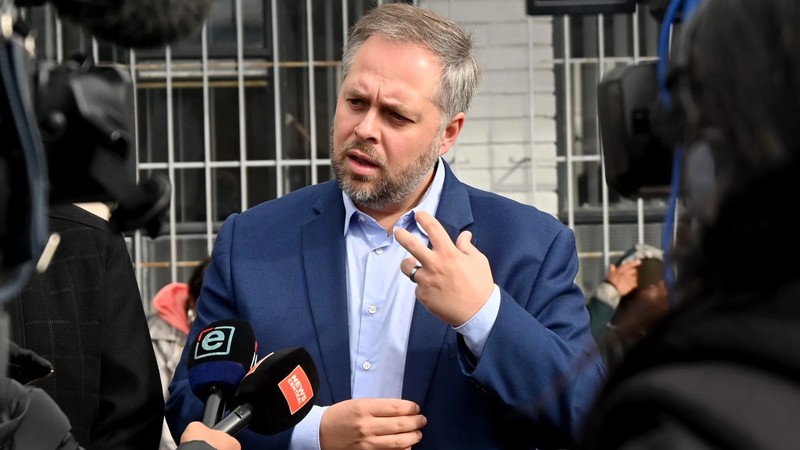
Over half a billion rands. That’s what South Africa has poured into detaining and deporting undocumented migrants over the past three years alone. The number is staggering — R552 million — and it’s forcing a hard conversation about where state money goes, who bears the cost, and what this means for the millions of young Africans crossing borders in search of a better life.
To understand how South Africa got here, you have to go back to 2015. That year, the Department of Home Affairs spent R51 million on deportation costs — a figure that would fluctuate in the years that followed. Spending dipped to R28 million in both 2016/17 and 2017/18, then dropped further to R23 million in 2018/19 and again in 2020/21. The numbers seemed to be trending downward. R22 million in 2021/22. R17 million in 2022/23. It looked, briefly, like the costs were stabilising.
Then everything changed.
With the formation of the Government of National Unity (GNU), deportation activity accelerated sharply. In 2023/24, costs jumped to R54 million. The following year, they climbed again to R73 million. The department carried out a total of 109,344 deportations over just the past two financial years — an exponential surge that signals a clear political shift toward tougher enforcement on undocumented migration.
The pace was relentless. In just five months — between April and August of last year — South Africa spent more than R52 million to deport 19,750 people, working out to roughly R2,670 per person. Home Affairs Minister Leon Schreiber, responding to parliamentary questions from ActionSA and the Inkatha Freedom Party (IFP), confirmed that undocumented foreign nationals are typically deported within 10 days of detention. The longer someone stays in a holding facility, the more the state pays.
At the centre of this system sits the Lindela Repatriation Centre in Krugersdorp — the country’s largest holding facility for people awaiting deportation. Managed by facilities company EnvironMongz, which also handles security on behalf of the department, Lindela has become a focal point for debates about migrant rights, state spending, and the conditions in which people are held before being sent back across borders.
Trying to cut costs, the department made a practical move: it purchased 10 buses and trucks using funds from the Criminal Assets Recovery Account, rather than continuing to outsource transportation. Those vehicles have already been deployed to deport Basotho nationals. Small savings, but savings nonetheless in a budget stretched thin.
ActionSA MP Lerato Ngobeni pushed Schreiber on whether South Africa could recoup any of the money spent. Schreiber pointed to Section 34(3) of the Immigration Act 2002, which allows the director-general to order a foreigner facing deportation to deposit a sum covering — in whole or in part — the costs of deportation, detention, and custody. In practice, full recovery remains limited. The department has also been notifying embassies and consular offices about their detained nationals at Lindela, both to confirm identities and to fast-track the issuing of travel documents. A non-profit organisation has even stepped in to assist with cleaning the facility, at no cost to the state.
Behind these figures are real human stories. South Africa currently hosts more than 150,000 recorded asylum seekers and refugees, the majority coming from Ethiopia, the Democratic Republic of the Congo (DRC), and Bangladesh. Among the 68,991 active refugees are Somalis (21,202), Congolese (20,624), Ethiopians (13,680), Zimbabweans (3,408), and Rwandans (932) — people who fled conflict, persecution, and collapse at home, and who now navigate an increasingly hostile administrative environment.
The R552 million question isn’t just about money. It’s about what kind of regional neighbour South Africa wants to be — and who gets to decide the fate of young Africans on the move.



