Physical Address
304 North Cardinal St.
Dorchester Center, MA 02124
Physical Address
304 North Cardinal St.
Dorchester Center, MA 02124

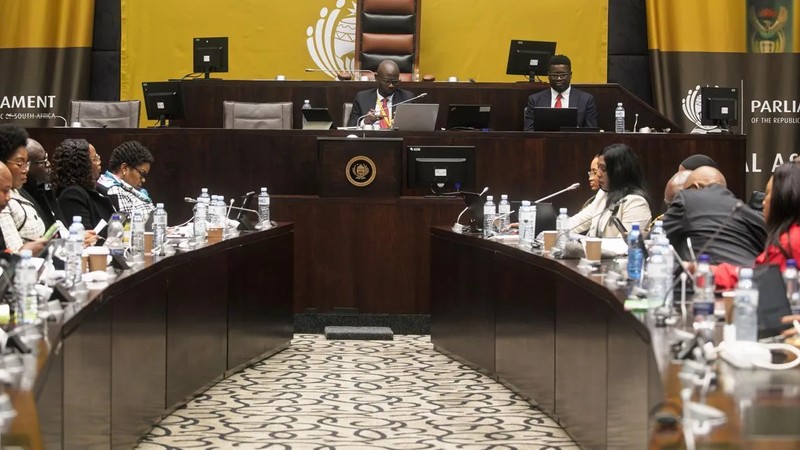
South Africa’s Parliament Impeachment Committee has set a critical July 10, 2026 deadline for political parties to nominate an evidence leader — the key figure who will guide the presentation of evidence in the impeachment inquiry against President Cyril Ramaphosa. The decision, taken on Wednesday June 24, comes as Ramaphosa fights in court to halt the entire process.
The 31-member committee, established under Section 89 of the Constitution, is investigating allegations that Ramaphosa violated the Constitution in connection with the 2020 theft of foreign currency from his Phala Phala game farm in Limpopo.
Committee Chairperson Makashule Gana confirmed that once nominations are received, the committee will recommend a preferred candidate to Parliament for formal appointment. In a notable departure from tradition, the committee will submit its shortlist directly to Speaker Thoko Didiza for discussion with the Solicitor-General.
The committee made clear it does not want to leave the decision solely to the Speaker and Parliament’s legal unit. The appointed evidence leader will also have discretion over the selection of any assistant evidence leaders.
Despite the committee’s progress, President Ramaphosa has approached the Western Cape High Court seeking an urgent interdict to suspend the inquiry. He wants the process frozen while he separately challenges the Section 89 panel report that found he may have breached the Constitution.
The court hearing is scheduled for July 15 and 16, 2026. The committee has resolved to oppose the interdict and stressed a key legal point: its obligation to proceed stems from a Constitutional Court order, which outranks a Western Cape High Court ruling.
NCC leader Fadiel Adams did not mince words, accusing Ramaphosa of going to extreme lengths to avoid accountability. Committee chair Gana, however, kept focus: the committee’s work continues unless a court explicitly orders otherwise.
The Phala Phala scandal dates back to 2020, when a large sum of US dollars was allegedly hidden — and later stolen — at Ramaphosa’s private game farm. An independent Section 89 panel found in November 2022 that there was prima facie evidence Ramaphosa may have committed serious misconduct and violated the Constitution.
In December 2022, the National Assembly voted to shelve the report — a move the Constitutional Court struck down in May 2026, ruling it irrational, unconstitutional, and invalid. That ruling reopened the path to impeachment proceedings, setting the stage for the current committee process.
This case is a landmark test of constitutional accountability in one of Africa’s most influential democracies. Whether a sitting president can be held accountable — or use legal tools to delay justice — will shape how young South Africans and the wider continent view democratic institutions for years to come.



