Physical Address
304 North Cardinal St.
Dorchester Center, MA 02124
Physical Address
304 North Cardinal St.
Dorchester Center, MA 02124

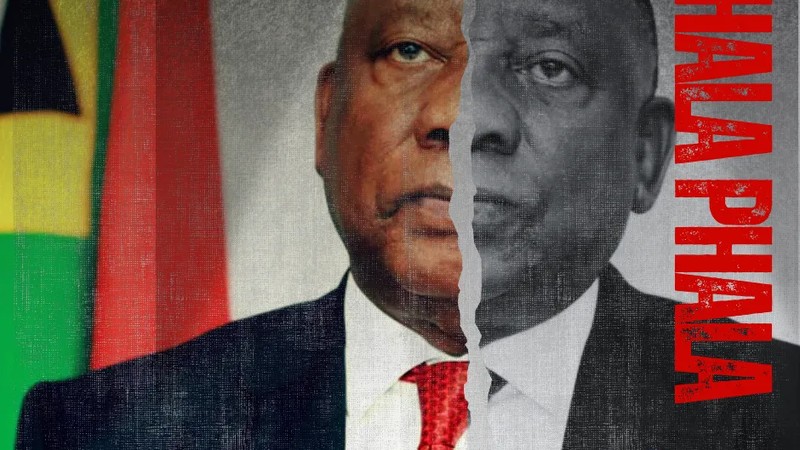
South African President Cyril Ramaphosa is waiting on a critical court ruling that could reshape his political future — and the country’s constitutional landscape. The Western Cape High Court heard his urgent application to halt Parliament’s impeachment inquiry into the Phala Phala scandal on Wednesday and Thursday before a full bench of judges André le Grange, Matthew Francis and Diane Davis, who reserved judgment. A ruling is expected by the end of next week.
The scandal traces back to the 2020 theft of more than half a million US dollars that had been stashed at Ramaphosa’s Phala Phala game farm near Bela-Bela in Limpopo — cash whose origins and concealment have never been fully explained to the public. A panel chaired by former Chief Justice Sandile Ngcobo, alongside retired judge Thokozile Masipa and advocate Mahlape Sello, concluded in November 2022 that the president had a case to answer. Ramaphosa is now asking the same court to set aside that report entirely, with a separate review hearing scheduled for September 2 to 4.
Even if Ramaphosa loses the interdict bid, legal experts are clear: this is not the end of the road. Whichever side loses the first ruling can immediately seek leave to appeal before the same bench, then escalate to the Supreme Court of Appeal, and ultimately to the Constitutional Court. The legal machinery could grind on for months, if not longer.
Meanwhile, the impeachment committee has not paused its work while the court deliberates — a detail that underscores just how much political momentum has built up around this case.
Presidential spokesperson Vincent Magwenya has firmly ruled out resignation, framing the court application not as self-preservation but as a matter of principle. “You cannot have a flawed report forming the basis for the removal of a president,” Magwenya told reporters, insisting Ramaphosa is litigating on behalf of every future occupant of the office.
Here is where things get genuinely consequential for South Africa’s political future. When Parliament voted in December 2022 on whether to adopt the Ngcobo report, the ANC held 230 of the National Assembly’s 400 seats and comfortably defeated the motion 214 votes to 148. That arithmetic no longer exists.
The 2024 general elections slashed the ANC’s representation to just 159 seats — far below what the party would need to shield Ramaphosa on its own. Removing a president under Section 89 of the Constitution requires the support of at least 267 of the 400 members of the National Assembly, meaning opponents would still need to build a broad coalition to succeed. But the ANC can no longer block such a vote unilaterally, and that shift matters enormously.
Political analyst Professor André Duvenhage confirms the balance of power has fundamentally shifted since Phala Phala first landed in Parliament.
Impeachment is not the only weapon on the table. Opposition parties MK and the ATM have separately filed a motion of no confidence against Ramaphosa under Section 102 of the Constitution — a route that requires only a simple majority rather than the two-thirds threshold that impeachment demands. That lower bar makes it a far more achievable target for opposition forces.
MK spokesperson Nhlamulo Ndhlela has written to the Speaker of the National Assembly requesting that any vote on the motion be conducted by secret ballot. “In light of the constitutional importance of a motion of no confidence, as well as the considerable political pressures surrounding such proceedings, we have written to the Speaker requesting that the motion be conducted by secret ballot,” Ndhlela said — a move clearly designed to free ANC members from party discipline.
Three key dates now dominate South Africa’s political calendar: the imminent court ruling on the interdict, any subsequent appeals process, and the September 2–4 review of the Ngcobo panel’s report — the case that could determine whether the entire impeachment process has any legal foundation at all. For young South Africans watching their democracy navigate this stress test, the coming weeks will be defining.



