Physical Address
304 North Cardinal St.
Dorchester Center, MA 02124
Physical Address
304 North Cardinal St.
Dorchester Center, MA 02124

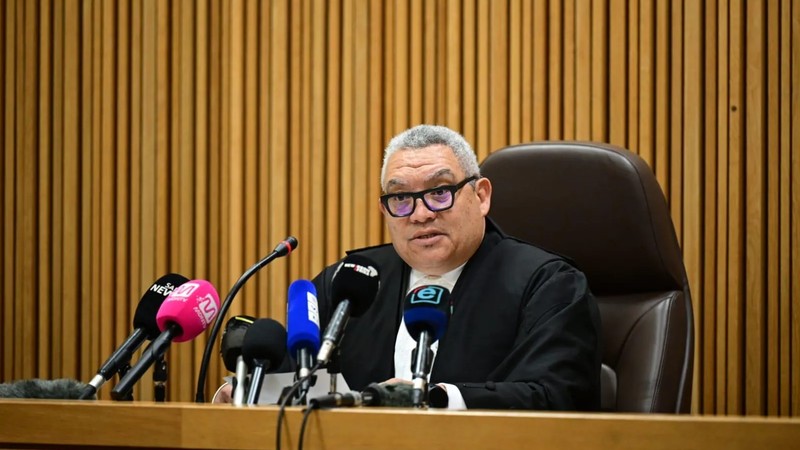
A court just hit pause on what could have been a historic moment for South African democracy.
On Friday, the Western Cape High Court issued an interdict blocking Parliament’s Section 89 Impeachment Committee from continuing its public hearings into the Phala Phala cash scandal — the controversy that has shadowed President Cyril Ramaphosa since a 2020 break-in at his luxury Limpopo farmhouse exposed a stash of undisclosed foreign currency. The full bench, ruling by majority, ordered the committee to stand down until a review application brought by Ramaphosa himself is fully determined. One judge would have dismissed the application outright, but the majority found the president had met the threshold for interim relief, accepting his argument that proceeding with public hearings would cause irreparable harm to his reputation.
The facts at the heart of this case are not new, but they remain explosive. Ramaphosa is accused of concealing from both police and tax authorities a robbery in which $580,000 — or, according to the original complaint, as much as $4 million — was stolen from his Phala Phala farmhouse. He maintains he reported the break-in and that the money came from the sale of twenty buffaloes. The complaint was filed by a former spy chief with close ties to Ramaphosa’s predecessor, Jacob Zuma, and it set off a chain of events that an independent panel later described as raising “substantial doubt about the legitimacy of the source of the currency that was stolen.” That panel finding triggered the parliamentary process now frozen by the court. The public prosecutor dropped charges in 2024, but the Constitutional Court overturned a parliamentary vote in May this year, forcing the establishment of the impeachment committee and reigniting the entire debate.
Opposition parties did not take Friday’s ruling quietly. uMkhonto weSizwe Party (MK Party) MP Andile Mngxitama was blunt, calling the decision unsurprising but deeply troubling. “The judiciary has consistently protected Mr Ramaphosa,” he said, pointing also to what he described as an undisclosed R1 billion in donor funds. His sharpest line cut straight to the chase: if Ramaphosa has nothing to hide, why would appearing before an impeachment committee damage his reputation at all? For Mngxitama, the court’s willingness to accept that logic amounts to a green light for evasion dressed up in legal language.
The Economic Freedom Fighters (EFF) echoed that frustration through MP Nontando Nolutshungu, who described the party as “shocked, but not surprised,” and framed the ruling as the latest episode in a pattern of accountability avoidance that also includes the Bosasa controversy. These are not fringe voices — together, the MK Party and EFF represent a significant bloc of South Africa’s younger, more radical electorate, precisely the generation that has grown up watching political elites sidestep consequences and is running out of patience for it.
Not every opposition voice struck the same angry note. Rise Mzansi communications director Mabine Seabe took a more measured position, accepting the court’s authority while signalling the party would study the full judgment. “Our constitution is an evolving one,” he said, adding that the party remains committed to the rule of law and expects Parliament to continue its broader work regardless. It is a reasonable stance, yet in a political climate this charged, reasonableness can feel like its own kind of statement.
Parliament’s spokesperson Moloto Mothapo confirmed that the institution would scrutinise the judgment before deciding on next steps, a response that is procedurally correct but tells the public very little about where this saga goes from here. Ramaphosa, for his part, issued a statement after the ruling reaffirming his “respect of judicial independence and separation of powers enshrined in our Constitution” — language that his critics will read as precisely the kind of polished deflection they have come to expect.
What makes this moment genuinely significant is what hangs on the other side of it. If impeachment proceedings eventually go ahead, they would be the first ever against a sitting South African president. The High Court is set to hear Ramaphosa’s bid to overturn the 2022 independent panel report in September, meaning the legal battle is far from over. For a generation of young Africans watching their institutions in real time, the question is not just whether one president faces consequences — it is whether the systems built to hold power accountable actually work when it matters most.
Ramaphosa denies any wrongdoing. The court will have its say in September. And South Africa waits.



