Physical Address
304 North Cardinal St.
Dorchester Center, MA 02124
Physical Address
304 North Cardinal St.
Dorchester Center, MA 02124

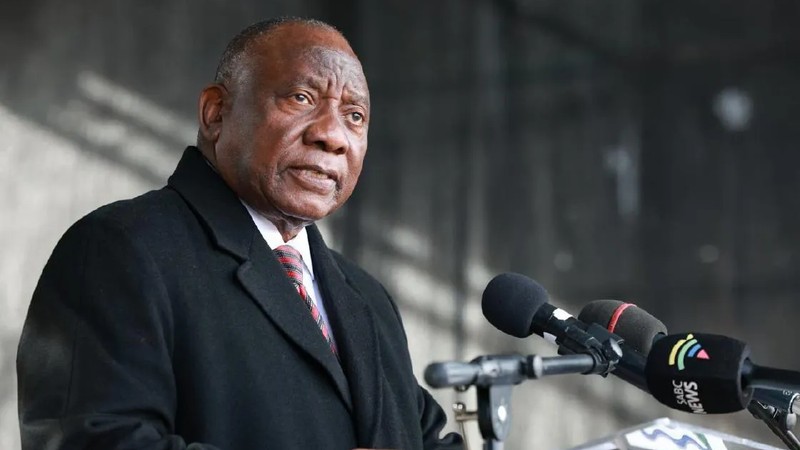
South Africa’s President Cyril Ramaphosa is fighting for his political life, and the battlefield is a scandal that started with a break-in at a game farm and has now reached the country’s highest court. If you’ve been hearing the name “Phala Phala” and wondering what it actually means for South Africa’s future, here’s everything you need to know — from the beginning.
Back in February 2020, roughly $580,000 in foreign currency — around R8 million at the time — was allegedly stolen from a sofa at Ramaphosa’s Phala Phala game farm in Limpopo. The theft itself was suspicious enough. But the political explosion came later, when former intelligence director Arthur Fraser accused the President of covering up the crime and bypassing proper law enforcement channels entirely. That accusation triggered a formal parliamentary process under Section 89 of the Constitution, which allows for a president’s removal if found to have seriously violated their oath of office.
On 8 May 2026, the Constitutional Court ruled that Parliament’s original handling of the Phala Phala report was unconstitutional. Specifically, the court struck down Rule 129I of the National Assembly — the procedural rule Parliament used in December 2022 to vote against adopting the independent panel’s findings. That December 2022 vote, in which the ANC-controlled Assembly blocked the report 214 votes to 148, was also set aside. In plain terms: the court said Parliament got it wrong, and the matter must go back to an impeachment committee to be properly processed.
This ruling landed very differently in 2026 than it would have in 2022, and the reason is pure electoral mathematics. When Parliament first voted, the ANC held 230 of the Assembly’s 400 seats — enough muscle to kill the motion on its own. The May 2024 general elections changed everything: the ANC was reduced to just 159 seats, its worst result since 1994. Removing a president under Section 89 requires a two-thirds majority, or at least 267 votes. The ANC can no longer block that threshold alone, which means Ramaphosa’s survival now depends on the loyalty of coalition partners he cannot fully control.
Rather than stepping down or waiting for the committee to begin its work, Ramaphosa went to court — twice. First, he filed an application in the Western Cape High Court to have the independent panel’s report declared unlawful, arguing the panel overstepped its mandate, acted like a trial court, and relied on hearsay and unverified information. Second, he filed an urgent interdict asking the same court to halt the impeachment committee’s public inquiry until his main challenge to the report is heard — currently scheduled for 2 to 4 September. A full bench of three judges heard the urgent application and reserved judgment, with a ruling expected within days.
Opposition parties hit back hard in court. Advocate Dali Mpofu SC, representing the MK Party, argued that the only real harm Ramaphosa had identified was his own embarrassment. The EFF’s representative pointed out that Ramaphosa had allowed the report to circulate publicly for years without legal challenge, and only rushed to court once his presidency was directly threatened. Presidential spokesperson Vincent Magwenya pushed back against that framing, insisting the interdict application is a matter of constitutional principle — that the president is essentially litigating on behalf of every future holder of the office, not just himself.
The political arithmetic inside the Government of National Unity (GNU) adds another layer of complexity. The GNU, formed after the 2024 elections brought together ten parties including the DA, IFP, Patriotic Alliance, GOOD, Rise Mzansi, Al Jama-ah, UDM, FF Plus and PAC alongside the ANC, has so far signalled broad support for Ramaphosa. Al Jama-ah leader Ganief Hendricks stated that GNU parties would rally behind the president regardless of the court ruling. However, the DA, UDM, GOOD and Rise Mzansi all said they would respect and adhere to the Constitutional Court’s judgment — leaving real uncertainty about how each party would vote if the impeachment committee ultimately recommended removal.
What makes this moment genuinely significant for young South Africans is not just one man’s career. The process now unfolding tests whether constitutional accountability mechanisms actually work when a sitting president pushes back through the courts, and whether a coalition government can hold together under that kind of pressure. Legal analyst Mpumelelo Zikalala notes that whichever side loses the High Court battle retains the right to appeal — first to the same full bench, then to the Supreme Court of Appeal, and ultimately back to the Constitutional Court itself. That means this fight could stretch on for months, with South Africa’s highest office hanging in the balance at every stage.



