Physical Address
304 North Cardinal St.
Dorchester Center, MA 02124
Physical Address
304 North Cardinal St.
Dorchester Center, MA 02124

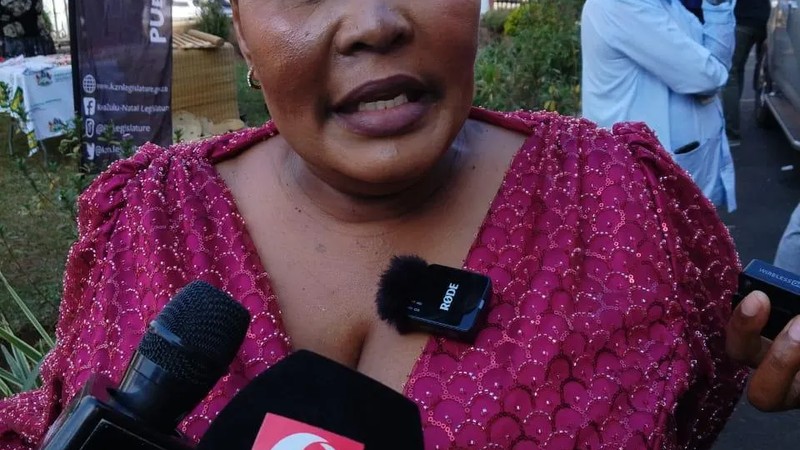
Mbali Shinga, the sole Member of the Provincial Legislature (MPL) for the National Freedom Party (NFP) in KwaZulu-Natal, is standing her ground — and she has the courts on her side. Shinga has publicly dared the NFP leadership to obtain a new court order if they want her gone, declaring she will not vacate her seat until a judge tells her otherwise. The standoff, unfolding in the KZN Legislature and the Pietermaritzburg High Court, exposes deep fractures inside one of South Africa’s smaller political parties — and carries consequences that stretch far beyond internal drama.
The conflict began when Shinga refused to back an Umkhonto weSizwe (MK) Party-sponsored motion of no-confidence against Premier Thamsanqa Ntuli. Her defiance cost her dearly inside the party. The NFP launched a disciplinary hearing, found her guilty on April 11, and her subsequent appeal to the party’s Appeals Tribunal was dismissed on May 30. By June 4, Speaker Nontembeko Boyce officially announced in the Legislature chamber that Shinga was no longer a member of the House, paving the way for NFP President Ivan Barnes to take her seat.
That is when the courts stepped in.
The Pietermaritzburg High Court granted Shinga an interim interdict — a temporary legal block — halting the NFP’s removal process. Judge Namhla Thina Siwendu ruled that Shinga remains both an NFP member and an MPL pending a full judicial review of her expulsion. The court went further, ordering Speaker Boyce to reverse any steps already taken to remove Shinga from her seat and her position as MEC.
Shinga’s legal argument is straightforward: under the NFP’s own constitution, only the party’s General National Congress — its highest structure — holds the power to finalise expulsions, not an appeals tribunal. That constitutional question now sits before the High Court, and until it is resolved, her position is legally protected.
“It was a court order that compelled the Speaker to stop the process of removing me, so that order remains operative until it is replaced by a new one,” Shinga said in an exclusive interview.
The NFP accused Speaker Boyce of using delaying tactics to keep Shinga in her seat, suggesting the timing benefited the passing of departmental budgets and the presentation of her Social Development budget. Boyce dismissed these claims as “regrettable and unfounded,” insisting she had acted at all times in line with her constitutional obligations and the High Court’s orders.
Undeterred, the NFP suspended Shinga again within days of the court ruling. Her lawyer, Sithembiso Mbhele, rejected the new suspension letter as legally invalid and warned the party it would face further court action. The two sides are also headed back to the Pietermaritzburg High Court over a separate dispute: the NFP told Shinga she could not bring her own legal representative to her appeal and should instead rely on an ordinary party member — a condition she flatly refused.
The internal fallout has been significant. Two senior NFP figures — National Chairperson Shevu Mkhabela and Provincial Secretary Zodwa Mtshali — broke ranks with the party’s national leadership and publicly supported Shinga during her disciplinary processes. The NFP responded by suspending both of them, deepening a crisis that now touches the party’s leadership at multiple levels.
This is not just an internal party squabble. The stakes are genuinely high for KwaZulu-Natal’s political balance of power. The NFP holds a single seat in the 80-member KZN Legislature. That one seat gives the Government of Provincial Unity (GPU) the 41-seat majority it needs to control both the Legislature and the provincial government.
Shinga’s seat, in other words, is the difference between a functioning provincial majority and a hung legislature. That reality makes her defiance — and the court’s protection of it — politically explosive in ways that go well beyond one lawmaker’s job security.
As the legal battles continue and the NFP’s internal divisions widen, Shinga has positioned herself as a figure who chose principle over party loyalty — and, so far, the courts have agreed with her right to do so.



