Physical Address
304 North Cardinal St.
Dorchester Center, MA 02124
Physical Address
304 North Cardinal St.
Dorchester Center, MA 02124

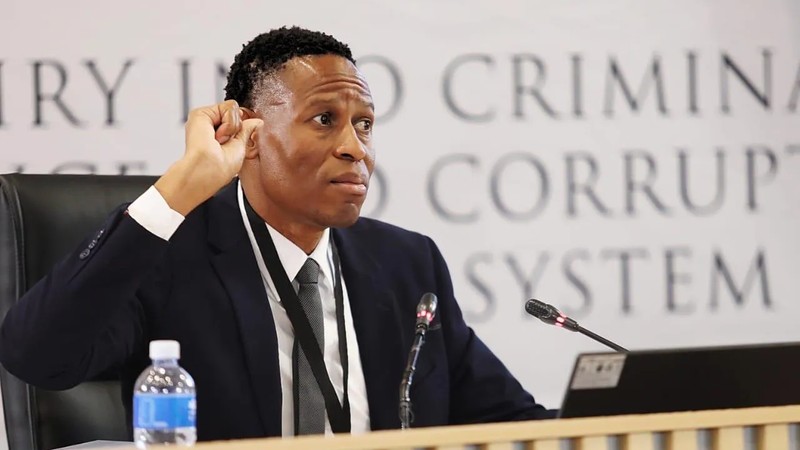
An anti-corruption investigator is now turning the spotlight on his own colleagues. And the fallout could shake one of South Africa’s most powerful law enforcement institutions to its core.
Mantsha Raphesu, an investigator at the Investigating Directorate Against Corruption (IDAC), took the stand at the Madlanga Commission of Inquiry on Friday, 31 July 2026, at the Brigitte Mabandla Justice College in Pretoria. He came with serious allegations — and a plan to file criminal charges against two of his own colleagues.
Raphesu says he intends to open a criminal case against fellow investigators Dylan Perumal and Brian Padayachee, accusing them of orchestrating a campaign to undermine him. But he has one major fear: that the case could be quietly buried before it even gets off the ground. That’s why he’s asking the commission itself to step in and make sure the matter lands in the right hands.
The story starts with a Section 27 referral submitted in November 2024 by Fadiel Adams, leader of the National Coloured Congress (NCC) and a sitting member of parliament. Adams’ complaint targeted senior figures in the police’s Crime Intelligence division, alleging fraud, corruption, abuse of state resources, intimidation, and irregular appointments. The officials named include Lieutenant General Dumisani Khumalo, Brigadier Dineo Mokwele, and others.
Raphesu was part of the team assigned to investigate. Then things got messy. He says that after raising concerns about how the investigation was being handled, he was systematically pushed out — removed from key cases, hit with disciplinary proceedings, and barred from working on matters involving police officers and the security cluster.
On 10 February 2025, he received a sealed courier package from the personal assistant of former IDAC head Advocate Andrea Johnson. Inside was a disciplinary letter dated 7 February, accusing him of leaking confidential information. Raphesu believes this was retaliation, not accountability. He also claims Padayachee had been spreading rumours inside IDAC that he had compromised operational safety — a serious allegation in an environment where trust is everything.
There’s more. Raphesu also testified that a critical document — the Section 27 affidavit at the centre of the inquiry — may have been altered. He says the version later presented to Parliament and the commission was missing key allegations he personally read in an earlier version. Commission chairperson Acting Deputy Chief Justice Mbuyiseli Madlanga pushed back hard, questioning how Raphesu could accurately recall the contents of a document he had seen for only a few minutes. Raphesu held his ground, insisting the gravity of what he read made it impossible to forget.
To understand why this testimony is significant, you need to know how IDAC actually works. Investigators like Raphesu do not choose their own cases. Cases are assigned through internal processes — communicated by the chief investigator, the prosecutor on the matter, or a project manager. That means who controls the assignment pipeline controls everything.
Raphesu reported directly to Dylan Perumal, who is currently suspended as IDAC’s chief investigator. He flagged it as highly unusual that former IDAC head Andrea Johnson personally assigned a prosecutorial team to investigate Adams’ 2024 whistleblower report — a task that would ordinarily fall to deputy directors. In December 2024, Johnson assigned the report to prosecutor Drushantha Ramsamy, who later shared it with Raphesu.
Both Ramsamy and Raphesu submitted recorded voice notes to the commission, disputing the statements attributed to Adams. They maintained that the documents Perumal relied on were not the statements obtained during a joint interview with Adams in Cape Town on 6 January — an interview conducted as part of the investigation into his corruption complaint.
The commission, chaired by Acting Deputy Chief Justice Madlanga, is probing matters that arose from IDAC’s handling of Adams’ Section 27 referral. What started as an investigation into alleged police corruption has now become an inquiry into whether the investigators themselves were manipulated, silenced, or set up. That’s a big deal — and young South Africans who care about who actually holds power accountable need to be paying attention.



