Physical Address
304 North Cardinal St.
Dorchester Center, MA 02124
Physical Address
304 North Cardinal St.
Dorchester Center, MA 02124

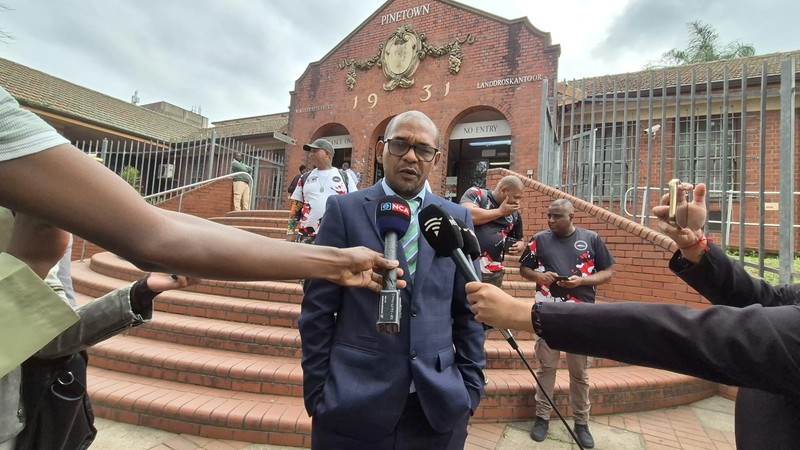
National Coloured Congress leader and Member of Parliament Fadiel Adams walked back into Parliament this week with a defiant message for anyone watching: he is not going anywhere. After serving a 20-day suspension for sharing an internal email containing a DA staffer’s personal contact details on social media, Adams returned to work on Monday — the same week his fraud case made its first appearance in court. For a young generation of South Africans watching how power and accountability intersect, this story raises questions that go far beyond one man’s legal troubles.
On Friday morning, Adams appeared at the Pinetown Regional Court on charges of fraud and defeating the administration of justice. The hearing was brief and procedural — State Advocate Nokulunga Ngcobo confirmed that statements had been handed over to the defence and requested a postponement to allow a pre-trial conference to take place. Adams’ attorney, Donovan Moodley, confirmed the defence had received the documents and agreed that October was the right timeline to move forward. The matter was formally postponed to 16 October, when a pre-trial conference will set the stage for what comes next.
It is worth being clear about where this case stands legally, because the optics can be misleading. A pre-trial conference is a procedural step where both sides align on how the trial will be conducted — it is not a trial itself. The State’s evidence has not yet been tested, and the allegations against Adams remain entirely untested in court. In South Africa’s legal system, an accused person is presumed innocent until proven guilty, and Friday’s proceedings moved the case forward without resolving anything on the merits.
Outside the courtroom, Adams was anything but subdued. He pushed back sharply against media characterisations of him as an “embattled” politician, delivering what felt like a carefully staged moment of defiance. “The media should stop calling me embattled. Do I look embattled?” he said, a line clearly aimed at reframing the narrative around his public image. Whether or not you agree with his politics, Adams understands that in the social media age, perception and reality are in constant competition — and he is determined to control which one wins.
Adams also directed sharp criticism at the Political Killings Task Team (PKTT), the unit that arrested him earlier this year at the Parliamentary Village in Cape Town. He accused the task team of deliberately slowing down the case, describing the process as “late,” “last minute,” and “sabotaged.” These are serious allegations against a law enforcement unit, and they deserve scrutiny — though Adams has not yet provided evidence to substantiate those claims publicly. The PKTT has not publicly responded to his characterisation of their conduct.
What makes this situation particularly significant is that Adams is now navigating two entirely separate processes simultaneously. His parliamentary suspension — triggered by the social media incident involving the DA staffer’s personal information — has ended, and he has resumed his duties as an MP. The criminal case, however, remains very much alive before the courts, with the October pre-trial conference marking only the next step in what could be a lengthy legal journey. For Adams, the political track and the legal track are now running in parallel, and the outcome of one will not determine the outcome of the other.
This story is not just about one politician’s legal drama — it is a window into how political accountability actually functions, or sometimes fails to function, in a democratic system. The fact that an MP can serve a suspension, return to Parliament, and continue making laws while simultaneously facing serious criminal charges is not unique to South Africa, but it is a reality that demands engagement from young citizens who care about governance. Adams denies all allegations against him, and he is entitled to that presumption of innocence — but the system that allows political and criminal processes to run separately, without one automatically triggering consequences in the other, is a system worth understanding, debating, and ultimately shaping. The next court date is 16 October. Watch this space.



