Physical Address
304 North Cardinal St.
Dorchester Center, MA 02124
Physical Address
304 North Cardinal St.
Dorchester Center, MA 02124

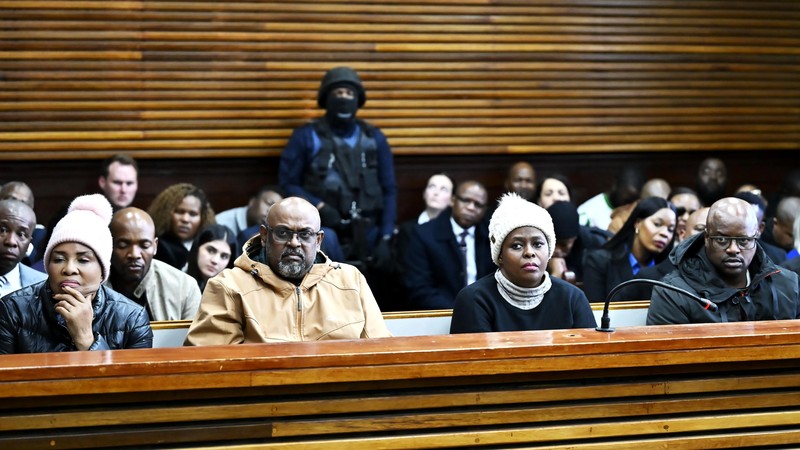
Four senior officials from the City of Ekurhuleni appeared before the Germiston Magistrate’s Court on Thursday, 9 July 2026, charged with fraud, corruption and defeating the ends of justice — and the case goes far deeper than a few illegal blue lights on luxury cars.
The accused are former city manager Imogen Mashazi, suspended head of legal services Kemi Behari, suspended head of human resources Linda Gxasheka, and suspended Ekurhuleni Metropolitan Police Department deputy chief Julius Mkhwanazi. Their arrests followed an overnight operation by the Commission Recommendations Task Team, a unit actively pursuing corruption suspects across Gauteng.
At the centre of the case is an allegation that Mkhwanazi fraudulently facilitated the fitting of blue lights — the kind reserved for law enforcement and emergency vehicles — onto a fleet of private luxury cars belonging to businessman Vusimuzi “Cat” Matlala, whose company, CAT VIP Protection, operates in the security sector. Fitting or using blue lights on a civilian vehicle is illegal under South African law, and the police have made clear that anyone caught doing so will face prosecution.
What makes this more than a traffic offence is what the state alleges happened next: rather than face disciplinary proceedings recommended by both the EMPD and the Independent Police Investigative Directorate (Ipid), Mkhwanazi allegedly had powerful people inside the municipality working to protect him. According to the charge sheet, Mashazi instructed officials to halt the disciplinary process and withdraw internal investigations, while Behari and Gxasheka reportedly helped lift Mkhwanazi’s suspension entirely, preventing accountability from moving forward.
The financial dimension adds another layer of seriousness. Investigators allege that Behari and Gxasheka received salary increases that the city council had never approved — adjustments that, between the 2023/24 and 2025/26 financial years, resulted in the pair allegedly pocketing a combined R2,658,553.29 in unlawful additional earnings: R1,320,480.44 for Behari and R1,338,072.85 for Gxasheka.
Mkhwanazi and Behari were each granted bail of R50,000. Mashazi and Gxasheka were initially remanded in custody after the state requested time to verify their residential addresses — a process complicated by the number of properties linked to each woman. Investigators identified properties connected to Mashazi in Meyersdal, Bedfordview, Waterfall, Sunward Park, a Brakpan estate and Mpumalanga. Gxasheka was linked to properties in Gauteng and the Eastern Cape, with only one address fully verified at the time.
By Friday, 10 July, the National Prosecuting Authority confirmed it was no longer opposing bail for either Mashazi or Gxasheka, with NPA spokesperson Kaizer Kganyago noting that the charges relate specifically to fraudulent promotions and appointments within the municipality. All four accused deny the allegations. Mkhwanazi has described the charges as politically motivated, while Behari argued that continued detention would compromise his ability to cooperate with ongoing investigations.
The wider context matters here. Matlala, the businessman at the origin of the blue lights allegation, has also appeared prominently before the Madlanga Commission, where he stands accused of being a central figure in a criminal network referred to as the “Big Five” cartel — allegations he denies. SAPS national spokesperson Athlenda Mathe has warned that further arrests remain on the table as the task team continues its work, signalling that this case is far from over for those watching how power and accountability intersect in South Africa’s municipalities.



