Physical Address
304 North Cardinal St.
Dorchester Center, MA 02124
Physical Address
304 North Cardinal St.
Dorchester Center, MA 02124

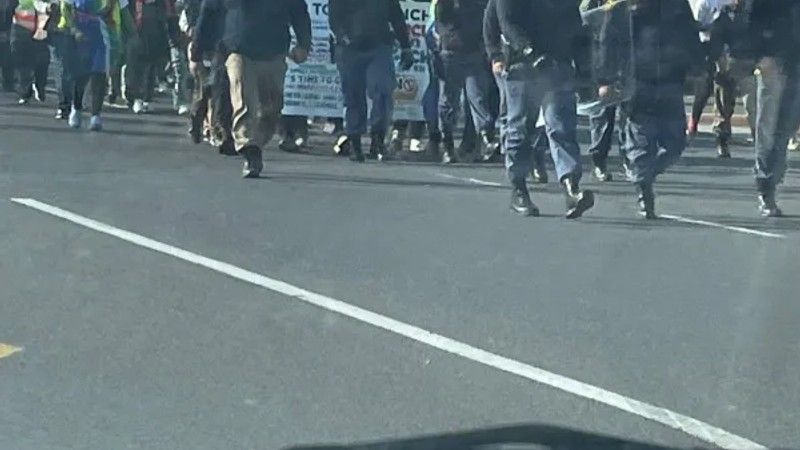
Just after 11 in the morning on a Saturday, roughly a hundred demonstrators moved along Main Road in Parklands, Cape Town — but not before a standoff with police almost derailed the whole thing before it began. Some marchers had arrived carrying knobkieries and sticks, traditional weapons that officers flagged as a potential safety risk. The procession stalled. Words were exchanged. Then, one by one, protesters set down their weapons and the march got underway. It was a small moment, but it said a lot about the mood gripping South Africa right now.
The demonstration was organised by a pressure group called March and March, and its demands were blunt: remove undocumented foreign nationals from South Africa. It unfolded peacefully, with both Public Order Police and metro police on the ground to keep things controlled. Police spokesperson Constable Ndakhe Gwala confirmed afterward that the event was lawful, that protesters had complied when verbally warned about their weapons, and that no injuries were reported. By any official measure, it was orderly. But the context surrounding it is anything but.
One of the march’s leaders, Busisiwe Sicetsha, framed her participation in deeply personal terms. “This is a peaceful march,” she said. “All we want is a better South Africa for the great grandchildren of ours. I am a grandmother; I had to stand up because I want a future that is bright for my grandchild. I do not want South Africa to end just like that — we don’t have any other home, this is our only home.” Her words land differently when you understand what’s driving so many South Africans into the streets: unemployment that disproportionately crushes young people, stretched public services, and a sense that the state has lost control of its own borders.
The Parklands march sits inside a much larger and more volatile national picture. Across South Africa, tensions around undocumented migration have been building toward a 30 June deadline — a date some groups have publicly cited as the point by which undocumented foreign nationals should leave the country. The government has pushed back hard on this framing, insisting that June 30 is not a national shutdown and that normal life should continue. But the pressure is clearly mounting.
Acting Minister of Police Firoz Cachalia has gone on the offensive against protest organisers, arguing that the demonstrations cause economic, financial, human, and diplomatic harm rather than serving any genuine public interest. He went further, warning that organisers of violent or disruptive protests — incidents in which fatalities have already been reported elsewhere — could face both criminal prosecution and civil liability for damages. “What we’re experiencing is not costless,” he said. “And that must become part of the national conversation.” It’s a striking escalation in government language, signalling that authorities are not prepared to treat this wave of protests as routine.
In Cape Town specifically, the tension shows up in layered, sometimes contradictory ways. While demonstrators march in Parklands, hundreds of Zimbabwean nationals have been gathering outside the Zimbabwean Consulate, seeking help with repatriation ahead of the deadline — people caught in the crossfire of a political moment that is spinning faster than institutions can manage.
City and provincial leaders are trying to hold the line. Cape Town Mayor Geordin Hill-Lewis has urged residents not to let legitimate frustration over unemployment, crime, and weak border enforcement tip into hatred or violence against foreign nationals. Western Cape Premier Alan Winde has warned that anti-foreigner protests risk igniting wider instability if the temperature isn’t brought down. The Western Cape Government says it has activated a Joint Operations Centre to coordinate its response — a sign that officials are treating the situation as something that requires active management, not just monitoring.
March and March has said its planned 30 June protest will go ahead, despite facing pushback over permits in certain municipalities. What happened in Parklands on Saturday was, by the numbers, a small march. But it was also a window into something much bigger — a country wrestling with hard questions about belonging, economic anxiety, and what it owes both its own citizens and those who have crossed its borders to build a life. For the young generation inheriting this South Africa, those questions aren’t abstract. They’re playing out on the streets right now.



