Physical Address
304 North Cardinal St.
Dorchester Center, MA 02124
Physical Address
304 North Cardinal St.
Dorchester Center, MA 02124

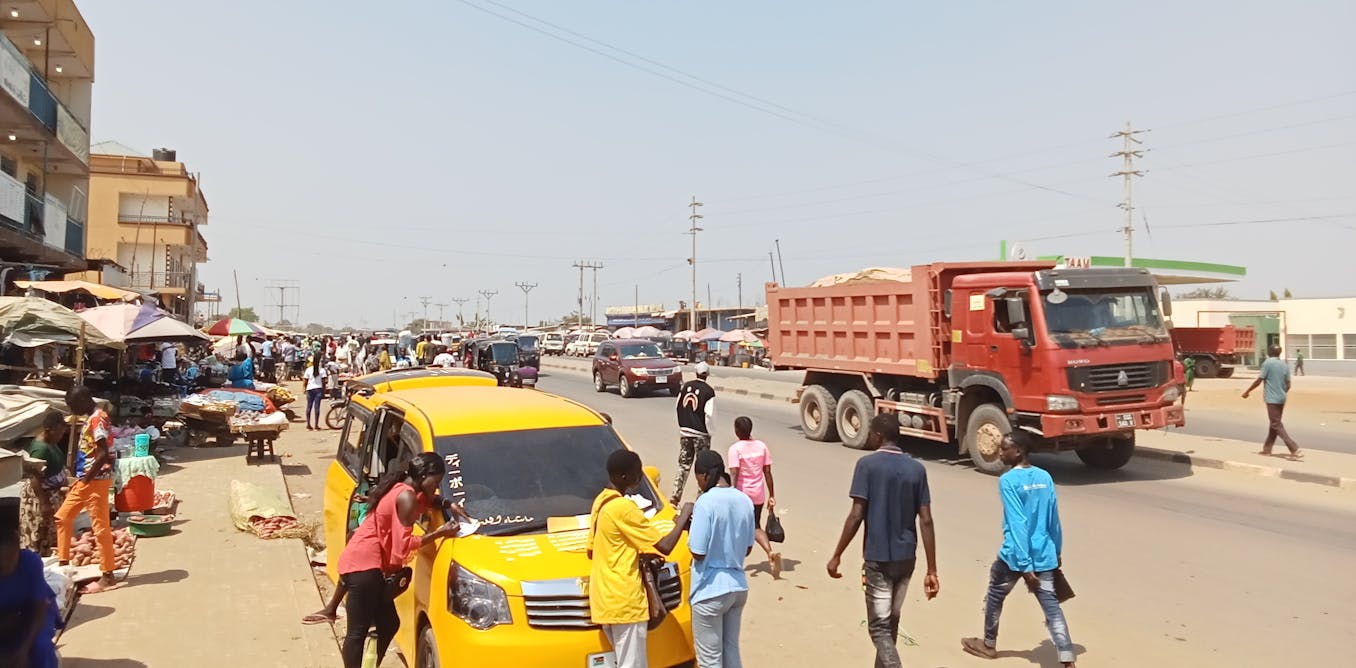
South Sudan’s independence in 2011 was supposed to be a new beginning. After decades of one of Africa’s most devastating civil wars, the world’s newest nation had a chance to build something different. It didn’t. What followed was not peace, but a reshuffling of who gets to profit from the chaos — and that distinction matters enormously.
The country slid back into war in 2013. A 2015 peace deal collapsed. The 2018 Revitalised Agreement, still technically in force, has seen its promised democratic transition postponed again and again. The standard explanation blames spoilers, weak political will and international neglect. But what if that explanation is too convenient? What if South Sudan’s peace deals are not failing — but actually working exactly as designed, just not for ordinary people?
That is the central thesis of new research by economic historian Morten Jerven, who spent over a decade tracing how South Sudan’s rulers extract money, goods, labour and other resources from their population — and how peace agreements have consistently preserved, even formalised, those extractive systems rather than dismantling them. The conclusion is stark: peace and war have become two settings of the same machine.
Political settlements theory tells us that peace is more likely to hold when rival leaders receive a meaningful share of power and resources — giving them less incentive to fight. In theory, that is a reasonable framework. In practice, in South Sudan, it has meant cutting elites into a system of extraction that was already brutalising civilians long before the ink dried on any agreement.
Jerven’s research, drawing on fieldwork conducted between 2020 and 2024 alongside archival and peace agreement data, examined three core questions: who collects revenue — both monetary and non-monetary, including cattle, grain and forced labour; who pays; and who benefits. The answers reveal a pattern he calls predatory peace: a situation where violence does not end, but migrates from the battlefield into checkpoints, tax offices, security forces and commodity markets, all operating in the name of order.
A businessman in Malakal, a city in Upper Nile State, put it plainly. He described the tax system as “organised robbery,” with soldiers overcharging and pocketing the proceeds. When he complained, he was told this was the price of peace. That framing is not accidental — it is the ideological cover for a system that works perfectly well for those who run it.
This is not a recent invention. Jerven traced the territory’s revenue complex back to at least 1899, through colonial rule, rebel governance and independent statehood. Across more than 120 years, the underlying logic remained consistent: revenue systems served to secure rulers’ control, not to fund public goods. Each major political settlement since the 1970s has been laid over that inheritance without ever disturbing its roots.
South Sudan is an oil-rich country, and oil sits at the heart of its political economy. But the problem extends far beyond a single commodity. The country’s revenue complex encompasses taxes, customs, fees, international loans, humanitarian aid, off-budget income, and non-monetary extraction — all enforced through soldiers, officials and checkpoints scattered across the country. Timber, charcoal, cattle, grain: anything of value is subject to extraction by whoever holds a gun or an office.
The confusion built into this system is not a bug — it is a feature. Traders describe being bounced from office to office, each demanding fresh payments. Collectors speak of decrees “passed from nowhere” that redirect revenue to new units. A businesswoman in Wau described fierce competition for tax collection posts, precisely because of how much could be skimmed. When revenue authority is deliberately spread across overlapping, unaccountable offices, everyone can be rewarded for loyalty and no one can be held responsible for theft.
At the very top, the numbers are staggering. In 2012, South Sudan’s president himself acknowledged that approximately US$4 billion in oil revenues had simply been stolen. By 2026, a UN panel of experts found the country was still selling oil months before delivery, with disputes over undelivered cargoes reaching UK commercial courts. State budgets are drafted, reforms are announced, and the money moves elsewhere regardless.
Similar dynamics have played out in Angola and the Democratic Republic of Congo — countries where resource wealth and political violence have combined to create governing elites that profit from instability. South Sudan fits this regional pattern, but with a particular intensity, because the state itself has become the ultimate prize. Controlling it is so lucrative that armed capture remains rational, and when power-sharing breaks down — as it did violently in 2013 — the fighting returns. The cycle is not accidental; it is structural.
Here is what makes this analysis more than just a grim diagnosis: South Sudanese people themselves have not given up on the idea of public contribution. Jerven’s research found that communities consistently distinguished between local-level payments — contributions they could see returning as boreholes, roads or clinics — and state taxation, which they experienced as pure extraction with nothing in return. People are not opposed to paying; they are opposed to paying into a void that enriches elites while their roads stay broken and their clinics stay empty.
That distinction points directly toward what a genuine peace settlement would need to do. It would need to treat the revenue complex not as a technical afterthought, but as the central question of peacemaking itself. It would need to ask, from the very beginning of negotiations, who controls money and resources, who is permitted to extract from civilians, and whether those civilians receive anything in return. Concretely, this means:
That last point deserves emphasis. People inside South Sudan are already documenting where the money goes. Journalists, community monitors, civil society organisations — they are doing this work under enormous personal risk. Any peace process that sidelines them in favour of elite bargaining is not serious about peace. It is serious about the next deal.
South Sudan turns 15 this year. Its people deserve more than a political class that has mastered the art of profiting from both war and the promise of peace. The machinery of extraction has survived every agreement so far — but machinery can be dismantled, if the will exists to do it.



