Physical Address
304 North Cardinal St.
Dorchester Center, MA 02124
Physical Address
304 North Cardinal St.
Dorchester Center, MA 02124

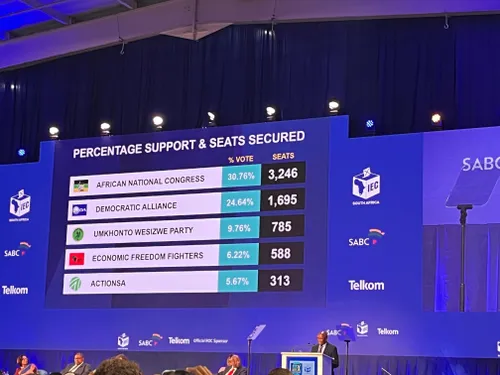
One hundred and thirty-seven municipalities. No outright majority. And a political landscape where the fate of millions of South Africans now rests on fragile agreements between parties that may not even trust each other.
South Africa’s 2026 local government elections have produced a council map defined by coalition politics, and while the formation of governing alliances is already underway, the harder question is what happens when those alliances crack. The answer, it turns out, is more complicated than most people realise, and far more consequential for everyday life in cities and towns across the country.
A coalition collapses when one or more parties withdraw their support from a governing agreement, stripping the mayor or ruling bloc of the council majority they need to function. At that point, opposition parties can move a motion of no confidence against the sitting mayor. If that motion passes, the mayor is out, and councillors elect a replacement without triggering a fresh municipal election. The remaining parties can also attempt to negotiate a new coalition, or press on as a minority administration, scraping together enough votes to pass budgets and policies one decision at a time. That last option is unstable by design, and when it breaks down, the real casualties are services: water, electricity, refuse collection, infrastructure repair.
Provincial governments do hold a reserve power under Section 139 of the Constitution, which allows them to intervene when a municipality fails to meet its constitutional or legislative obligations. In the most serious cases, a provincial executive can dissolve the municipal council entirely and install an administrator to keep things running. A lawful dissolution then triggers a fresh election within 90 days. But the mere collapse of a coalition, without broader governance failure, does not automatically justify that step. The bar is high, and it should be.
Cooperative Governance and Traditional Affairs Minister Velenkosini Hlabisa has been direct about what he expects from parties navigating this terrain. “Differences among coalition partners must not become obstacles to the work of municipalities,” he said, adding a pointed arithmetic reminder for any party tempted to govern alone: “If you did not get 50% plus one, you are not a majority. You are only bigger. You need to engage other political parties so that you have 50% plus one.”
The warning carries weight because South Africa has lived through exactly this kind of instability before. After the 2021 local government elections, municipalities including Johannesburg, Tshwane and Nelson Mandela Bay cycled through mayors and governing arrangements as coalition agreements collapsed and motions of no confidence flew across council chambers. Johannesburg alone saw repeated leadership changes that paralysed long-term planning and left residents uncertain about basic service delivery. The lesson from that period is not abstract: coalition instability costs real people real things.
The deeper truth here is that coalition government is not a crisis, it is a feature of mature democracies, and it can work. What makes it work is not just the signing of a governing agreement, but the political discipline to honour it under pressure. For the 137 municipalities now navigating this reality, the choices made in council chambers over the coming months will shape the quality of life for millions of young South Africans who voted for change and are still waiting to see it delivered.



