Physical Address
304 North Cardinal St.
Dorchester Center, MA 02124
Physical Address
304 North Cardinal St.
Dorchester Center, MA 02124

Forty-six students snatched from their classrooms in Borno state. Twenty villagers slaughtered in Zamfara. All within a single week. These are not isolated incidents — they are the brutal rhythm of daily life for millions of Nigerians, and they are exactly what pushed President Bola Tinubu to sign off on the most sweeping military expansion the country has seen in recent memory.
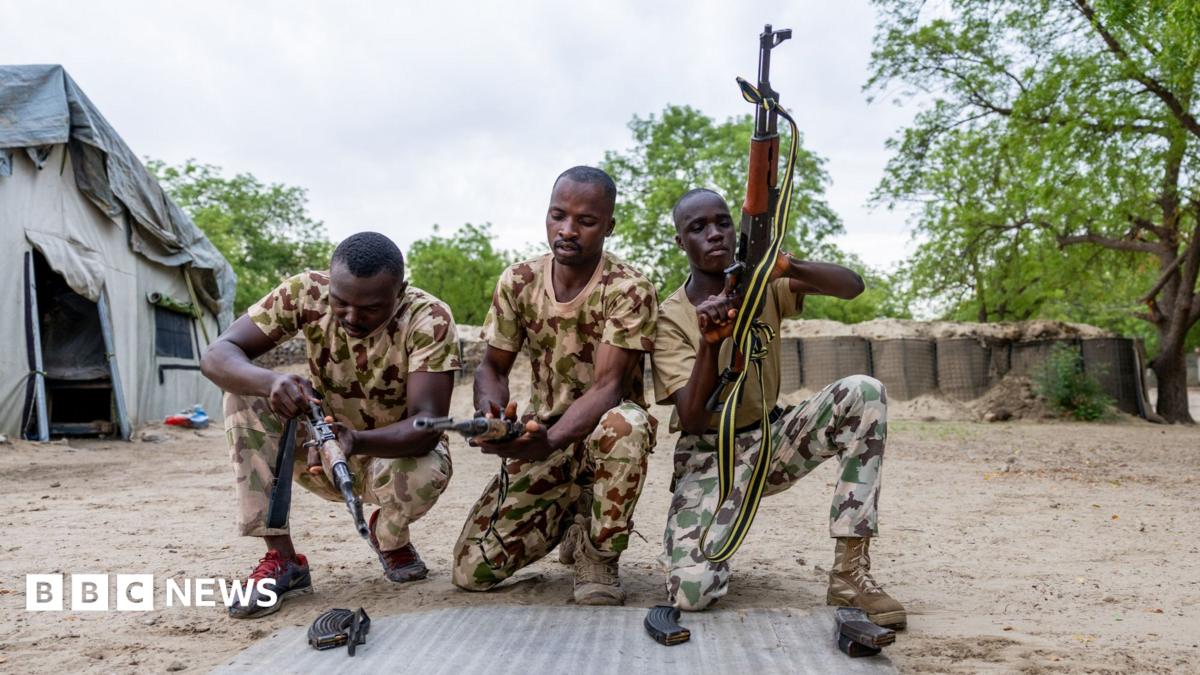
Tinubu has approved the recruitment of 28,000 additional soldiers and the creation of four brand-new army divisions, bringing Nigeria’s total to twelve. The government says the restructuring will sharpen coordination between units, accelerate response times, and improve intelligence sharing across the country’s vast and volatile territories.
Right now, individual divisions are stretched dangerously thin, forced to patrol enormous swaths of land spanning multiple states at once. The new structure aims to fix that. Three additional army headquarters will anchor the north-east and central Nigeria — regions where Islamist militants, armed bandits, and deadly farmer-herder clashes have made entire communities feel like war zones.
The expansion doesn’t stop at the military. Tinubu also announced the hiring of more than 50,000 new police officers and pushed through a record defence and security budget of 5.41 trillion naira — roughly $4 billion — for the year. Before signing off on any of it, he issued a stark ultimatum to armed groups across the country: surrender, or face the full force of the state.
The threat carries real weight after a string of recent operations. In December, US and Nigerian forces launched a joint strike against the Lakurawa jihadist group in the north-west — including a Christmas Day raid. A months-long mission centred on the Lake Chad Basin also resulted in the killing of senior Islamic State leader Abu-Bilal al-Minuki. These are genuine wins. But they haven’t stopped the attacks.
IS has been quietly reshaping itself. Analysts note that around 90% of its global attacks now take place in sub-Saharan Africa, and its Nigeria-based branch is the most active of all. Even after the US-Nigeria joint operation wrapped up earlier this month, militant groups continued to strike. The enemy is adapting faster than the state can keep up.
And the violence is no longer contained to the north. In May, 44 pupils and teachers were abducted in coordinated school attacks in Oyo, a south-western state that many Nigerians once considered relatively safe. The geographic spread of insecurity is accelerating — and so is public anxiety.
Security experts who spoke to the BBC flagged a critical tension at the heart of Tinubu’s plan: actually filling those 28,000 new military slots. Recruiting young Nigerians into an army that has suffered significant casualties in recent months is a hard sell. The government is asking young people — people your age — to sign up for a fight that is far from over, in exchange for a salary and a uniform.
That question hangs over everything. The budget is allocated, the divisions are drawn up on paper, and the president has spoken. But somewhere in a village in Zamfara, or a school in Borno, or a home in Oyo, families are still waiting to feel the difference — waiting to see whether this expansion is the turning point Nigeria desperately needs, or just the latest promise in a long line of them.



