Physical Address
304 North Cardinal St.
Dorchester Center, MA 02124
Physical Address
304 North Cardinal St.
Dorchester Center, MA 02124

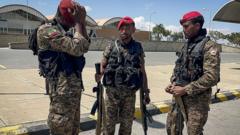
Two neighbours. One explosive border crossing. And a region that could be on the edge of something far bigger.
Ethiopia has formally accused Eritrea of launching what it calls an “all-out invasion” of its northern Tigray region. This is not just diplomatic noise — Ethiopian Foreign Minister Gedion Timothewos sent a letter directly to the UN Security Council, dated 8 October, claiming that Eritrean forces had pushed as far as 60 kilometres into Tigrayan territory. Residents had already been telling journalists that soldiers were crossing the border days before any official statement came through.
The letter was blunt. Ethiopia described the incursion as a “blatant act of aggression” that triggers its “inherent right to self-defence.” That kind of language, sent to the UN Security Council, signals that Addis Ababa is preparing the world for the possibility of a serious military response — and wants international backing before it acts.
Eritrea, for its part, flipped the narrative entirely. Information Minister Yemane Gebremeskel fired back, describing the situation as an “unprovoked war of aggression” from Ethiopia’s side. On Friday, he went further, accusing Ethiopian leaders of “duplicity in their most extreme forms” and claiming Addis Ababa is actively trying to engineer regime change in Asmara by sheltering opposition fighters.
The short answer: a lot changed, very quickly. During Ethiopia’s brutal two-year civil war against the Tigray People’s Liberation Front (TPLF), Eritrea was firmly on Addis Ababa’s side. Eritrean troops fought alongside Ethiopian federal forces against the TPLF — a conflict that left tens of thousands dead and millions displaced. A peace deal in 2022 was supposed to close that chapter.
But the relationship between Ethiopian Prime Minister Abiy Ahmed and Eritrean President Isaias Afwerki has since collapsed. The breaking point? Abiy’s ambition to secure access to the Red Sea through one of Eritrea’s ports — a move Asmara sees as a direct threat to its sovereignty. Diplomatic ties between the two countries were severed just last week, making the current military standoff feel less like a sudden crisis and more like the logical conclusion of months of deteriorating trust.
Now Ethiopia says Eritrea is backing the TPLF — the very group they once fought together. Eritrea denies it. But the accusation alone reshuffles the entire regional chessboard.
The situation is moving fast. Ethiopian drone strikes reportedly hit Eritrean forces in the Tigrayan town of Adigrat on both Wednesday and Thursday. US-based conflict monitor ACLED confirmed that “Eritrean troops and ammunition” were struck by “multiple drone strikes” overnight. One resident described “many, many drone strikes” to AFP, adding that several Eritrean military lorries were destroyed. Another witness reported that Eritrean forces appeared to be pulling back northward following the strikes.
Meanwhile, TPLF forces withdrew from Mekelle — Tigray’s main city, located 115 kilometres south of Adigrat — which is now under Ethiopian army control. The reshuffling of forces across the region suggests that the front lines are anything but stable. No verified casualty figures have emerged yet, and independent reporting from inside Tigray remains extremely limited.
Because what starts in Tigray rarely stays in Tigray. The Horn of Africa is one of the most geopolitically sensitive regions on the continent, with overlapping interests from global powers, regional blocs, and armed groups all competing for influence. An open war between Ethiopia — Africa’s second most populous country — and Eritrea would send shockwaves through the entire region, affecting trade routes, refugee flows, and the fragile stability of neighbouring countries like Sudan and Djibouti.
There is also a deeper political story here about how African leaders use conflict to consolidate power, suppress opposition, and deflect from domestic failures. Eritrea’s accusation that Ethiopia is funding “mercenaries” posing as opposition is a classic authoritarian playbook move. Ethiopia’s appeal to the UN for solidarity, while simultaneously launching drone strikes, raises its own questions about who gets to define self-defence. These are not abstract debates — they shape the futures of millions of young people across the region who deserve peace, economic opportunity, and governments that answer to them.
The September formation of a new alliance of armed groups inside Ethiopia, which includes the TPLF, adds yet another layer of complexity. This conflict is not just about two countries at a border — it is about who controls the political future of one of Africa’s most strategically important nations, and what kind of neighbourhood the entire Horn becomes as a result.



